





Headquarters
The Energy and Resources Institute (TERI)
Darbari Seth Block, Core 6C,
India Habitat Centre, Lodhi Road,
New Delhi - 110 003, India
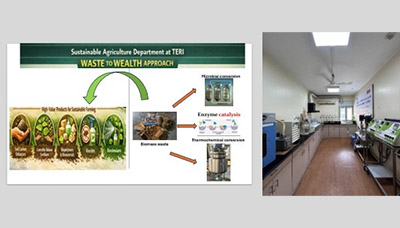
The Sustainable Agriculture Division of TERI is committed to addressing the twin challenges of global food security and environmental sustainability in the face of a rapidly growing population. The primary orientation is on enabling a transition toward climate-resilient and resource-efficient agricultural systems by advancing science-led, nature-based solutions. Research focuses on reducing reliance on synthetic chemical inputs while enhancing soil health, carbon sequestration, nutrient use efficiency, and crop productivity along with advanced technological solutions for allied disciplines including feed for livestock, natural products and biomolecules for nutraceuticals, pest management, reclamation of industrial wastelands and amelioration of agriculture waste.
Unlike conventional blue carbon's ecosystems like mangroves, salt marshes, seagrass meadows, seaweed largely occupies rocky, high-energy intertidal and subtidal substrates where there is no accumulating sediment column.
Out of over 3 trillion trees globally, more than 40% occur in (sub)tropical settings that contribute to two-thirds of all natural CH4 emissions.
The Union Budget 2026 for agriculture marks a decisive recalibration of India’s farm policy, signalling a gradual transition from a subsidy-reliant, relief-driven approach to a more technology-enabled, outcome-oriented, and sustainability-focused growth paradigm.
Guar gum powder is extracted from the guar seeds after a multistage industrial process. The production technique depends upon the desired product.
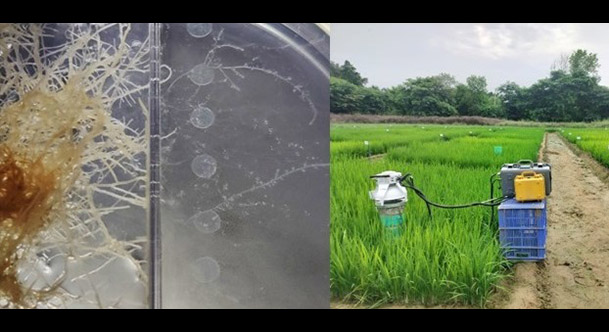
Combining biochar with soil microbial communities can enhance soil health, nutrient cycling, and agricultural productivity. Being a stable carbonaceous material, biochar offers multiple benefits by improving soil’s physical, chemical, and biological properties.
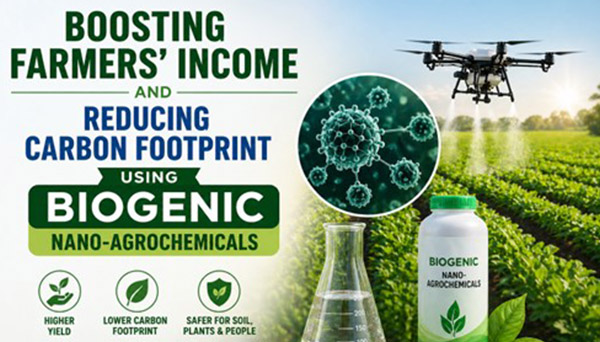
Nano-agri-inputs could be the next big leap in sustainable farming, with the ability to boost yields and cut emissions—but their real-world impact will rest on scientific rigour, careful regulation, and farmer trust.
TERI, the Kisan Chamber of Commerce (KCC), and Value Network Advisory (VNV) formally signed a tripartite Memorandum of Understanding (MoU) at the Constitution Club of India, New Delhi, on July 9, to collaborate on the development and implementation of a carbon project in Haryana.
TERI, the Kisan Chamber of Commerce (KCC), and Value Network Advisory (VNV) formally signed a tripartite Memorandum of Understanding (MoU) at the Constitution Club of India, New Delhi, on July 9, to collaborate on the development and implementation of a carbon project in Haryana.
NEW DELHI: TERI and the CSIR-Indian Institute of Integrative Medicine (CSIR-IIIM), Jammu, signed a Memorandum of Understanding (MoU) for a collaborative research project on the “Upscaling Optimization of Anthraquinone-Based Pigment Production Through Fermentation Technology”. The MoU was signed at TERI's IHC Office, New Delhi on 11th June, 2026.
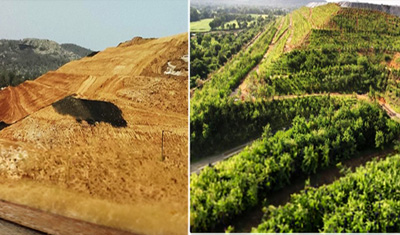
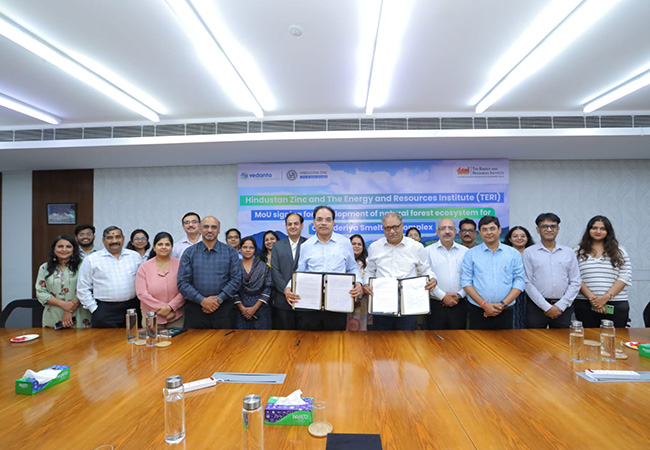
Transforming Industrial Landscapes: TERI and Hindustan Zinc Partner for Historic Ecological Restoration
The Synthetic & Art Silk Mills’ Research Association (SASMIRA) signed a Memorandum of Understanding (MoU) with The Energy and Resources Institute (TERI) on 3rd December 2025 at the SASMIRA Campus in Mumbai to jointly plan and implement research and development initiatives of common interest.
TERI’s recent assessment of the country’s AgriPV potential lists SunSeed’s 1.4-MW Parbhani installation and Nashik project, and GroSolar and Jain Irrigation pilots, among other projects.
Integrating soil microbial diversity, genomic technologies and traditional farming practices can improve crop health, nutrient management, soil fertility and agricultural sustainability, writes Dr Pushplata Singh, Director, Sustainable Agriculture Division, The Energy and Resources Institute (TERI).
Microbial ecosystems are vital for soil health, nutrient cycling, carbon sequestration and climate resilience, warranting greater attention in the COP31 climate agenda, write Dr Kanika Chowdhary, Associate Fellow, Social Transformation & CSR Division and Dr Mayurika Goel, Fellow, Sustainable Agriculture Division, The Energy and Resources Institute (TERI).
The conference on "Indigenous Traditional Knowledge, Clean Energy & Grassroots Innovation" in Assam and Meghalaya, organised under the GEF Small Grants Programme with TERI as National Host Institute and TISS Guwahati as knowledge partner, aimed to connect community-led practices with policy solutions for biodiversity, climate resilience and land restoration.
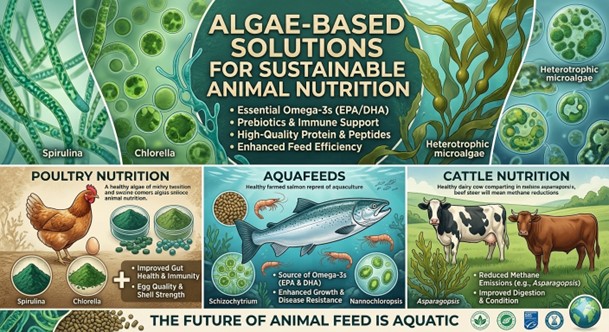
Microalgae-based aquafeed offers India a sustainable alternative to fishmeal and soybean, with potential to reduce environmental pressures, improve fish nutrition, and strengthen the country’s aquaculture sector, write Dr Amritpreet Kaur Minhas, Fellow, Dr Shovon Mandal, Fellow, Sustainable Agriculture Division, The Energy and Resources Institute (TERI).
In a Lok Sabha reply, the government said studies by institutions including The Energy and Resources Institute (TERI) estimate India’s theoretical agrivoltaic potential at 1,192 GW to 2,129 GW.
The overall purpose of watershed programmes is to enhance incomes, provide food security through sustainable agriculture and prudent management of natural resources. This directly corresponds to SDG 1 and 2, i.e. No poverty and Zero Hunger respectively.
Nanobiotechnology applications in food production and agriculture have a lot of potential. However, India did not have adequate guidelines to regulate the same. Until now.
The paper looks at enhancing the role of women in agriculture and allied activities and providing institutional support
Land scarcity, degraded ecosystems and climate change are pressures that the agriculture sector confronts in the 21st century whilst needing to meet demands for food, feed and fibre, preserve natural resources as well as ensure profitability, economic and social equity (FAO, 2015). Industrialized agriculture,1 which is capital intensive, substituting animal and human labour with machines and purchased inputs (IAASTD, 2009) has been the favoured model for agriculture development due to its tremendous success in increasing food production.
The recent decision by the Ministry of Environment and Forests to place an indefinite moratorium on the release of Bt Brinjal for commercial agriculture has brought sharp focus on the stridently polarized views across the scientific community and civil society on the benefits and costs of genetically modified crops.
We provide expertise in greening and reclamation of wasteland to turn it into green, productive land. We do this using a beneficial group of micro-organisms known as mycorrhizal fungi. Successful examples of sites reclaimed using this technology include fly ash overburdens, alkali chlor-laden sites, distillery effluent discharge sites, phosphogypsum ponds, coal mines, red mud, saline and arid sites.
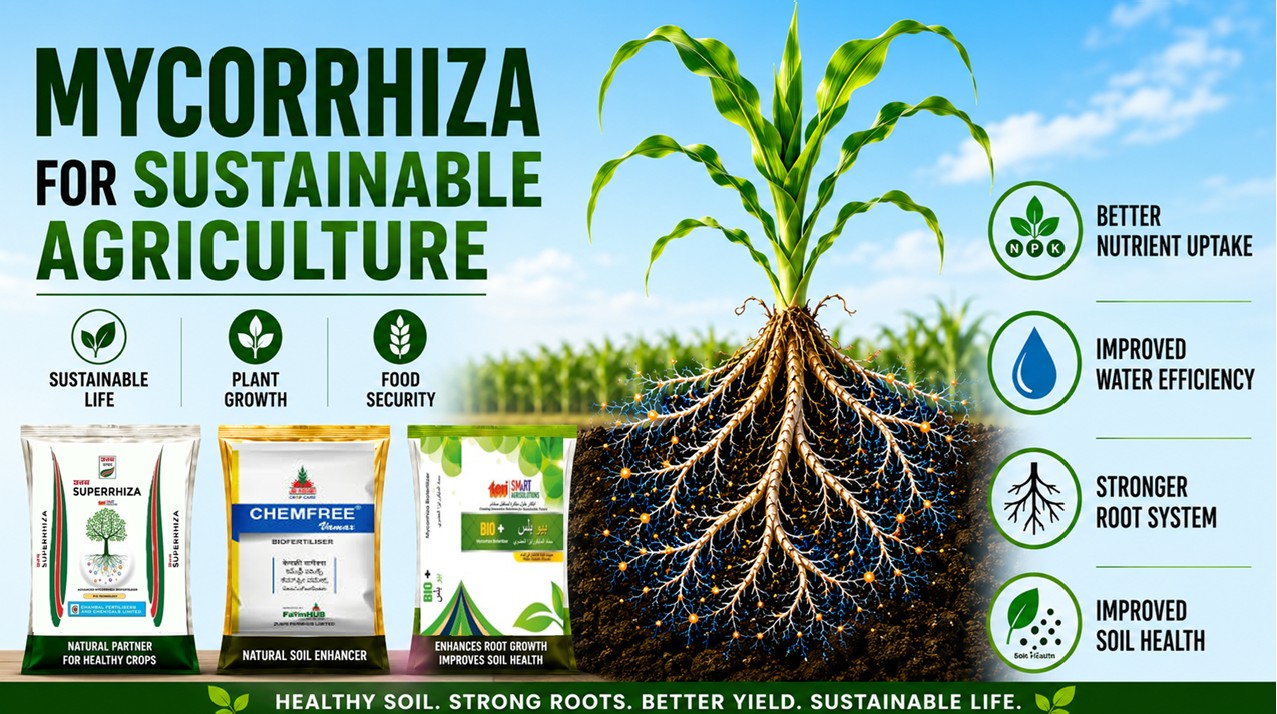
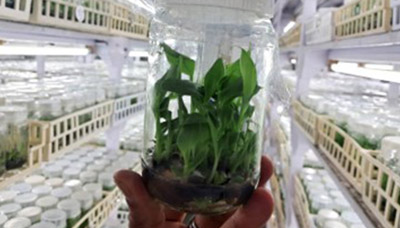
Mycorrhiza is a biofertiliser that helps promote plant growth in an environment-friendly manner and provides several benefits during the plant cultivation stages. Our in-vitro mass production technology uses a sterile, contamination-free environment, to commerciallly produce this high-quality mycorrhiza, which is viable, healthy, and genetically pure. Our next generation technology for arbuscular mycorrhizal fungi is suitable for industries and requires less space for maximum recovery of propagules (up to 1000 billion propagules/annum).
Read more