Examining the Feasibility of Adopting Advanced Biofuels like MTBE and ETBE in India: Challenges and Opportunities.

01 Nov 2023
Examining the Feasibility

TERI and ACFA Launch Report on Oxyfuels to Accelerate India’s Clean Fuel Transition

TERI, with support from the Asian Clean Fuels Association (ACFA), launched a seminal report titled “Enhancing India’s Biofuels Programme: Examining the Role of Oxyfuels in India’s Clean Fuel Transition.” The publication highlighted complementary strategies India could deploy to reduce its reliance on imported fossil fuels by integrating fuel ethers into the national fuel strategy.

Fuel ethers, such as Ethyl Tertiary Butyl Ether (ETBE) and Methyl Tertiary Butyl Ether (MTBE), had already been successfully adopted by numerous countries, including Japan, Germany, the Netherlands, China, France, Spain, Malaysia, Taiwan, and Mexico. Notably, ETBE was shown to improve the energy content of ethanol threefold while reducing carcinogenic benzene emissions by 27 per cent compared to direct ethanol blending (E10/E20).

Launch and Industry Roundtable

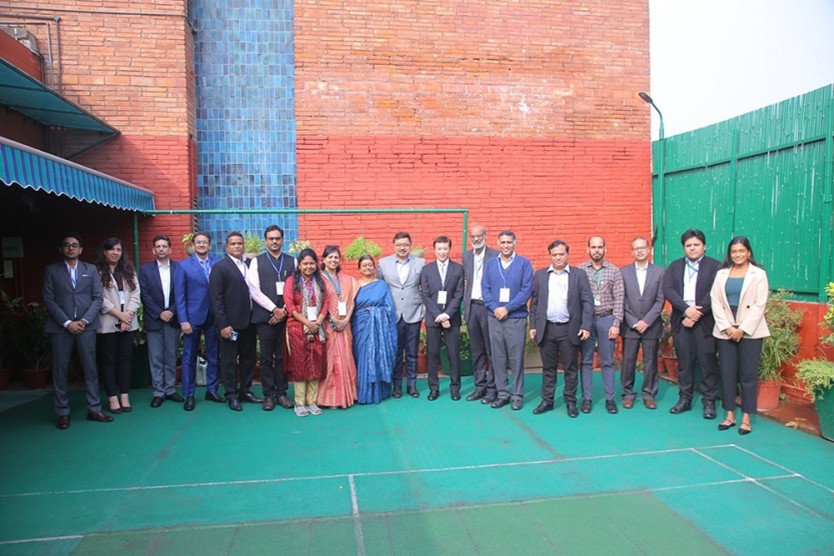
The report was unveiled by a distinguished panel of dignitaries, including:

  • Shri Rajnath Ram, Advisor (Energy), NITI Aayog, Government of India
  • Shri Alok Sharma, Executive Director, Centre for High Technology (CHT), Ministry of Petroleum and Natural Gas, Government of India
  • Dr. Vibha Dhawan, Director General, TERI
  • Dr. Clarence Woo, Executive Director, ACFA

The launch was followed by a stakeholder roundtable that drew leading industry representatives and experts from Indian Oil Corporation Limited (IOCL), Hindustan Petroleum Corporation Limited (HPCL), the Petroleum Planning and Analysis Cell (PPAC), Maruti Suzuki, and senior fellows from TERI. Academic and technical insights were further enriched by contributions from Prof Avinash Kumar Agarwal (IIT Kanpur) and Dr (Prof) Anuradda Ganesh (Advisor, Cummins India Ltd).

Report at a Glance

  • Road Transport and Energy Consumption: In 2021, road transport in India accounted for 14 per cent of the nation's total energy consumption, sitting just below the global average of 20 per cent.
  • Emissions Impact: India's road transport sector emitted approximately 280 MT CO2 in 2021. This represented 12 per cent of the country's total energy-related emissions and more than a quarter of its energy demand-related CO2 emissions.
  • MTBE/ETBE as Oxygenates: Incorporating MTBE and ETBE into fuel blends can help India achieve its higher Research Octane Number (RON) aspirations, ultimately improving vehicle fuel economy and urban air quality.
  • Synergistic Advantages: Co-blending ethers with alcohol offers multiple operational and economic benefits. These include improved cost-effectiveness through C4/C5 chemical valorization, reduced Scope 1 and Scope 2 emissions, and the mitigation of classic ethanol-only blending issues such as commingling, low water tolerance, and material incompatibility.
  • ETBE Integration: Blending ethanol via ETBE is identified as an optimal approach. Moving forward, India has the opportunity to explore the domestic production of ETBE utilizing second-generation (2G) bioethanol.
  • Renewable Fuel Research: Advanced R&D into renewable ETBE and bio-MTBE production, derived from bioethanol, biomethanol, and low-cost domestic waste feedstocks, will be critical to ensuring supply chain sustainability and supporting India's long-term clean fuel strategies.
Files
Partners
Asian Clean Fuels Association
Tags
Alternate Fuels
Biofuels
Bioproducts
Biorefineries
Energy policies
ETBE
Green Fuels
Greenhouse gases
MTBE
Renewable energy
Waste-to-energy technologies