Headquarters
The Energy and Resources Institute (TERI)
Darbari Seth Block, Core 6C,
India Habitat Centre, Lodhi Road,
New Delhi - 110 003, India
Stakeholders come together in Shobhapur to showcase local enterprises, share community experiences and explore opportunities for a just and inclusive transition
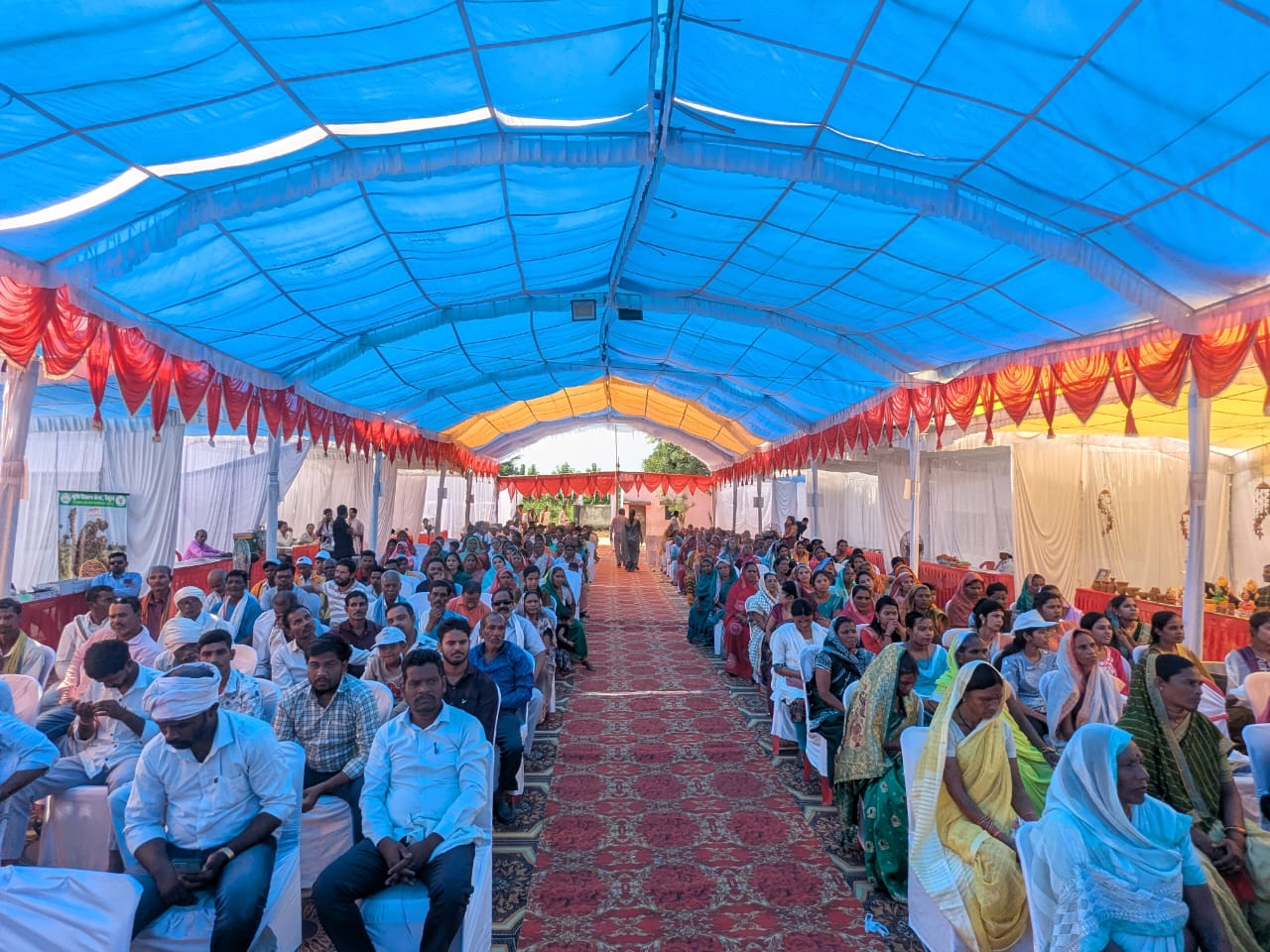
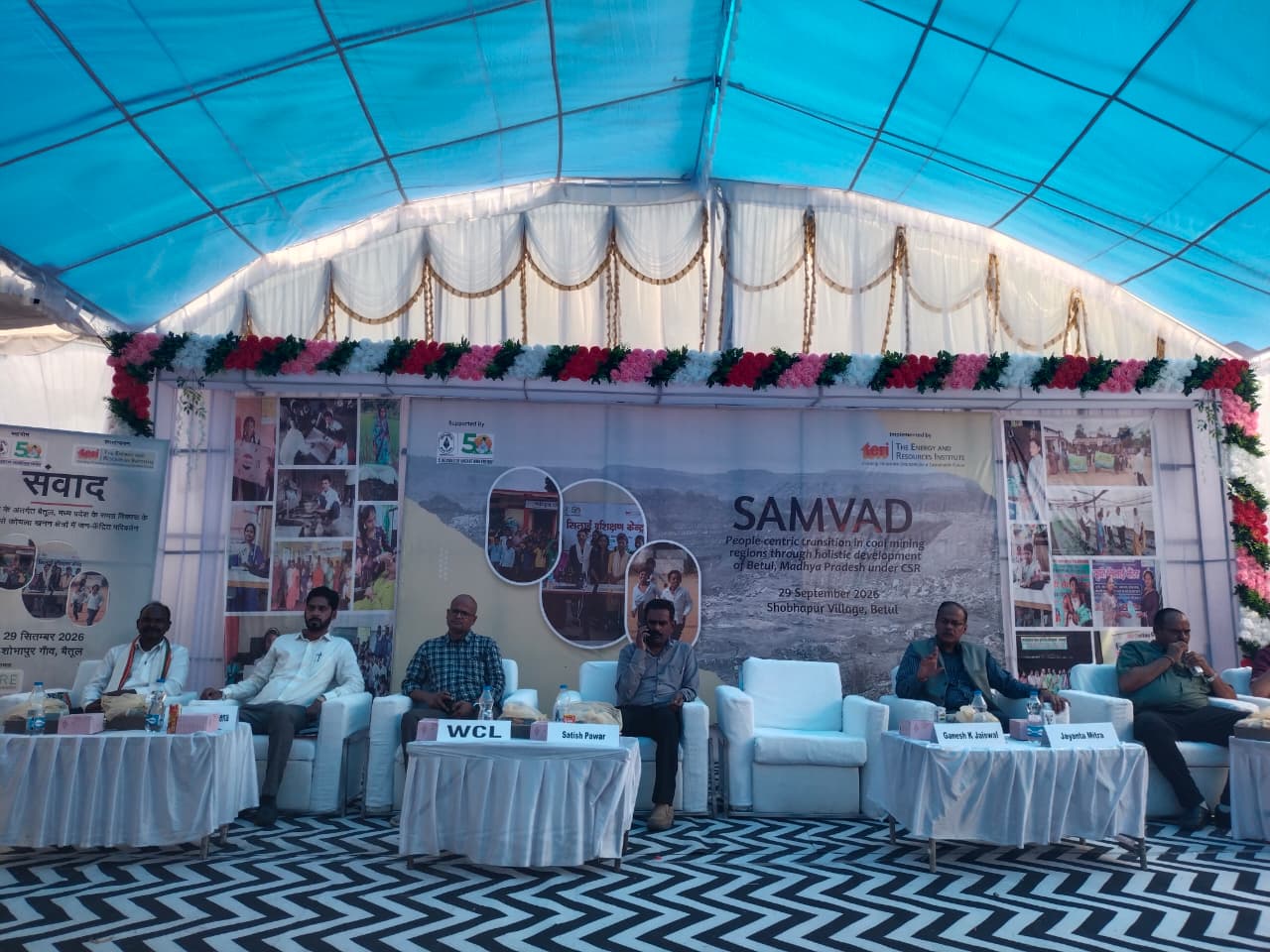
Shobhapur, Betul, Madhya Pradesh | 29 September 2026: The Energy and Resources Institute (TERI), with support from Coal India Limited, organised ‘Samvad’ at Shobhapur village in Betul, Madhya Pradesh, bringing together community members, entrepreneurs, workers, local institutions, government representatives and other stakeholders to discuss livelihood diversification and community-centric approaches to the transition in coal-dependent regions.
Coal mining has played an important role in shaping the economic landscape and livelihoods of communities in Betul. With some coal mines in the district having been scientifically closed and others expected to close in the coming years, preparing communities and local economies for a future beyond coal has emerged as an important priority. Mine closure can have implications for employment, household incomes, local businesses and the wider economic ecosystem that has developed around mining.
The event was organised as part of TERI’s project, “People-centric Transition in Coal Mining Regions through Holistic Development of Betul, Madhya Pradesh,” supported by Coal India Limited. The project seeks to promote economic diversification and strengthen alternative livelihood opportunities in coal-dependent communities by harnessing local skills, resources and entrepreneurial potential to create new sources of income and employment.
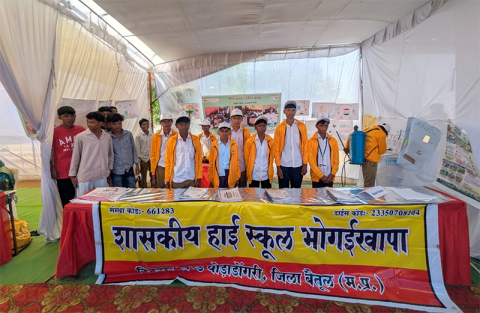
A key highlight of the event was the showcase of local enterprises established through sustained community engagement and enterprise development. Six enterprises – Tailoring and Stitching, Sanitary Pad Unit, Vermicompost, Beauty Parlour, Hair Salon and Common Service Centres – have been successfully established, while work on several other enterprises is currently progressing. These initiatives demonstrate the potential of local entrepreneurship to create alternative livelihood pathways and contribute to a more diversified rural economy.
The programme included a visit to the enterprise stalls, a presentation by TERI on the project and its context, and ‘Voices of Beneficiaries’, providing an opportunity for community members and entrepreneurs to share their experiences. The programme also featured addresses by representatives of the district administration, Mining Department, Western Coalfields Limited (WCL), Madhya Pradesh State Rural Livelihoods Mission (MPSRLM), Krishi Vigyan Kendra (KVK), the Gram Panchayat and SCORE Livelihood Foundation.
On TERI’s approach to people-centric transition, community engagement and livelihood diversification in coal-dependent regions, Dr Jayanta Mitra, Senior Fellow, TERI, shared, “A people-centric transition is not simply about preparing communities for change; it is about enabling them to shape their own future. By investing in local capabilities, strengthening livelihoods, fostering entrepreneurship and building partnerships across institutions, we can transform the challenges of transition into opportunities for inclusive, resilient and sustainable development.”
Regarding the importance of local institutions, convergence and community participation in supporting sustainable livelihoods beyond coal, Shri Ganesh K Jaiswal, CEO, ZP, highlighted, “Sustainable development is not achieved through one intervention, but through a shared vision and collective action. When we empower communities, strengthen institutions, promote innovation and bring different schemes and stakeholders together, we create pathways for inclusive and resilient growth. Every local initiative is a building block towards a stronger economy, empowered communities and a better India.”
In the Special Address, Shri Satish Pawar, DPM, NRLM, noted, “Creating an enterprise is only the beginning; connecting it to the right market is what makes it sustainable. Strong market linkages can transform local skills and small enterprises into reliable and lasting sources of income.”
Shri Sachin Nagar, WCL added, “A sustainable transition cannot be achieved by one institution alone. It requires strong partnerships between communities, government institutions, local organisations, and industry so that new livelihood opportunities are created and the benefits of development reach the people who need them most.”
The event also featured local cultural performances, including a folk song and group dance, alongside a skit highlighting community engagement and the broader transition process. The participation of local stakeholders underscored the importance of dialogue, collaboration and collective learning in identifying opportunities and addressing challenges associated with economic diversification.
‘Samvad’ was envisioned as a platform for stakeholders to showcase achievements, exchange experiences, discuss challenges and identify opportunities for further economic diversification. It also provided an opportunity to explore how successful enterprises can be strengthened, replicated and scaled across other communities experiencing the socio-economic impacts of coal mine closure.
Through such community-centred engagement, the initiative seeks to foster convergence, partnerships and collective ownership of the transition process, while supporting communities in developing resilient and diversified livelihood opportunities for the future.