Headquarters
The Energy and Resources Institute (TERI)
Darbari Seth Block, Core 6C,
India Habitat Centre, Lodhi Road,
New Delhi - 110 003, India
One-day training on Battery Energy Storage Systems (BESS), conducted by TERI under the GIZ-implemented StoREin project, strengthens bankers’ capacity to appraise, structure, and finance emerging energy storage projects
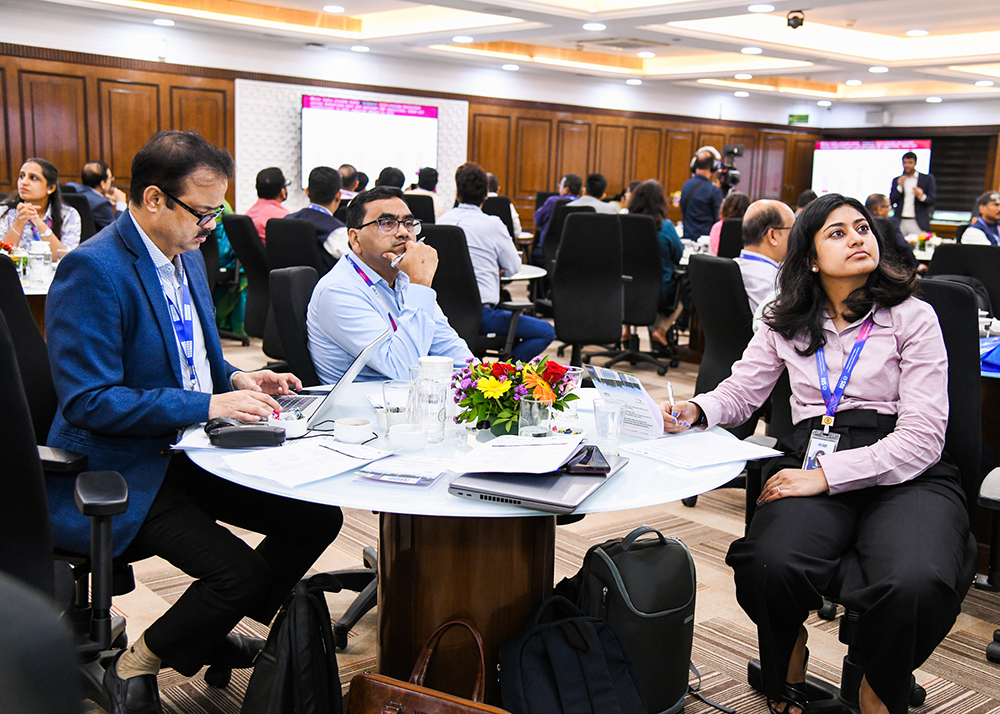
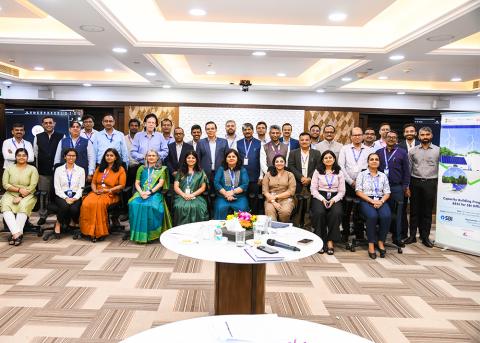
Mumbai, 18 September 2026: Over 80 officials of the State Bank of India (SBI) completed a one-day Capacity Building Programme on Battery Energy Storage Systems (BESS) here today. Held at SBI’s Local Head Office (Synergy Building), Bandra Kurla Complex, the programme equipped officials with the knowledge and practical insights required to evaluate and finance one of India’s fastest-emerging clean energy asset classes.
The programme was conducted by The Energy and Resources Institute (TERI) under the Indo-German Development Cooperation project, “Energy Storage for Renewable Energy Integration in India (StoREin)”, implemented by the Deutsche Gesellschaft für Internationale Zusammenarbeit (GIZ) GmbH on behalf of the Federal Ministry for the Environment, Climate Action, Nature Conservation and Nuclear Safety (BMUKN) under the International Climate Initiative (IKI), in close cooperation with the Ministry of New and Renewable Energy (MNRE), Government of India.
India’s transition towards net-zero emissions by 2070 is centred on the large-scale deployment of renewable energy, with the National Electricity Plan projecting the country's installed solar and wind capacity to exceed 480 GW by 2031-32. As variable renewable generation grows, energy storage is expected to become an integral component of India’s electricity networks — balancing generation fluctuations, enhancing grid stability, enabling energy arbitrage, and deferring investments in transmission and distribution infrastructure. Mobilizing capital for this build-out will require banks and financial institutions to navigate the distinct technological, operational, commercial, and safety considerations that set BESS projects apart from conventional power infrastructure.
SBI has already demonstrated leadership in clean energy financing, having supported approximately 10.41 lakhs rooftop solar installations (nearly 3460.48 MW of installed capacity) under SBI Surya Ghar scheme. Inaugural Session
The programme opened with a welcome address by Mr Sachin Singh, Associate Director, TERI, followed by an inaugural session featuring, Dr Kuldeep Rana, Scientist E and Director Ministry of New and Renewable Energy; Mr Bernhard Voelcker, Project Head, GIZ India; and Shri R. Shailesh Unnithan, Chief General Manager (ESG&CFU), SBI. Regarding the objectives of the programme, why banker capacity is the missing link in scaling energy storage finance, Mr Sachin Singh, Associate Director, TERI, said, “Battery energy storage is emerging as a critical enabler of India’s renewable energy transition. Building institutional understanding of its technologies, business models, financing structures and risks will be essential for enabling informed investment and supporting the growth of a bankable energy storage ecosystem.”
About national policy direction on energy storage; the Government’s expectations from the banking sector in achieving energy security and renewable integration targets, Dr Kuldeep Rana Scientist E and Director MNRE, shared, “Energy storage is emerging as a critical enabler of India’s renewable energy transition, and its scale-up will require not only technological deployment but also a robust financing ecosystem. For BESS projects, understanding revenue models, cash-flow, technology risks and contractual frameworks is essential to building bankability. Financial institutions such as SBI can play an important role in developing appropriate financing structures for storage-linked and RE+BESS projects. Capacity-building initiatives such as this programme can help bridge the understanding between developers, lenders, investors and policymakers, enabling greater mobilisation of capital for India’s energy transition.”
Mr Bernhard Voelcker, Project Head, GIZ India focused on the role of energy storage in India’s energy transition and the importance of preparing financial institutions, and said, “India’s energy transition will require battery energy storage to move from individual applications towards integrated solutions that can provide multiple services to the power system. A key learning from the work under StoREin is the importance of value stacking- combining revenue and system-value streams such as energy arbitrage, peak management, grid support and flexibility to strengthen the business case for storage. Building a shared understanding of these technical, commercial and financial dimensions among utilities and financial institutions will be essential for scaling up bankable BESS projects in India.”
About SBI’s commitment to green and sustainable finance; building internal capacity to appraise new-age clean energy assets, Shri R. Shailesh Unnithan, Chief General Manager (ESG&CFU), SBI asserted, “For financial Institutions, building a clear understanding of BESS technologies, revenue models, project risks and contractual structures are essential for informed lending decisions. Capacity-building programmes such as this provide an important platform for strengthening the preparedness of banking institutions and developing financing approaches suited to the emerging storage sector. SBI remains committed to supporting innovative financing solutions that can help accelerate India’s clean energy transition.”
Through the day, experts from TERI, Mr Debmalya Sen, President, India Energy Storage Alliance (IESA), Mr Vismit Bansal, Associate Partner, Dalberg Advisors, Mr Deepak Gupta, Vice President, ReNew, Mr Harish Kant Kaushik, Sector Expert and former SBI official, Mr Richie Stephen, Senior Standards Project Manager, UL Standards & Engagement, and Mr Ismael Miranda, Global Technical Lead – BESS, Bureau Veritas guided participants across the complete BESS financing value chain:
The programme concluded with closing remarks by Dr Ajeet Singh, Fellow, TERI; Mr Bernhard Voelcker, Project Head, GIZ India; and Ms Shashi Prabha, General Manager (CoE), PFSBU, SBI, followed by the distribution of participation certificates jointly awarded by GIZ and TERI.
The programme forms part of ongoing efforts under the StoREin project to strengthen institutional capacity among financial institutions in project appraisal, credit assessment, risk management, and sustainable finance — contributing to India's clean energy transition and long-term sustainable development objectives.