Headquarters
The Energy and Resources Institute (TERI)
Darbari Seth Block, Core 6C,
India Habitat Centre, Lodhi Road,
New Delhi - 110 003, India
New Delhi, 1-3 September 2026: The Indo-German technical cooperation project “Energy Storage for Renewable Energy Integration in India (StoREin)” showcased its work on advancing energy storage deployment, research, capacity building and grid integration in India during Bharat Electricity, POWERGEN India and Indian Utility Week 2026, held from 1–3 September 2026 at Yashobhoomi, New Delhi.
The StoREin Project commissioned by the Federal Ministry for the Environment, Climate Action, Nature Conservation and Nuclear Safety (BMUKN) under the umbrella of International Climate Initiative (IKI), is led by the Ministry of New and Renewable Energy (MNRE), Government of India, and jointly implemented with the Deutsche Gesellschaft für Internationale Zusammenarbeit (GIZ) GmbH, along with its consortium partners—Fraunhofer Institute for Energy Economics and Energy System Technology (Fraunhofer IEE), Indian Institute of Technology Bombay (IIT Bombay), The Energy and Resources Institute (TERI), and World Resources Institute India (WRI India). Two key reports released at POWERGEN India
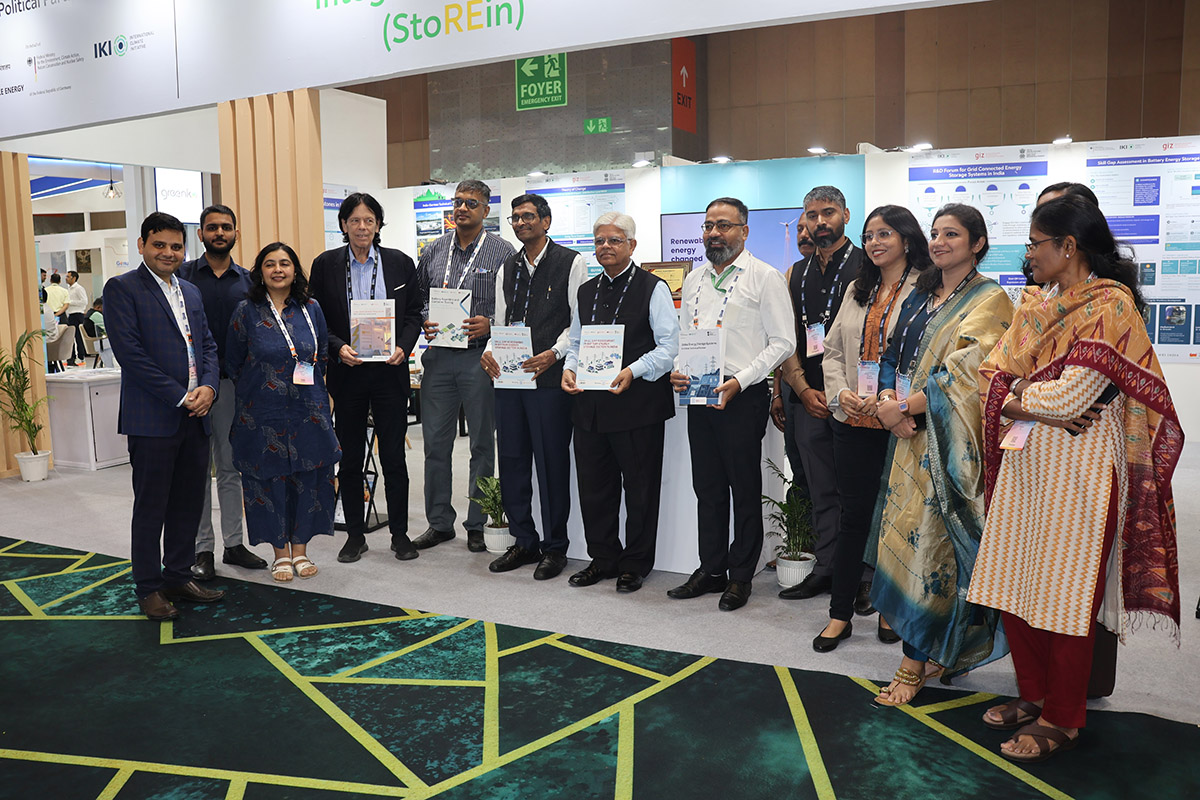
Two knowledge products developed under the StoREin project were released during the inaugural session of POWERGEN India 2026, providing insights on the human-capacity requirements and technological pathways needed to scale up energy storage in India.
“Skill Gap Assessment in the Battery Energy Storage Sector in India”, developed by TERI, examines emerging workforce requirements across India's battery energy storage value chain. The assessment identifies key skill and competency gaps among technicians and training institutions, with particular focus on installation, operation and maintenance (O&M), battery servicing, safety and system integration. The report also assesses industry requirements and existing training capacities and provides recommendations to strengthen the skills ecosystem for the rapidly expanding BESS sector.
The second report, “Global Energy Storage Systems: A Critical Technical Review”, developed by the Grid Integration Lab at IIT Bombay, provides a comprehensive review of global developments in energy storage systems, covering technologies, grid integration and control, applications, markets, standards, economics, sustainability and real-world deployment experience. The report provides a global perspective on the evolution of energy storage and identifies key considerations for technology development and integration into increasingly renewable-rich power systems.
A key highlight of StoREin’s presence at the event was the launch of the beta version of Urja Sanchay digital knowledge platform at the StoREin Pavilion.
The portal was launched by Shri Shailesh Kumar, Hon’ble Minister of Energy, Government of Bihar; Shri Ghanshyam Prasad, Chairperson, Central Electricity Authority (CEA); Mr Amal Sinha, Executive Director, BRPL and Mr Abhishek Ranjan, CEO, BRPL. Urja Sanchay is designed as a digital knowledge platform to support India's transition towards greater adoption and integration of energy storage solutions. The platform brings together a range of interactive tools and knowledge resources, including a Dialogue Platform, Energy Storage Dashboard, E-Learning Platform and Digital Library.
The Urja Sangraha dashboard provides insights on energy-storage capacities, technology types, deployment trends and geographical distribution, supporting data-driven decision-making by policymakers, researchers, utilities and other stakeholders.
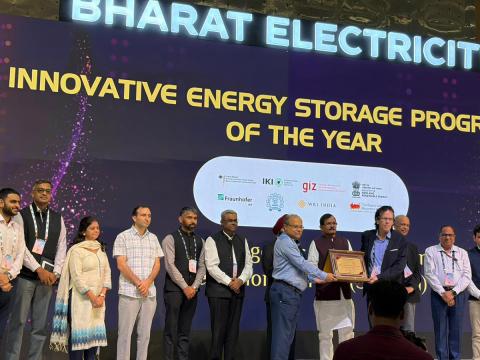
The StoREin project was also recognised with the “Innovative Energy Storage Programme of the Year” award at the Project Excellence Awards, held as part of Bharat Electricity, POWERGEN India & Indian Utility Week 2026. The recognition acknowledges the project's contribution towards advancing innovative energy-storage solutions and strengthening pathways for renewable energy integration, grid flexibility and a more resilient electricity system. The award also recognises the collective contribution of the StoREin consortium partners towards supporting India's clean-energy transition through research, demonstration, capacity building and knowledge exchange.
As part of its knowledge hub activities, the StoREin project organised two high-level sessions during the event to discuss the practical pathways for scaling energy storage in India.
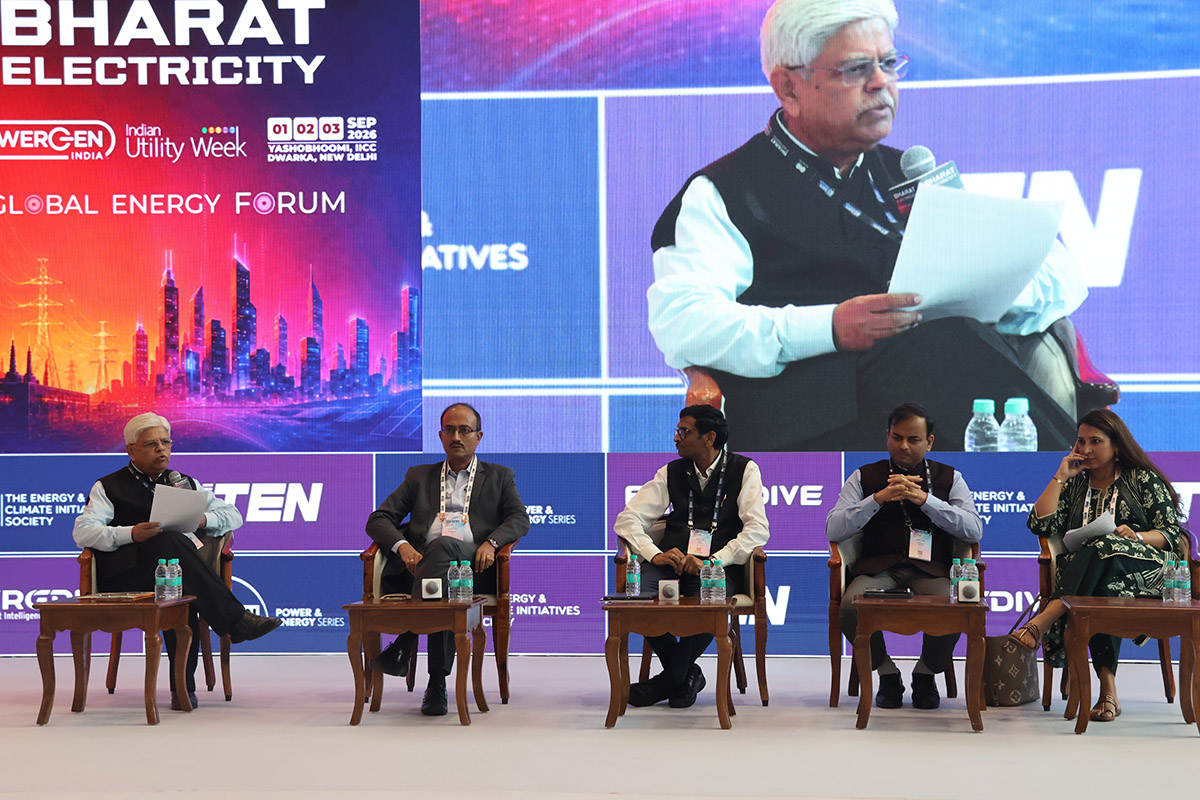
The first session, “Energy Storage for India: From Research to Demonstration and Commercialization,” was organised on 1st September 2026. The session explored how India can strengthen the pathway from research and innovation to technology testing, field demonstration and commercially viable deployment of energy-storage solutions.
The session featured a presentation by Prof. Zakir Hussain Rather, IIT Bombay, on key findings from the technical review of global energy-storage systems, followed by a panel discussion.
The discussion highlighted priority areas including advanced battery chemistries, long-duration energy storage, power electronics and grid integration, safety, recycling and circularity, indigenous manufacturing and emerging storage applications. It also examined the role of testing infrastructure, standards and certification, academia–industry collaboration, technology transfer, financing, business models and mechanisms for moving demonstration projects towards commercial deployment and scale-up.
The second Knowledge Hub session, held on 2nd September 2026, focused on “Scaling up Distributed Storage: A Utility-Led Approach to Grid Flexibility.” The session examined the growing deployment of distributed renewable energy under programmes such as PM Surya Ghar: Muft Bijli Yojana and PM-KUSUM, and the emerging role of distributed BESS in addressing challenges such as reverse power flows, voltage fluctuations, localised network constraints and the mismatch between daytime solar generation and evening electricity demand.
The discussion explored whether distributed storage can be aggregated across substations, feeders, distribution transformers and behind-the-meter installations and managed as a portfolio of flexible resources by DISCOMs. Key issues included ownership and procurement models, aggregation mechanisms, regulatory frameworks, financing structures and the potential role of virtual power plants in enabling distributed storage to support grid flexibility and renewable-energy integration.
As India continues to expand renewable-energy deployment, energy storage will be critical to providing the flexibility, reliability and resilience required for a future-ready electricity system. StoREin will continue to support collaboration among Indian and international stakeholders to accelerate this transition.