
Headquarters
The Energy and Resources Institute (TERI)
Darbari Seth Block, Core 6C,
India Habitat Centre, Lodhi Road,
New Delhi - 110 003, India
The scale and ambition of India’s mitigation and adaptation efforts are closely tied to the availability, accessibility, and effective deployment of climate finance. Mobilizing and channeling finance, from both domestic and international sources, is central to achieving India’s climate commitments under the Paris Agreement while aligning them with broader development priorities. This underscores the need for robust analytical frameworks that can systematically examine the complex interplay between climate action, financial flows, and economic development.
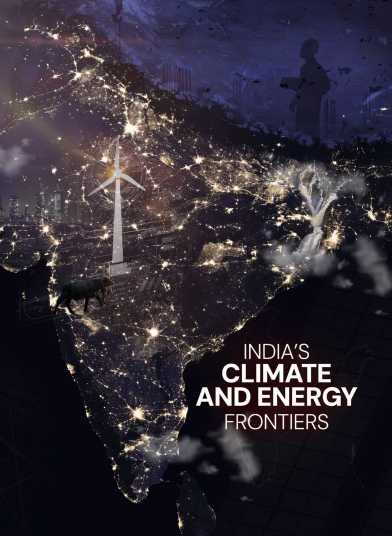
As a key contributor to the multi-institutional India’s Climate and Energy Frontiers (ICEF) report by Schmidt Sciences, TERI led the chapter on “Modelling for Climate Finance”, highlighting the critical role of integrated modelling frameworks in enabling informed climate finance decisions. The chapter reviews the current landscape of models and analytical tools used in India to assess mitigation and adaptation pathways, evaluates the extent to which financial dimensions and climate risks are embedded within these frameworks, and identifies key gaps that limit their effectiveness in addressing climate finance challenges. It also draws on emerging international practices to situate India’s modelling efforts within a global context.
Building on this assessment, TERI proposes an illustrative integrated modelling framework that strengthens linkages across energy systems, climate finance, macroeconomic dynamics, and climate and transition risks. By incorporating financial flows, such as green bonds, subsidies, and blended finance, the framework enables a more realistic representation of how policy and investment decisions would translate into on-ground outcomes across sectors and time horizons.
Such an integrated approach is essential to uncover and address systemic risks such as stranded assets, sectoral disruptions, and financial vulnerabilities that are often overlooked in conventional analyses. By enhancing transparency, improving data linkages, and adopting probabilistic approaches, the framework aims to support more robust, evidence-based policymaking and facilitate a just, efficient, and resilient low-carbon transition for India.