



Headquarters
The Energy and Resources Institute (TERI)
Darbari Seth Block, Core 6C,
India Habitat Centre, Lodhi Road,
New Delhi - 110 003, India
By 2050 it is projected that 7 out of 10 people in the world will live in cities. This combined with climate change-driven extreme weather events increases the spatial and social vulnerability of our cities. Our work focuses on making our cities inclusive and sustainable through participatory and data-driven approaches. We have undertaken policy analysis, capacity building, research and policy advocacy along the principles of low-carbon development. Our projects over the years have embedded the importance of action-oriented development in cities and disseminated knowledge products which have enabled mainstreaming of urban resilience and climate action. The areas of research and our association with plethora of multitiered stakeholders have resulted in building a rich body of experience in climate change adaptation and mitigation interventions at the city level.
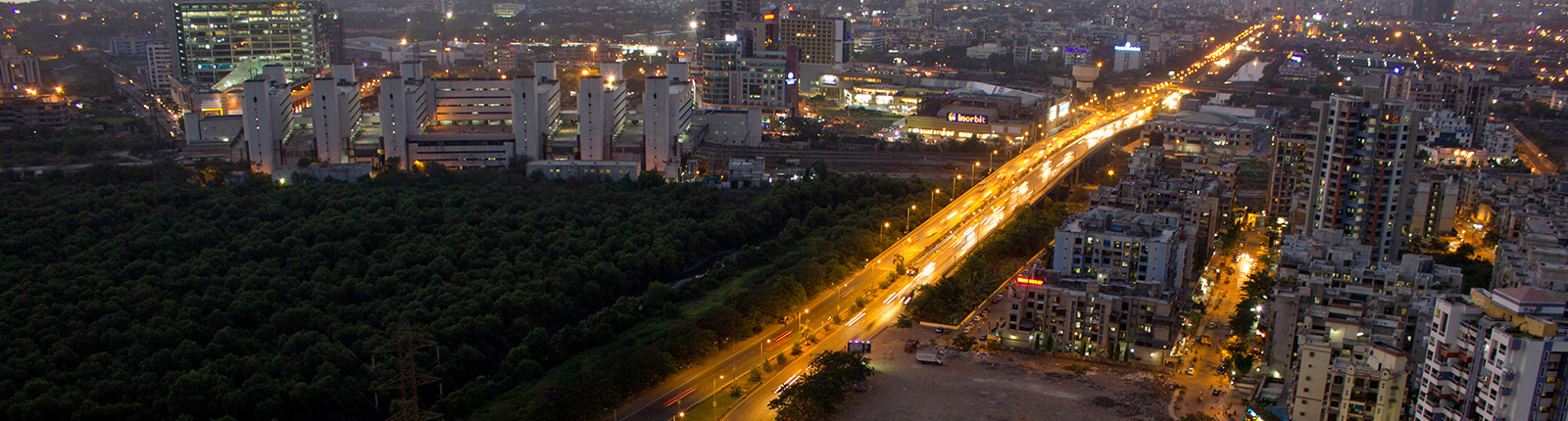


As we reflect on the future, it’s a timely reminder of the kind of cities we are building for future generations. The urban spaces we create today will shape the world that future generations inherit, and it is crucial that these spaces are inclusive of all their needs. The rapid growth of cities and urbanization pose significant challenges in various areas of urban development. Vulnerable groups, such as women, children and youth, persons with disabilities, the elderly, the urban poor, informal settlement dwellers, and migrants are disproportionately affected by these challenges.
Global dependence on fossil fuels in the transport sector has been a key driver of climate change and air pollution. In India, motorized transport accounts for a large share of the country’s total GHG emissions. Therefore, the swift replacement of internal combustion engines (ICE Vehicles) with Electric Vehicles (EVs) is imperative to decarbonize India’s transport sector.
Climate change impacts, such as increased rainfall intensity, sea-level rise, flooding, and heatwaves, pose significant challenges for urban systems worldwide. They adversely affect cities' basic services, infrastructure, housing, health, and economy.
The current scenario in India and Afghanistan shows us that most of the population still lives in rural areas, but the trends are changing rapidly as people migrate towards urban and peri-urban areas. According to the United Nations Department of Economic and Social Affairs (UNDESA), 55% of the world's population is residing in urban areas currently, with the proportion predicted to grow to 68% by 2050 (UNDESA, 2018).
An exponential increase in the population over the past decade has led to the emergence of rapid urbanization as a key global trend of prominence and concern. It is expected that more than 40% of the Indian population will be dwelling in urban cities by 2030, and the total urban population of India is anticipated to hit the three quarters of a billion mark by 2050.
There is a need for identifying aspects of enhancing liveability that can be mainstreamed at the Urban Local Bodies (ULBs) level, which can further transform the floating concept of 'liveability' into a tangible reality.
India’s sustainability transition is unfolding at an unprecedented scale and speed. Rapid urbanization, climate variability, increasing water stress, and rising energy demand are placing complex pressures on urban systems—particularly water supply, wastewater management, and climate resilience infrastructure. Addressing these challenges requires not only strong policy frameworks and public investment but also the deployment of proven, scalable, and context-appropriate technological solutions.
The Energy and Resources Institute (TERI), in partnership with Artha Global, convened a National Workshop on Clean Air Zones (CAZ) to share technical insights, implementation experiences, and financing pathways for improving urban air quality through corridor-focused interventions. The workshop presented ongoing CAZ pilot work in Vijayawada and Visakhapatnam and discussed how such approaches can support cleaner and more livable urban streets.
The World Urban Forum (WUF) is a premier global conference convened by the United Nations Human Settlements Programme (UN-Habitat) to exchange ideas and experiences on sustainable urbanization. The twelfth session of WUF is being held this year in Cairo, Egypt from November 04 – 08, 2024.
AI’s success will not be measured in keynote addresses or global rankings, but in whether flood forecasts arrive earlier, heat action plans target the right neighbourhoods, infrastructure avoids maladaptation, and governance becomes anticipatory rather than reactive writes Ms Anushree Harde, Associate Fellow & Shri Prakash, Distinguished Fellow, Transport and Urban Governance Division, The Energy and Resources Institute (TERI).
The whitepaper, titled Institutionalising Freight Emissions Accounting in India: Pathways for Clean Freight Programs and Policy Integration, calls for a nationally harmonised freight emissions accounting framework aligned with ISO 14083.
Smart Freight Centre (SFC) India, in collaboration with The Energy and Resources Institute (TERI) and IIM-Bangalore, released a Whitepaper titled, Institutionalizing Freight Emissions Accounting in India: Pathways for Clean Freight Programs and Policy Integration at the high-level convening, “Road to Zero Emissions: Measuring and Reporting Freight Emissions”, held in New Delhi.
Still, to reach high levels of electrification, India needs to overcome hurdles according to Mr Sharif Qamar, Associate Director, Transport & Urban Governance Division, The Energy and Resources Institute (TERI).
With climate risks rising, new Belém Adaptation Indicators aim to guide funding and action, as India looks to align its national adaptation plans with local realities and climate resilience goals Mr Shri Prakash, Distinguished Fellow & Ms Sonal Singh, Research Associate, Transport & Urban Governance Division, TERI.
As countries struggle to meet NDC commitments amid rising global temperatures, the transport sector is key writes, Mr Sharif Qamar, Fellow & Associate Director, Transport and Urban Governance Division, TERI.
With growing urbanisation, sustainable development will continue to increasingly depend on the successful management of urban growth and natural resources. This discussion paper suggests recommendations to incorporate and adapt sustainable solutions in cities in India.
Building urban resilience is imperative for safeguarding urban investments and paving the way for a forward-looking, risk-aware, inclusive and integrated approach to sustainable urban development in India.
Managing the energy footprint of cities is one of the most challenging goals, and with the evolution and transformation of existing cities into smart cities, smart energy management (SEM) becomes an integral component of this urban transformation.
More than 40% of India's population is expected to reside in its urban centres by 2050 (UNDESA, 2014). While these rapidly expanding urban centres in India are seen as the engines of economic growth, they also face tremendous pressures on their civic infrastructure systems and issues of environmental degradation, air pollution, and increasing frequency of climate-induced events and disasters. It is, thus, now critical to relook at the ways in which we manage these challenges for enhancing the liveability of cities.
This policy brief is based on the learning that emerged from The Energy and Resources Institute's (TERI) two-year long program on 'State-level policy engagement for mainstreaming urban climate resilience' in Goa and Uttarakhand, with support from the Rockefeller Foundation under its Asian Cities Climate Change Resilient Network (ACCCRN) initiative. ACCCRN—a 9-year initiative (2008–16)—has been instrumental in bringing forth the urban climate change resilience agenda to cities in Asia.
Urban India has grown at an unprecedented rate in the last two decades. The level of urbanisation increased from 25 per cent in 1991 to 31 per cent in 2011 with a total urban population of 377 million in 2011. A conservative estimate of India's population growth shows that it is expected to reach about 1.5 billion by 2031, of which the urban population is estimated to be about 600 million, i.e., about 40 per cent1.