Headquarters
The Energy and Resources Institute (TERI)
Darbari Seth Block, Core 6C,
India Habitat Centre, Lodhi Road,
New Delhi - 110 003, India
India is experiencing rapid economic growth and is among the fastest growing economies globally. Over the past two decades, the country has witnessed substantial expansion driven by accelerated urbanisation. According to the United Nations, more than 50% of India’s population is expected to be reside in cities and towns by 2050, reflecting the pace of urban transition. Projections further indicate that urban areas could account for up to 75% of Gross Domestic Product (GDP) by 2050.
This rapid urban sprawl has significant environmental implications, with Indian cities increasingly contributing to climate change through rising greenhouse gas (GHG) emissions. Accelerated urbanisation is driving a substantial share of the country’s fastest-growing emissions, placing cities at the centre of this transition and positioning them to contribute nearly 60% of India’s total GHG emissions to the coming decades.
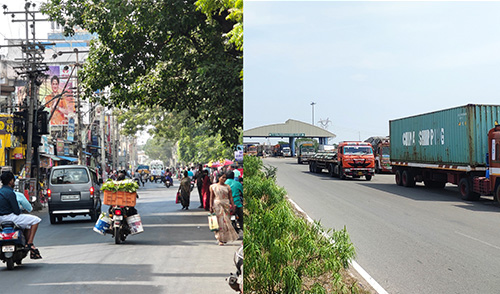
Tamil Nadu, a coastal state in southern India, exhibits one of the highest levels of urbanisation in the country, with about 50% of its population residing in urban areas. The state has experienced rapid industrialisation and growth in transport and mobility systems, particularly in Tier II cities such as Thoothukudi, which function as critical industrial and logistics hubs.
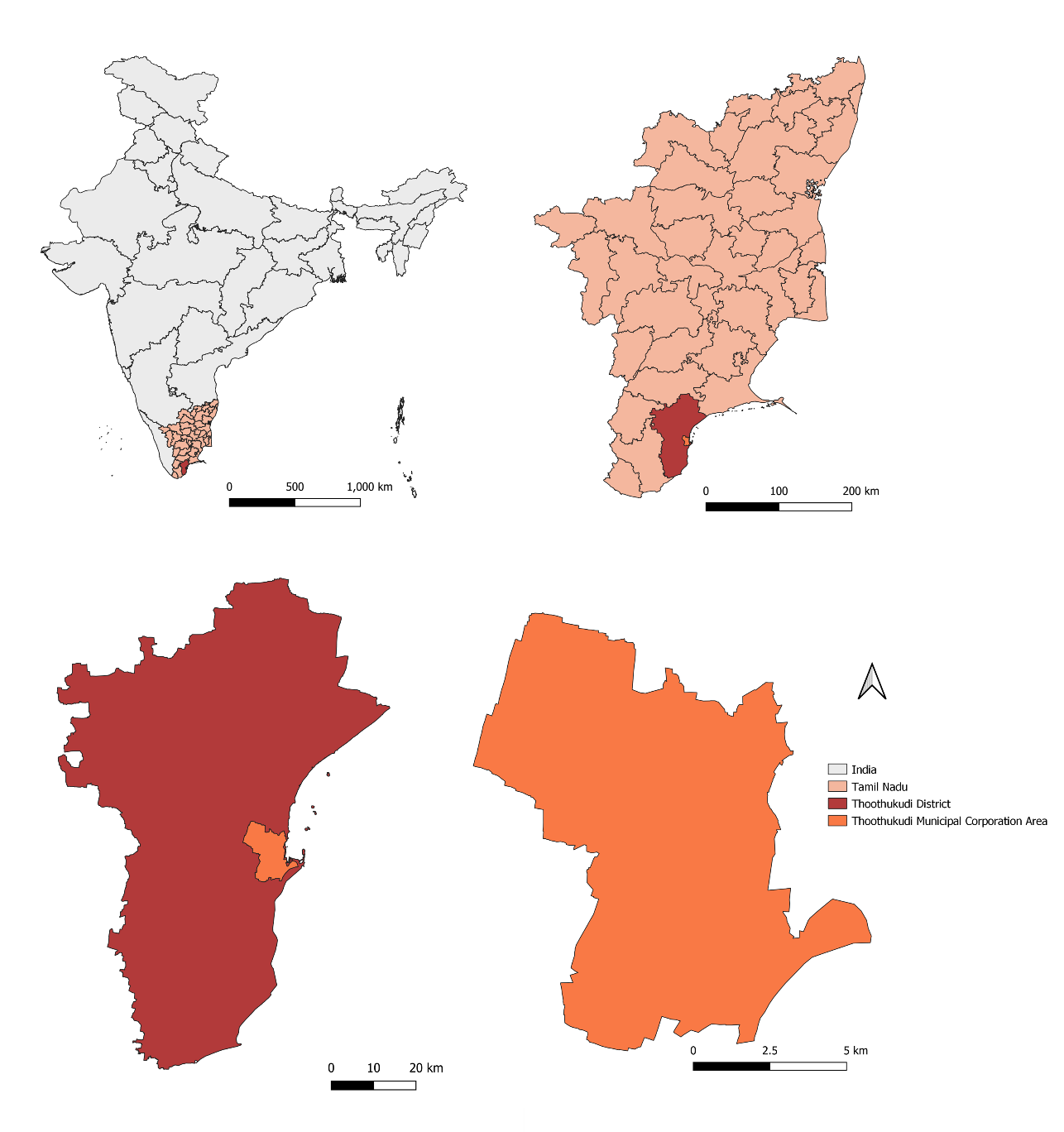
Thoothukudi (Tuticorin) is a major industrial and maritime centre, historically known as the “Pearl City” due to its association with the pearl fishing industry. Situated along the Gulf of Mannar, the city lies approximately 125 km north of Cape Comorin (Kanyakumari) and 590 km south of Chennai.
As a Tier II city, Thoothukudi hosts critical infrastructure including the major port of V.O. Chidambaranar (VOC) Port, thermal power plants, salt manufacturing facilities, and a vibrant fisheries sector. With ongoing urban expansion and substantial infrastructure development still underway, Thoothukudi presents a timely opportunity to integrate climate-responsive and sustainable urban mobility planning into its future growth trajectory.
| Thoothukudi (Tuticorin) | Major industrial and maritime centre |
| Population (Thoothukudi City Municipal Corporation) | 4,90,362 |
| Area (square km) | 90.66 |
| Corporation Road* | 429 km (98% fixed pavement) |
| Vehicle Registrations in the city | 19,563 in 2025 |
| Public Transport Fleet Size | 41 TNSTC buses and 58 private operated buses |
| Shared Mobility | 21 shared autos run on a 5.1 km loop between Bala Vinayagar Koil and Threspuram |
Source: TNSTC: Tamil Nadu State Transport Corporation; Vahan Data, 2025:, Census 2011, MAWS Policy Note FY 2024-2025;
* Thoothukudi Municipal Corporation
PACT-Digi-PULSE (Partnering for Advancing Carbon Neutral Transitions using Digital Twin-based Planning for Urban Living and Sustainable Environment) is a UK PACT (Partnering for Accelerated Climate Transitions) funded initiative aimed at strengthening Thoothukudi’s urban mobility planning through climate integrated, data driven approaches.
The project is led by Indian Institute of Technology Madras (IIT Madras), in partnership with The Energy and Resources Institute (TERI), the Institute for Transportation and Development Policy (ITDP), and UK-based Centre of Excellence for Low Carbon and Fuel Cell Technologies (Cenex).
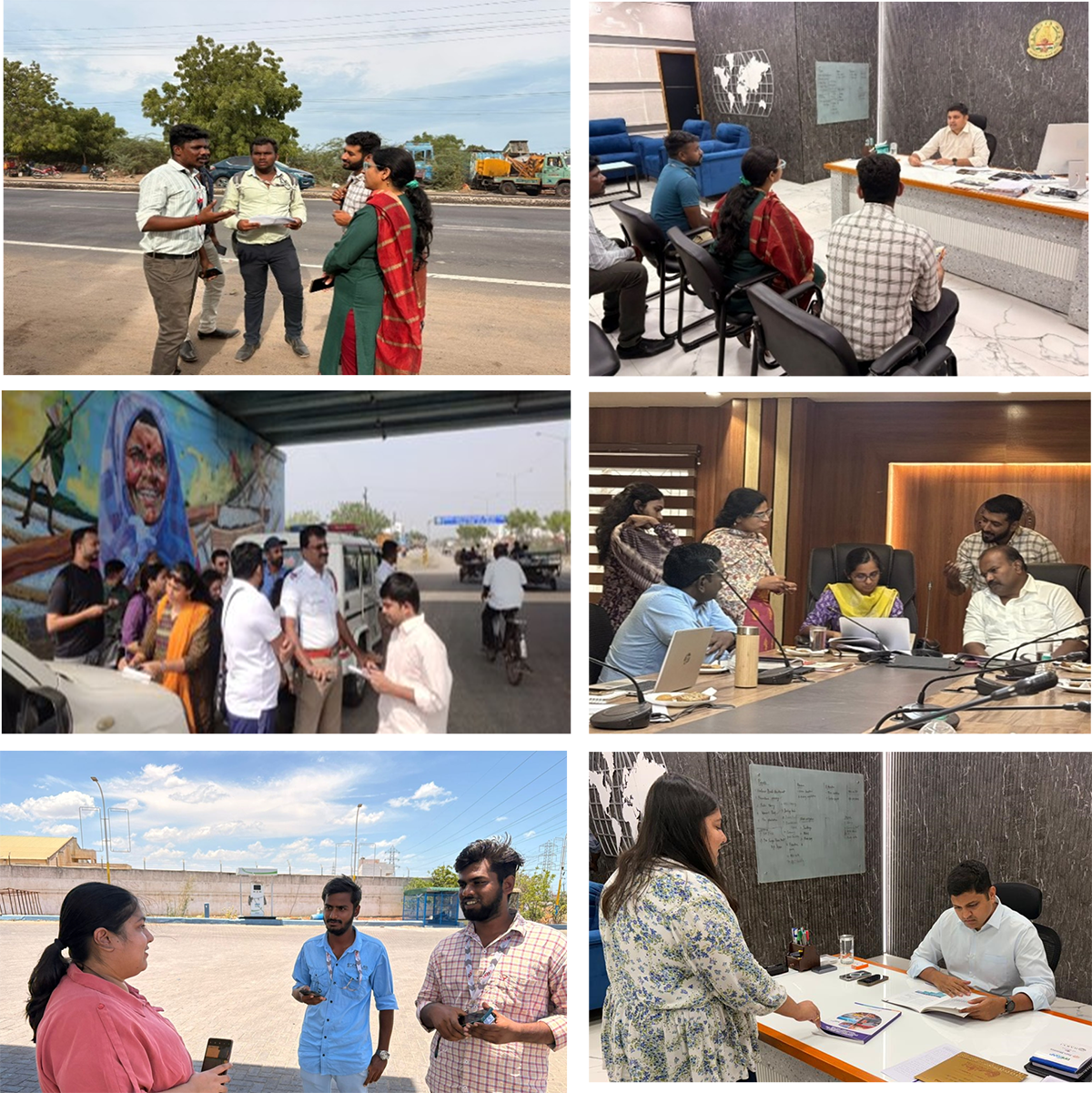
As a part of study, TERI is leading the development of an evidence-based, climate integrated urban mobility framework. This includes a detailed assessment of existing policies and systems, stakeholder consultations, and primary surveys to understand commuter behaviour, accessibility challenges, and mobility gaps. A baseline road transport GHG emissions inventory for passenger and freight movement is also being developed by TERI, along with Cenex, using a bottom-up modelling approach to support prioritise key mitigation interventions.
In parallel, the project is engaging with stakeholders across government, financial institutions, industry, and civil society to better understand the climate finance ecosystem in Thoothukudi as well as at the state level. This process is helping map institutional roles, coordination mechanisms, and existing financial flows, while identifying key gaps and opportunities for climate-aligned investments. The insights will feed into developing a more coherent approach to integrating climate considerations into urban planning and municipal finance and strengthening the city’s capacity to access and utilise climate finance effectively.
Project: Partnering for Advancing Carbon-Neutral Transitions using Digital Twin Based Planning for Urban Living and Sustainable Environment for the city of Thoothukudi (PACT-Digi-PULSE).
Funding Agency: UK PACT (Partnering for Accelerated Climate Transitions)
Delivery Partner (DP): UK PACT Team at ARUP
Implementing Partners (IP): IIT-M (Lead), ITDP India, Cenex, TERI