Headquarters
The Energy and Resources Institute (TERI)
Darbari Seth Block, Core 6C,
India Habitat Centre, Lodhi Road,
New Delhi - 110 003, India
India achieved near-universal household electrification under the SAUBHAGYA scheme by 2019. However, remote regions such as the northeast, tribal forest areas, and desert communities still face unreliable, low-quality power due to weak infrastructure and challenging geography. Frequent power disruptions affect essential household services, including lighting, cooling, and communication. They also hinder energy-dependent livelihoods, limiting productivity, income generation, and rural development.
TERI’s flagship initiative, Lighting a Billion Lives (LaBL), launched in 2008, was globally recognized for its innovative clean energy solutions and sustainable business models. Building on this legacy, TERI has launched LaBL 2.0: Leveraging a Billion Livelihoods, which focuses on lighting and energy access. LaBL 2.0 advances clean energy solutions for rural and traditional livelihoods, promoting energy transition, climate resilience, and socio-economic inclusion.
The late Mrs Jai Jamshed Dordi was a noted philanthropist whose vision and generosity strongly supported sustainable development initiatives. Through her will in 2013, she expressed a deep commitment to contributing to TERI’s flagship initiative aimed at promoting clean energy access and improving rural livelihoods.
The remote dhanis of Sam Block in Jaisalmer district, Rajasthan, face fragile energy access due to dispersed settlements, low population density, and the absence of grid connectivity. At the same time, the region receives high solar irradiance, making it highly suitable for decentralized solar energy solutions. To address the same challenges in these isolated Dhani households (a group of households varies from 3-30 in the cutoff region, the Thar desert of Rajasthan.
The TERI team disseminated Solar Home Systems under LaBL 2.O, with the aim to improve household lighting and cooling, support rural livelihoods such as embroidery, tailoring, wool collection, and pickle making, etc. The intervention also targeted climate resilience, enhanced productivity and livestock-based livelihoods, and improved the quality of life and income opportunities for vulnerable desert communities.
Solar Home Systems (SHS) significantly improved the quality of life by providing reliable lighting, mobile charging, and fan facilities, making homes safer, more comfortable, and livelier. Access to clean energy also supports household-based livelihoods, thereby enhancing income opportunities. SHS reduces dependence on traditional fuels, lowering energy costs and environmental pollution. In remote desert regions, it strengthens climate resilience and promotes inclusive rural development. The intervention directly contributes to United Nations Sustainable Development Goal 7 (Affordable and Clean Energy) while also supporting livelihoods, gender inclusion, and sustainable communities.
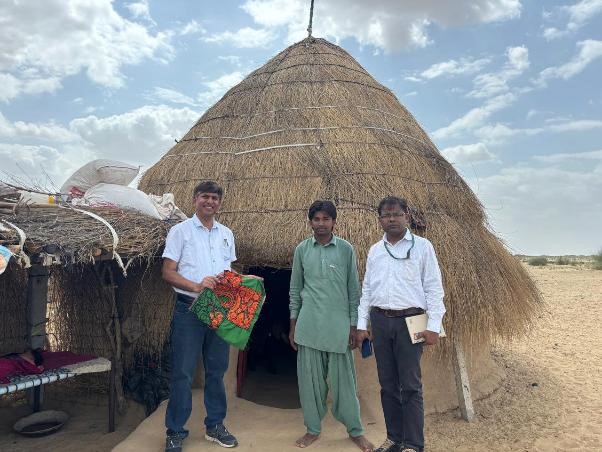
Baseline of Sadhik ki Dhani, Sam, Rajasthan
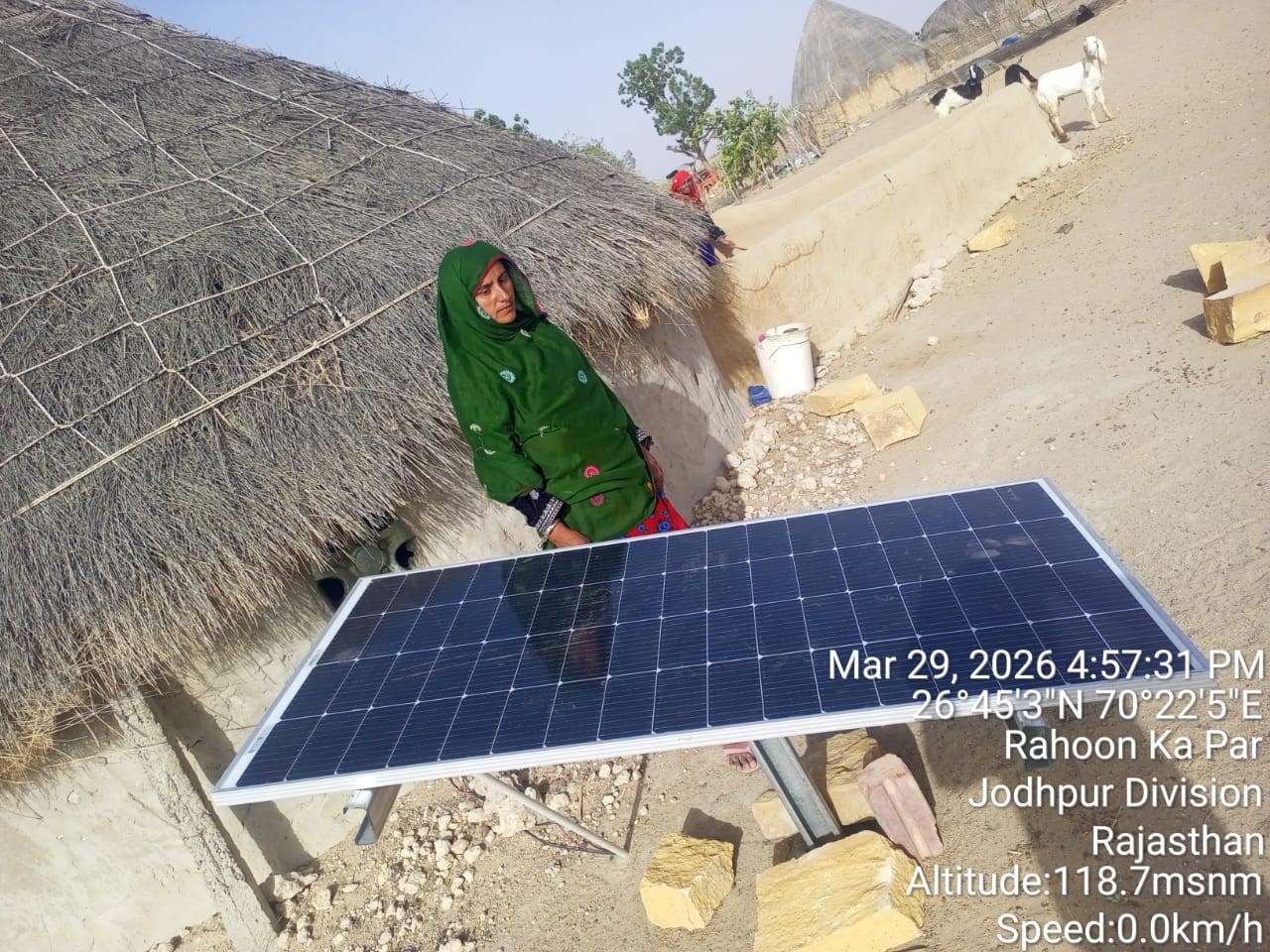
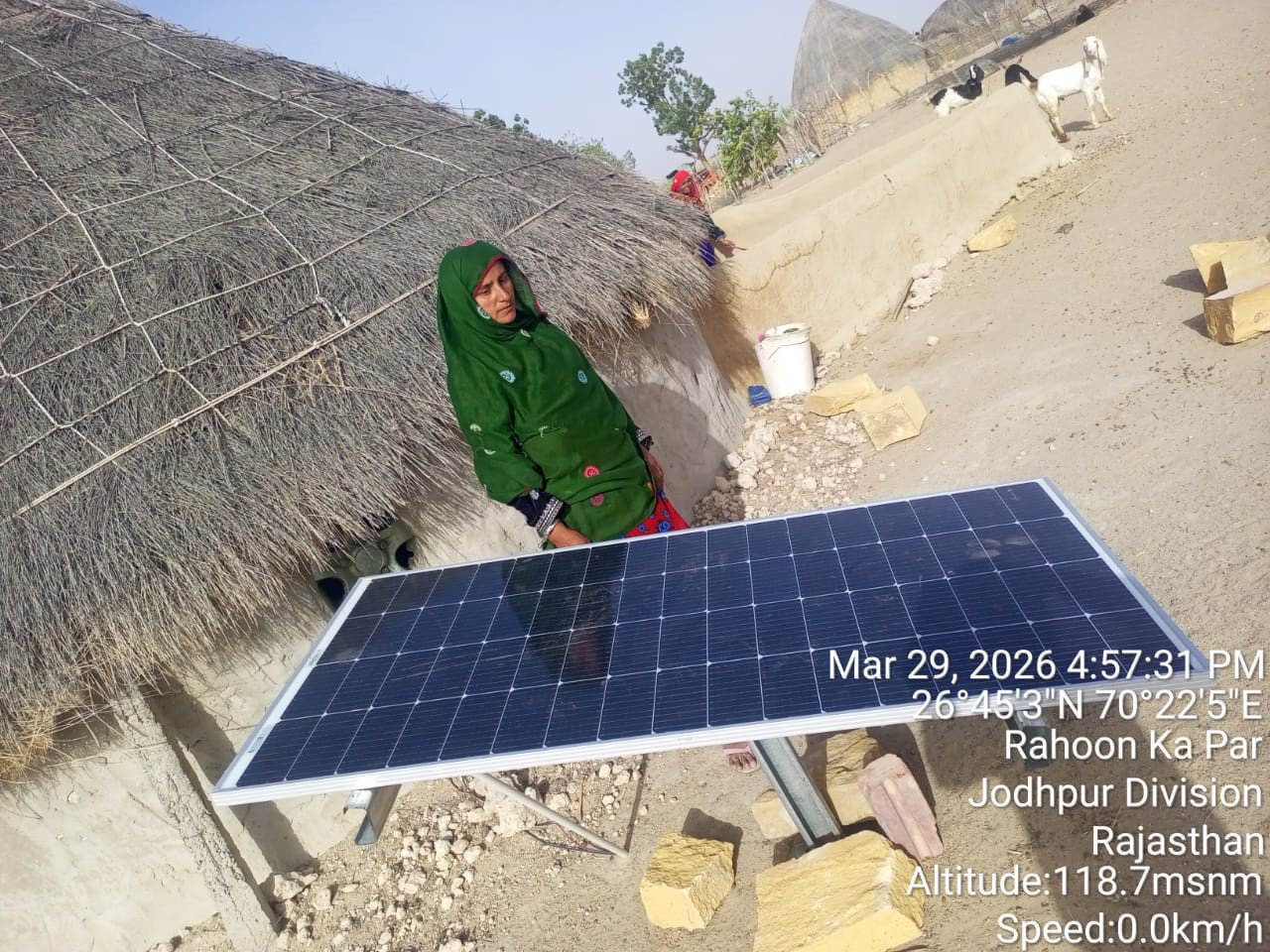
Solarization of Dhani household 1
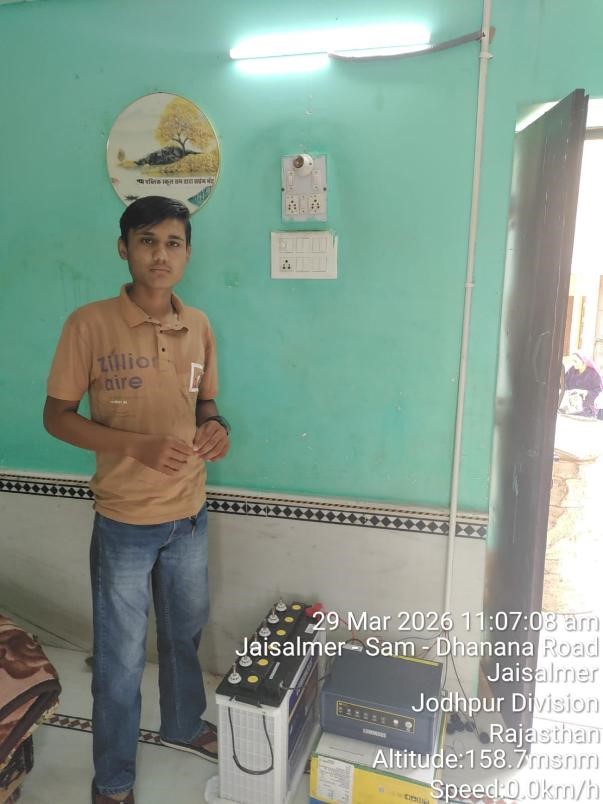
Solarization of Dhani household 2