Headquarters
The Energy and Resources Institute (TERI)
Darbari Seth Block, Core 6C,
India Habitat Centre, Lodhi Road,
New Delhi - 110 003, India
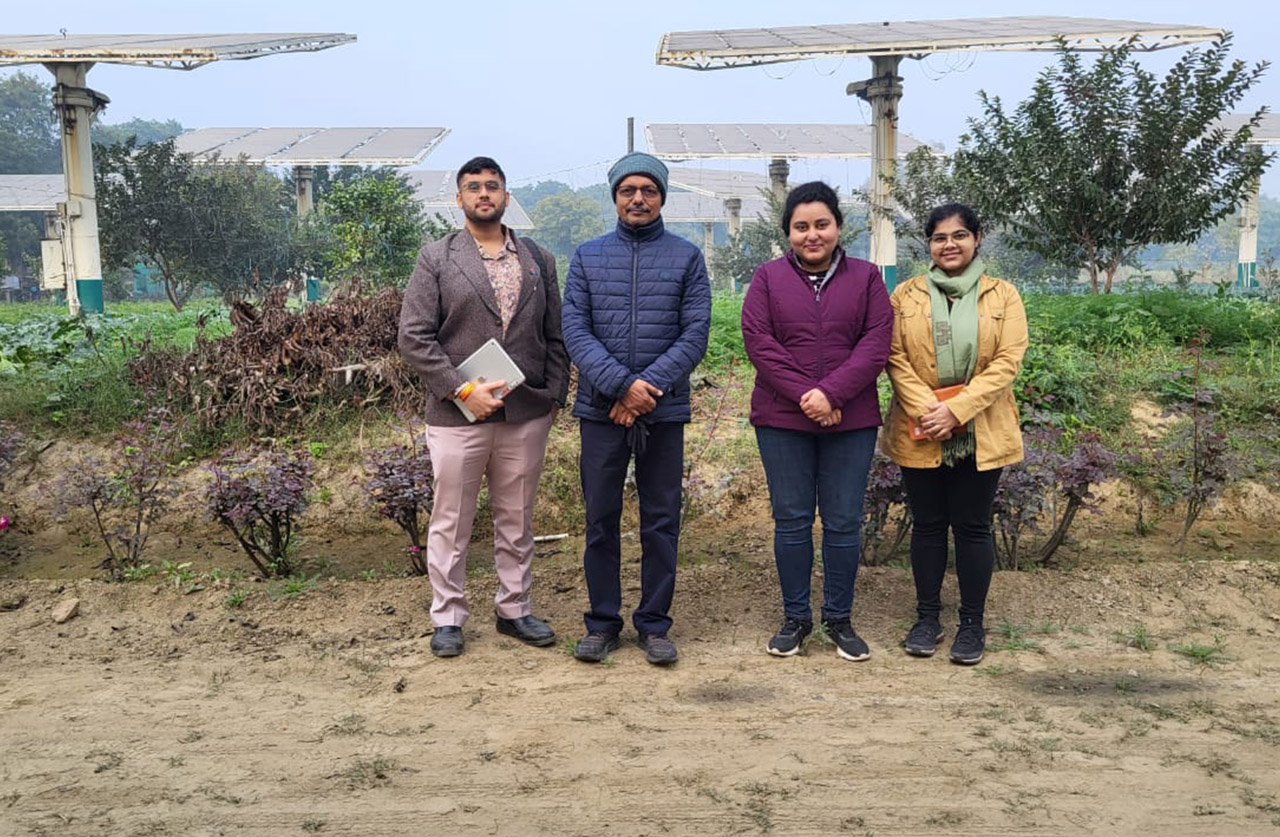
Agri-Photovoltaics (AgriPV) offers a land-efficient pathway for sustainable development by enabling the co-location of solar power generation and crop cultivation. This dual-use approach facilitates renewable energy expansion without displacing vital farmland or compromising national food security. Such an intervention is particularly critical for India, where agriculture supports 46 per cent of the workforce and occupies nearly 59 per cent of the total land area, amid intensifying competition for natural resources.
While promising, AgriPV deployment in India is currently in its nascent stages. As of August 2025, there are 36 operational projects with a cumulative capacity of approximately 37.54 MW, complemented by several additional pilots under development. These early-stage initiatives have successfully demonstrated technical feasibility and strong interest from the farming community.
To transition from pilot projects to large-scale adoption, the sector must address several key prerequisites:
By integrating these elements, AgriPV can serve as a cornerstone of India’s transition toward a resilient, low-carbon agrarian economy.
List of reports
TERI’s work on Agri-Photovoltaics has resulted in a set of action-oriented knowledge outcomes aimed at informing policy, strengthening project development, and enabling evidence-based scaling of AgriPV in India.
This report presents a national-level assessment of AgriPV potential, highlighting how dual-use land systems can enable renewable energyexpansion while sustaining agricultural productivity. It identifies priority regions, suitable cropping systems, and deployment pathways to support long-term planning and policy development. (Read more: https://www.teriin.org/policy-brief/agri-photovoltaics-potential-india-pathways-sustainable-energy-food-solutions)
This report examines land-related challenges associated with India’s clean energy transition and explores AgriPV as a strategic solution to address competing land-use demands. It provides analytical insights to strengthen alignment between energy planning and agricultural land management. (Read more: https://teriin.org/sites/default/files/files/ETC_AgriPV-Standalone.pdf)
Based on detailed field studies, this report documents baseline environmental, agricultural, energy, and socio-economic conditions at the project site. It evaluates on-ground implementation practices and identifies lessons for responsible and farmer-centric AgriPV deployment. (Read more: https://www.teriin.org/policy-brief/responsible-agri-pv-baseline-assessment-report-khare-energy-plant-madhya-pradesh)
This report provides a comprehensive baseline assessment of an operational AgriPV project in Telangana, focusing on crop compatibility, system configuration, and stakeholder engagement. It offers practical insights into operational models for integrating solar infrastructure with active agricultural systems. ( Read more: https://www.teriin.org/policy-brief/responsible-agri-pv-baseline-assessment-report-renkube-plant-telangana)
The DPR Framework provides structured guidance on technical design, financial viability, environmental considerations, and multiple Agri PVbusiness models. It is intended to support developers, utilities, and policymakers in planning, evaluating, and scaling bankable and replicable AgriPV projects. (Read more: https://www.teriin.org/policy-brief/framework-agripv-dpr-development).