Headquarters
The Energy and Resources Institute (TERI)
Darbari Seth Block, Core 6C,
India Habitat Centre, Lodhi Road,
New Delhi - 110 003, India

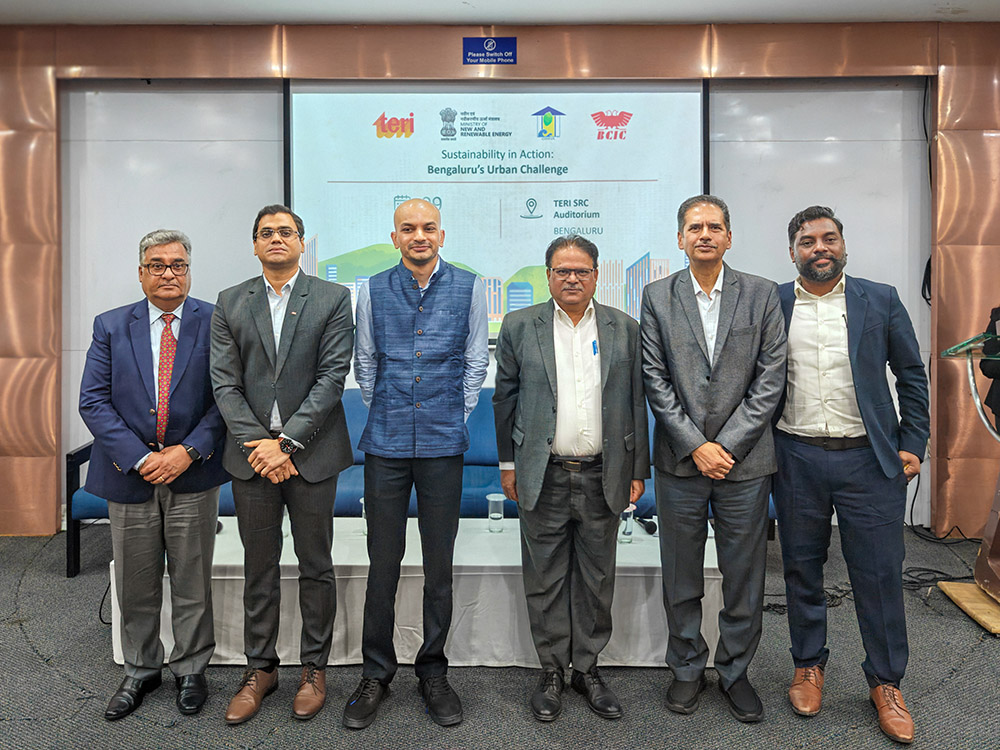
Bengaluru — 9 January 2026: The GRIHA Council, in collaboration with The Energy and Resources Institute (TERI) and the Ministry of New and Renewable Energy (MNRE), hosted a high-level event today titled "Sustainability in Action: Bengaluru’s Urban Challenge". Held at the TERI Southern Regional Centre (SRC) Auditorium, the event brought together urban planners, policy experts, and industry leaders to tackle the pressing environmental challenges facing India’s rapidly growing tech hub.
The day opened with a welcome address by Ms Shabnam Bassi, Deputy CEO & Secretary of the GRIHA Council, followed by opening remarks from Mr Sanjay Seth, Vice President & CEO of the GRIHA Council and Senior Director, Sustainable Infrastructure Programme, TERI.
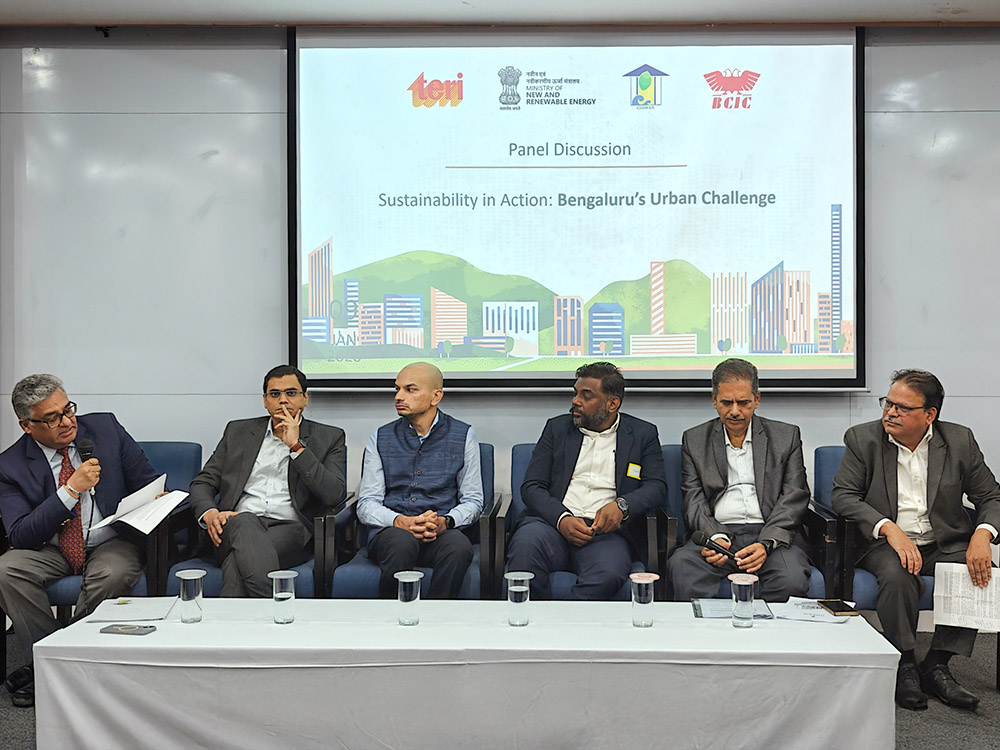
A key highlight of the event was the panel discussion moderated by Mr Sanjay Seth, who emphasized “while sustainability frameworks are largely in place, implementation remains the biggest challenge, particularly in fast-tracked construction projects where sustainability often takes a back seat. Data scarcity, fragmentation, and siloed departmental functioning were identified as key barriers to effective data collection and integration.” He also highlighted that “GRIHA Council’s collaborative and capacity-building initiatives were cited as effective platforms for translating sustainability intent into tangible on-ground outcomes, including improved operational efficiency, enhanced water and energy performance, and material optimisation.”
The panel brought together distinguished experts, including Mr Ajeet Kumar, Chief Engineer, CPWD; Mr Abhai Kumar Rai, Advisor (Civil), Bengaluru Metro Rail Corporation Limited (BMRCL); Mr Aloke Mukherjee, Manager – Cities and Transport, World Resources Institute (WRI) India; Mr Ranjit Kumar, IVLP Fellow –USA, and CSIS Fellow, USA; and Mr Rajesh Kumar Jha, Chairman, Sustainability (Energy, Environment & Water) Expert Committee, Bangalore Chamber of Industry and Commerce (BCIC) and Country Environment & Sustainability Manager, ABB India Limited.
Speakers underscored that Bengaluru’s transition to a future-ready city demands an integrated approach that brings together strong partnerships, demand-driven data collection, and inclusive capacity-building initiatives, supported by enhanced user awareness and aligned policy thinking to deliver measurable improvements in operational efficiency, water and energy performance, and material optimisation.
Additionally, the programme included the formal signing of a Memorandum of Understanding (MoU), between the Bangalore Chamber of Industry and Commerce (BCIC), and GRIHA Council to further strengthen the commitment to collaborative frameworks for sustainable urban development.
Bangalore Chamber of Industry and Commerce (BCIC), was represented by Mr K Ravi, Senior Vice President, Bangalore Chamber of Industry and Commerce (BCIC), and Director, VR e-Biz Solutions Pvt Ltd., speaking on the occasion he stated that “GRIHA brings strong national leadership, deep technical expertise, and credibility as India’s own green building rating system.” He also mentioned that, as BCIC marks 50 years of contribution to India’s industrial growth, the Council remains firmly committed to fostering inclusive, responsible, and sustainable development, having evolved into a key leadership platform bridging industry, policymakers, and society, and emphasised that sustainability today is no longer an aspiration but a strategic imperative for industries, cities, and communities alike.
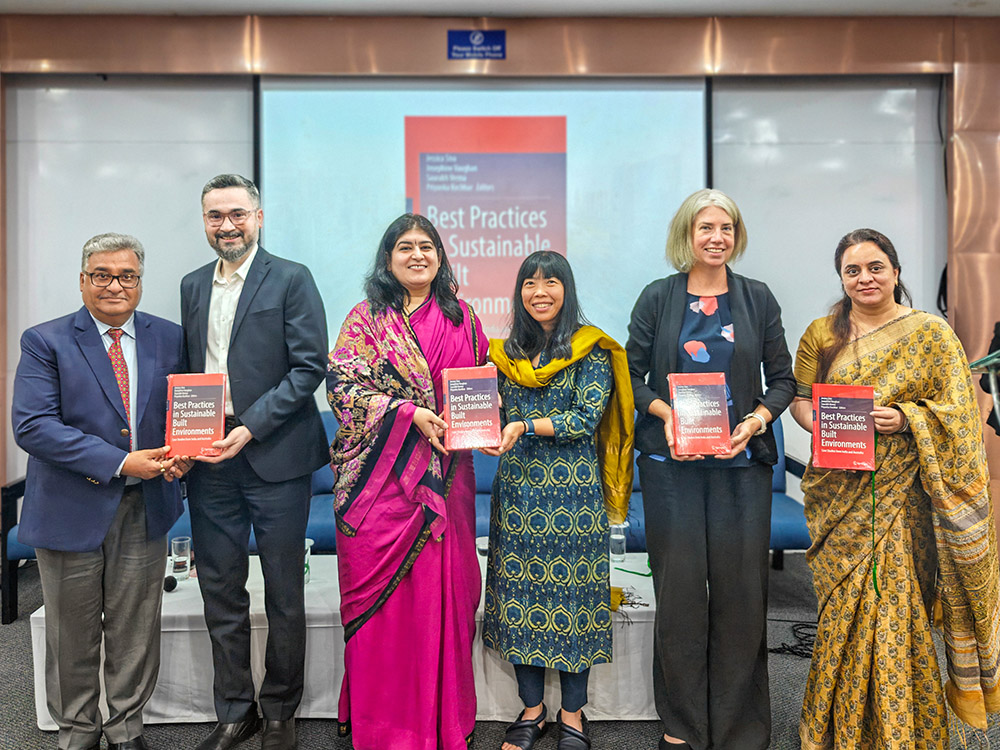
The event also marked a significant milestone in international academic and professional collaboration with the official launch of the book: 'Best Practices in Sustainable Built Environments' (Case Studies from India and Australia). The publication was introduced by Lead Editor Dr Jessica Siva, University of Newcastle, Australia, followed by reflections from co-editors, Dr Josephine Vaughan, University of Newcastle, Australia, Dr Saurabh Verma, RICS School of Built Environment, Amity University, India and Dr Priyanka Kochhar, The Habitat Emprise, New Delhi. The book also features a dedicated chapter contributed by the GRIHA Council, highlighting its perspectives and work in the domain of sustainable built environments.
As India’s national rating system for green buildings, GRIHA continues to be a key instrument supporting the Government of India’s efforts to reduce greenhouse gas (GHG) emissions. The discussions at the forum reflected a strong alignment with India’s Nationally Determined Contributions (NDCs under the UNFCCC), reinforcing the role of sustainable built‑environment practices in achieving national climate goals. Such regional forums play a crucial role in translating sustainability principles into local action, and the GRIHA Council has been consistently organizing similar engagements across the country to ensure wider regional outreach and mainstream sustainability at the grassroots level.
About GRIHA Council: The Green Rating for Integrated Habitat Assessment (GRIHA) Council is an initiative of TERI and the Ministry of New and Renewable Energy (MNRE). It oversees the certification of new and retrofitted building projects to ensure they meet rigorous national green building standards.