








Headquarters
The Energy and Resources Institute (TERI)
Darbari Seth Block, Core 6C,
India Habitat Centre, Lodhi Road,
New Delhi - 110 003, India
While, globally, it is the loss of forests that is a major issue, in India it is forest degradation that remains the biggest challenge. Our work focuses on promoting sustainable forest management, providing practical solutions towards generating finance through carbon trading from forests, and supporting the livelihood of forest dependent communities. We also work towards engaging communities for biodiversity conservation and mitigation of human-wildlife conflict through policy and scientific measures.

India must stop treating mangrove restoration as a plantation exercise and begin financing it as climate-resilient coastal infrastructure.
As the world marks the International Day for Biological Diversity, it is worth asking a simple but uncomfortable question: can biodiversity conservation succeed on moral appeal alone?
India’s forests are entering a decade of compounded risk. Longer dry spells, erratic rainfall, severe fire seasons, invasive spread, fragmentation and rising biomass pressure are no longer episodic concerns; they are structural realities.
Observed each year on 1 March, World Seagrass Day was officially designated by the United Nations General Assembly in May 2022 to highlight the critical importance of seagrass ecosystems for marine biodiversity and climate stability.
Blue carbon refers to the organic carbon captured and stored by coastal ecosystems such as mangroves, tidal salt marshes, and seagrass meadows. These habitats sequester excess CO₂ in their biomass and soil for centuries, playing a vital role in mitigating climate change while supporting coastal resilience and biodiversity.
Natural resource conservation isn’t just an environmental concern; it’s a geopolitical one.
TERI, the Kisan Chamber of Commerce (KCC), and Value Network Advisory (VNV) formally signed a tripartite Memorandum of Understanding (MoU) at the Constitution Club of India, New Delhi, on July 9, to collaborate on the development and implementation of a carbon project in Haryana.
TERI, the Kisan Chamber of Commerce (KCC), and Value Network Advisory (VNV) formally signed a tripartite Memorandum of Understanding (MoU) at the Constitution Club of India, New Delhi, on July 9, to collaborate on the development and implementation of a carbon project in Haryana.
Gujarat needs a dedicated State Mangrove Policy to strengthen fragmented conservation efforts, ensure long-term restoration, and integrate scientific data with coastal development and climate resilience. write Dr Ronak Rohitkumar Gadhvi, Associate Fellow and Mr Kapil Kumar, Senior Associate Fellow, Land Resources Division, The Energy and Resources Institute (TERI).
Mr Aniruddh Soni, Fellow, Land Resources Division, The Energy and Resources Institute (TERI), explains how Community Conserved Areas (CCAs) help protect the region's biodiversity. Managed by local communities under customary law, CCAs include forests, wetlands, rivers, and other ecosystems.
In Haryana’s Panchkula Forest Division where over four lakhs of curry plants grow wild state policy officially treats them as economically worthless. This points to a glaring structural oversight, missing rural income opportunities, writes Dr Ronak Rohitkumar Gadhvi and Ms Neha Sharma, Associate Fellows, Land Resources Division, TERI.
Sessions on modern agricultural technologies added a future-oriented perspective to the programme. Mr Sayanta Ghosh, Associate Fellow, Land Resources Division, The Energy and Resources Institute (TERI), New Delhi, spoke on carbon revenue mechanisms and digital MRV pathways.
SC's Aravalli ruling offers a science-led path to balance mining, restoration and livelihoods, writes Dr Vibha Dhawan, Director General, TERI.
The Supreme Court's recent order offers a new framework for the Aravalli range. With guidelines now in place, the task ahead lies in transparent implementation, institutional coordination and sustained scientific oversight, writes Dr Vibha Dhawan, Director General, TERI.
This report presents an evaluation of the concept of Compensatory Afforestation and its implementation across various states in India, offering insights into the current status, achievements, and challenges associated with this crucial environmental initiative. The analysis begins with an exploration of the policy and legal frameworks that govern compensatory afforestation in India. Despite having comprehensive guidelines, significant gaps remain betweenpolicy directives and their actual implementation.
TERI, in partnership with Ernst & Young LLP, conducted a comprehensive study for the Bangladesh Forest Department as part of the Sustainable Forest and Livelihoods (SUFAL) Project. This study developed a robust framework for valuing ecosystem services and natural wealth accounting in three critical forest sites: Teknaf Wildlife Sanctuary, Modhupur National Park, and Ramgarh-Sitakunda Reserved Forests.
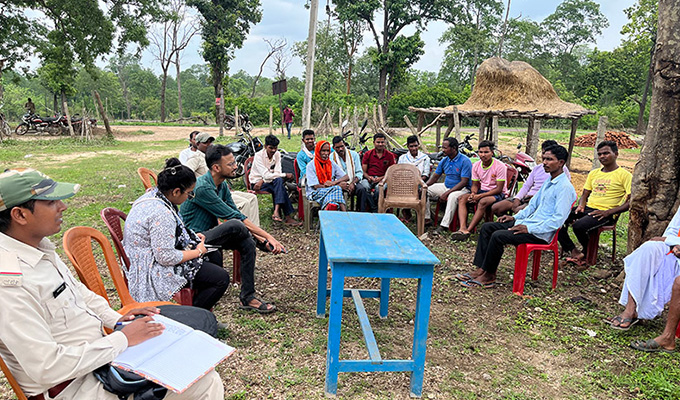
Human-wildlife conflict (HWC) leads to the bearing of direct as well as indirect economic costs of conflict by the communities. Such losses can seriously dent the incomes of concerned community members and result in increased antagonism towards conservation in general.
Our study in Dudhwa Tiger Reserve in Uttar Pradesh indicates to the fact that use of Climate, Community and Biodiversity Standards (CCBS) approach to generate carbon finance can yield 8 times more finance than just considering the aspect of carbon sequestration.
We undertake study for companies to estimate the carbon sink and other co-benefits including the biodiversity conservation from the plantation activities carried out in and around the companies premises.
We undertake work on various institutional issues relating to participatory forest management, and have major interests in the study of forest-based livelihoods and benefit-sharing at the community level.