Headquarters
The Energy and Resources Institute (TERI)
Darbari Seth Block, Core 6C,
India Habitat Centre, Lodhi Road,
New Delhi - 110 003, India
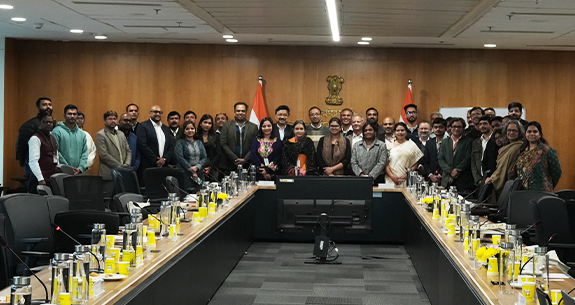
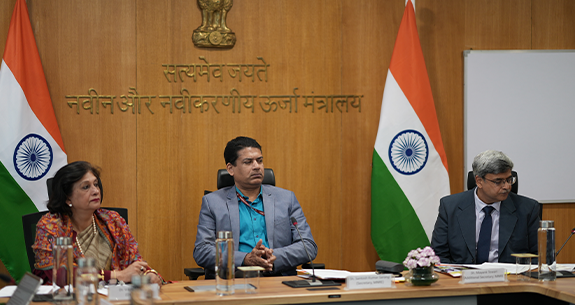
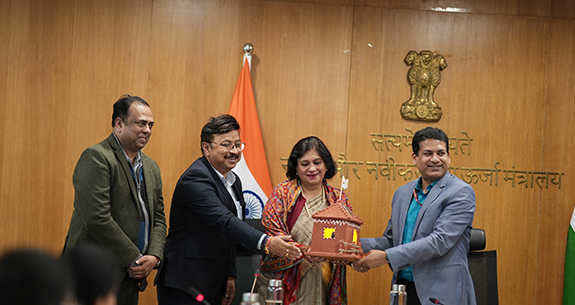
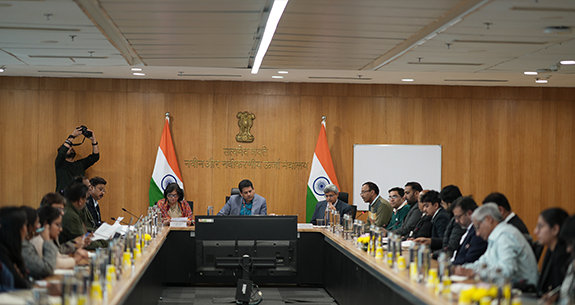
NEW DELHI, JAN 30 — In a move to redefine India’s energy landscape, TERI, in collaboration with the Ministry of New and Renewable Energy (MNRE), hosted a high-level, closed-door workshop at the Atal Akshaya Urja Bhawan. The strategic session focused on accelerating Decentralized Renewable Energy (DRE) as a primary engine for livelihood enhancement across rural India.
The workshop served as a critical alignment between national priorities—such as PM-KUSUM and the Model Solar Village Programme—and the next phase of TERI’s flagship energy initiative: Lighting a Billion Lives (LaBL) 2.0.
The proceedings opened with a context-setting address by Dr JK Jethani, Senior Director (MNRE), followed by a Special Address from Dr Vibha Dhawan, Director General of TERI. Dr Dhawan underscored the shift from mere electrification to economic empowerment. “This workshop reflects our shared commitment to advancing DRE solutions that deliver tangible impact,” she stated. “As a country, we have not only met our Glasgow commitments but are ahead of schedule. Now, we must move beyond basic access to ‘light a billion livelihoods.’”
Echoing this vision, Mr Santosh Kumar Sarangi, Secretary (MNRE), delivered the Keynote Address, highlighting the massive scale of India's current solarization efforts. He noted that through schemes like PM Surya Ghar and PM-KUSUM, India is adding immense capacity to the grid, positioning distributed RE as a prominent pillar of the national energy strategy.
A pivotal moment of the workshop was the presentation of LaBL 2.0 by Dr Amit Kumar Thakur, Associate Director at TERI. He detailed the strategic pillars and the vision of the initiative, which seeks to use clean energy specifically for income-generating activities. The session featured the screening of the LaBL 2.0 teaser, which received a warm reception and marked the official endorsement of the program by the MNRE.
To ensure these visions translate into ground reality, Mr Mayank Tewari, Additional Secretary (MNRE), emphasized the government’s focus on implementing strategic pilots to test scalability and relevance.
The event concluded with an expert-led technical panel, ‘Advancing Decentralized Clean Energy for Livelihoods,’ moderated by Dr Dipankar Saharia, Senior Director (TERI). Reflecting on the mission's evolution, Dr Saharia noted, “While our initial goal was reaching un-electrified villages, the challenge has now shifted to ensuring a regular, reliable supply of power to bridge development gaps.”
The discussion drew robust participation from a diverse group of policymakers, academics, PSUs, and philanthropic foundations. Dr Mini Govindan, Senior Fellow, TERI, provided a summary of the forthcoming Policy Paper, which is currently in development. This strategic document is set for a high-profile release by TERI at the Silver Jubilee edition of the World Sustainable Development Summit (WSDS) 2026 later this February.
The session concluded with closing remarks and a Vote of Thanks by Dr Jethani, signaling a unified front between the government and TERI in India's journey toward sustainable, energy-led rural development.