
Headquarters
The Energy and Resources Institute (TERI)
Darbari Seth Block, Core 6C,
India Habitat Centre, Lodhi Road,
New Delhi - 110 003, India
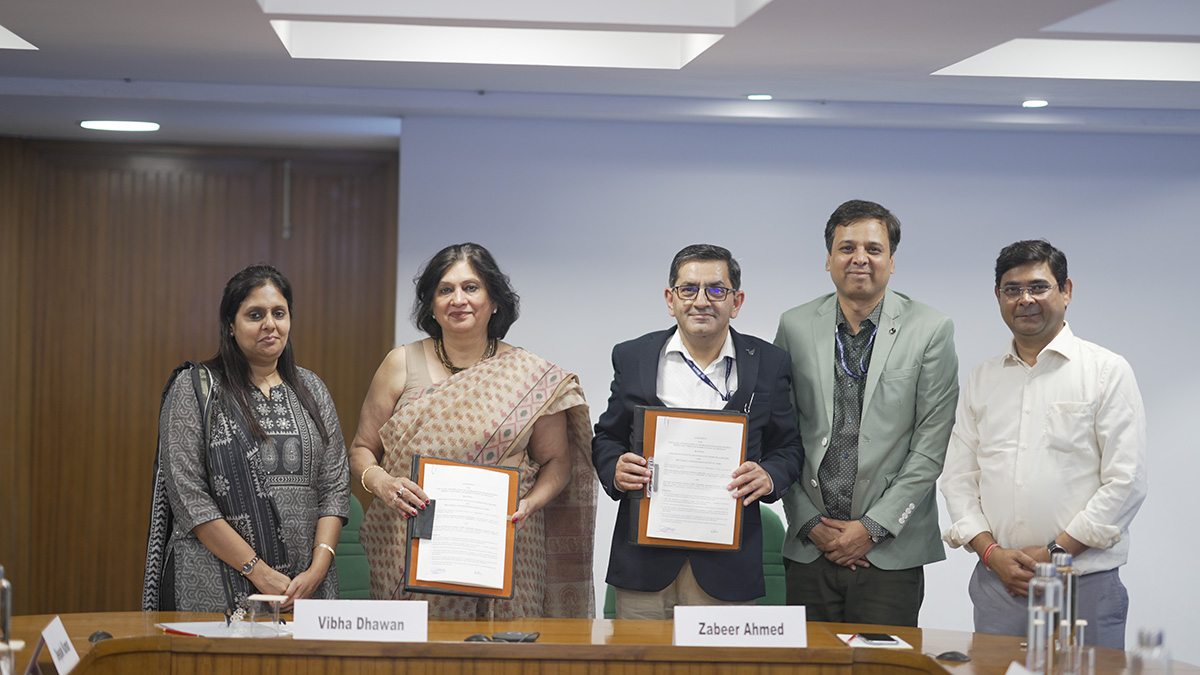
NEW DELHI: TERI and the CSIR-Indian Institute of Integrative Medicine (CSIR-IIIM), Jammu, signed a Memorandum of Understanding (MoU) for a collaborative research project on the “Upscaling Optimization of Anthraquinone-Based Pigment Production Through Fermentation Technology”. The MoU was signed at TERI's IHC Office, New Delhi on 11th June, 2026.
This partnership marks a significant step in developing India's scientific capabilities in natural product chemistry and sustainable bioprocessing. By combining CSIR-IIIM's expertise in fermentation and microbial biotechnology with TERI's strength in sustainable agriculture and agri-biotechnology, the two institutions aim to develop scalable, cost-effective, and environmentally sound methods for the production of high-value anthraquinone-based pigments from endophytic fungi. Anthraquinone-based pigments are biologically active compounds derived from fungal sources with significant potential in multiple sectors, including natural dyes, pharmaceutical intermediates, and crop protection.
Speaking on the occasion, Dr Vibha Dhawan, Director General, TERI, said that the biggest constraint in the world right now is the shortage of skilled human resources, and therefore, through these partnerships, essential knowledge and infrastructure are shared, leading to tangible impacts. CSIR-IIIM brings exceptional depth of expertise in natural product science, and we are confident that this collaboration will yield meaningful outcomes for science, industry, and the environment.
Dr Zabeer Ahmad, Director, CSIR-IIIM, added that the scientific world now has a responsibility to contribute to the world, and that these partnerships of mutual interest are crucial for giving back. CSIR-IIIM has long been at the forefront of research in natural products and fermentation science. Our collaboration with TERI opens promising new avenues for translating laboratory discoveries into scalable industrial processes.
Under this MoU, CSIR-IIIM's Fermentation and Microbial Biotechnology Division, will partner with TERI's Sustainable Agriculture Division. TERI has established a laboratory-scale process using a proprietary endophytic fungal strain with the ability to produce an anthraquinone-based pigment with potential biological applications. CSIR-IIIM will bring its capabilities in fermentation technology, process optimization, analytical testing, and scale-up studies to the partnership. Over the course of this two-year collaboration, a techno-economic feasibility assessment will also be conducted to gauge the commercial viability of the technology. The teams from both institutions will focus on scaling up the anthraquinone-based pigments up to 500 litres and developing standardized processes that can support future industrial-scale production.