
Achieving India's land restoration commitments will depend on mobilising public and private finance in ways that strengthen rural livelihoods while rebuilding ecological resilience.
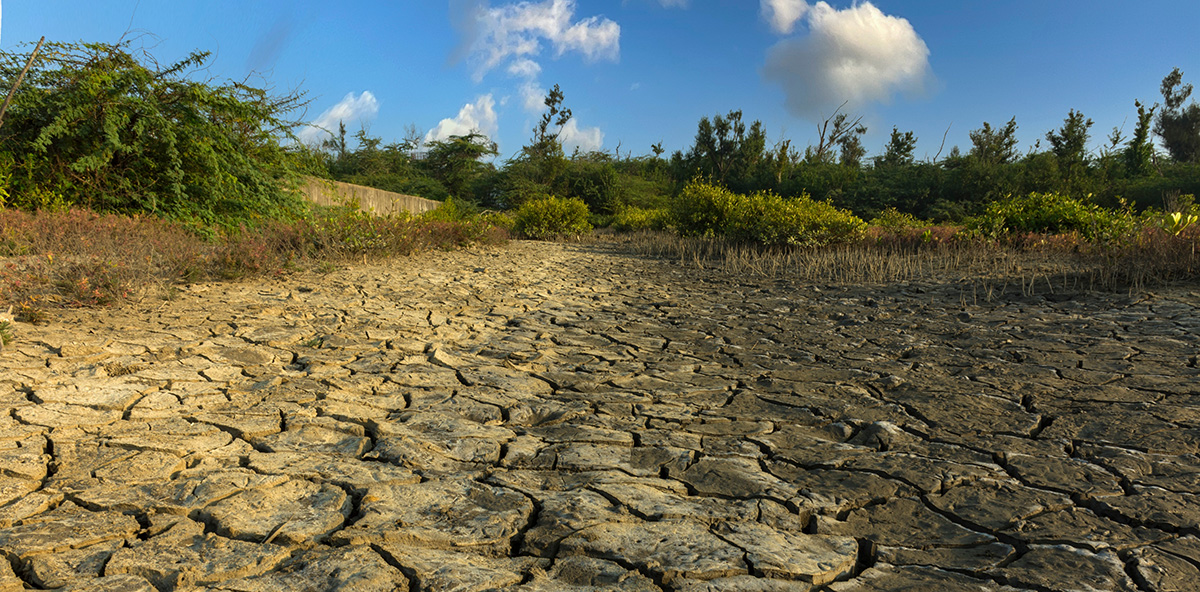
The 17th session of the United Nations Convention to Combat Desertification (UNCCD) Conference of the Parties, to be held in Ulaanbaatar, Mongolia, from August 17 to 28, 2026, carries a theme that is both simple and urgent: “Restoring Land, Restoring Hope.” It comes at a time when land degradation, drought and declining soil productivity are no longer slow-moving environmental concerns. They are questions of food security, water stress, rural income and social stability.
For India, this agenda is not distant diplomacy. It is a domestic development challenge. As per the Desertification and Land Degradation Atlas of India, about 97.85 million hectares, or nearly 29.77% of the country’s geographical area, is under degradation. This is not merely an ecological statistic. It reflects declining farm productivity, shrinking commons, groundwater stress, fodder scarcity and growing vulnerability in dryland and rainfed regions.
India has already made an important global commitment. It has pledged to restore 26 million hectares of degraded land by 2030. It has also committed to creating an additional carbon sink of 2.5 to 3 billion tonnes of CO₂ equivalent through enhanced forest and tree cover. The question now is not whether restoration is needed. It is how this ambition can be financed at scale while keeping farmers, pastoralists, and local communities at the centre.
Public finance will remain the foundation. Programmes related to afforestation, watershed development, Compensatory Afforestation Fund Management and Planning Authority (CAMPA), Green India Mission, agriculture, rural livelihoods, and Mahatma Gandhi National Rural Employment Guarantee Act (MGNREGA) already support different parts of the restoration agenda. But restoration is not a one-time plantation activity. It requires site preparation, soil and moisture conservation, nurseries, community mobilisation, maintenance, grazing management, invasive species control and long-term local institutions. These are recurring costs. Public budgets alone may not be able to carry the scale and continuity required.
This is where private finance can play a constructive role. But it must not be treated as a substitute for public responsibility. It should extend public investment, reduce pressure on government schemes and create new income channels for rural communities. India’s opportunity lies in building a land restoration finance architecture that links degraded landscapes with clear revenue pathways.
Carbon finance is one such route. Agroforestry, assisted natural regeneration, afforestation, reforestation, silvipasture, soil carbon improvement and improved agricultural land management can generate carbon benefits. But India’s rural landscape is dominated by small and marginal farmers. Carbon projects, therefore, cannot be designed farmer by farmer. They need aggregation through Farmer Producer Organisations (FPOs), cooperatives, panchayats, self-help group federations and state-supported platforms. Such aggregation can reduce transaction costs, make monitoring easier and ensure that carbon revenue reaches those who maintain the land.
The emerging Indian carbon market can also become important if land-based methodologies are framed with clarity. Restoration, agroforestry, biomass enhancement and soil carbon projects can be included in a way that does not favour only large landholders or plantation companies. The real opportunity is to make smallholder landscapes investable without taking away farmer control over land and production choices.
The Green Credit Programme offers another financing window. If designed carefully, it can support eco-restoration of degraded lands, plantations, water conservation and community assets. But green credits must not become another tree-counting exercise. They should reward survival, native species, ecological recovery, fodder security, groundwater recharge and benefits to local communities. A degraded pasture, for instance, should not be converted into a dense plantation merely to generate credits. It should be restored as a productive grazing landscape.
Corporate Social Responsibility (CSR) finance can provide early-stage support. Under the Companies Act, environmental sustainability, ecological balance, agroforestry, conservation of natural resources and maintaining soil, air and water quality are permissible CSR activities. Companies can use this route to support nurseries, pasture development, farm bund plantations, water harvesting structures, invasive species removal, restoration of village commons and five-year maintenance plans. CSR can help prepare restoration sites before carbon or green credit revenues begin to flow.
Green bonds, green deposits and concessional lending can add another layer. Banks and financial institutions can support agroforestry models, bamboo-based livelihoods, watershed restoration, climate-resilient agriculture and restoration-linked rural enterprises. For this to happen, restored land must be seen not as charity, but as a productive rural asset. A restored catchment reduces water risk. Better soil improves farm output. Fodder security supports livestock income. These are economic gains, not only environmental benefits.
The way forward is to make restoration finance community-centred, investment-ready and livelihood-linked. India needs a national pipeline of restoration landscapes where each land category is matched with a suitable financing route. Agroforestry and farm bund plantations can be linked with carbon finance and FPO-led aggregation. Degraded commons and pasturelands can be supported through CSR, green credits and community-managed fodder systems. Ravines, catchments and drought-prone agricultural lands can be financed through blended models combining public watershed funds, private capital and payments for ecosystem services. Mining-affected areas, saline lands and wetlands can attract restoration-linked corporate responsibility funds and green bonds.
Such finance must be tied not only to hectares restored or carbon sequestered, but also to farmer income, fodder security, groundwater recharge, women’s livelihood groups and transparent benefit-sharing. Farmers and communities must not become data providers while value is captured elsewhere. Revenue-sharing, grievance redressal and long-term maintenance responsibilities must be built into project design from the beginning.
COP17 offers India an opportunity to present a practical model: public policy providing direction, communities providing stewardship and private finance providing scale. Land restoration should be framed not only as climate action, but as rural economic policy. The promise of “Restoring Land, Restoring Hope” will be meaningful only when degraded landscapes become productive again, when farmers and pastoralists gain from restoration, and when private finance strengthens rather than replaces public responsibility. India has the land, the institutions and the financial instruments. The task now is to bring them together.