
Headquarters
The Energy and Resources Institute (TERI)
Darbari Seth Block, Core 6C,
India Habitat Centre, Lodhi Road,
New Delhi - 110 003, India
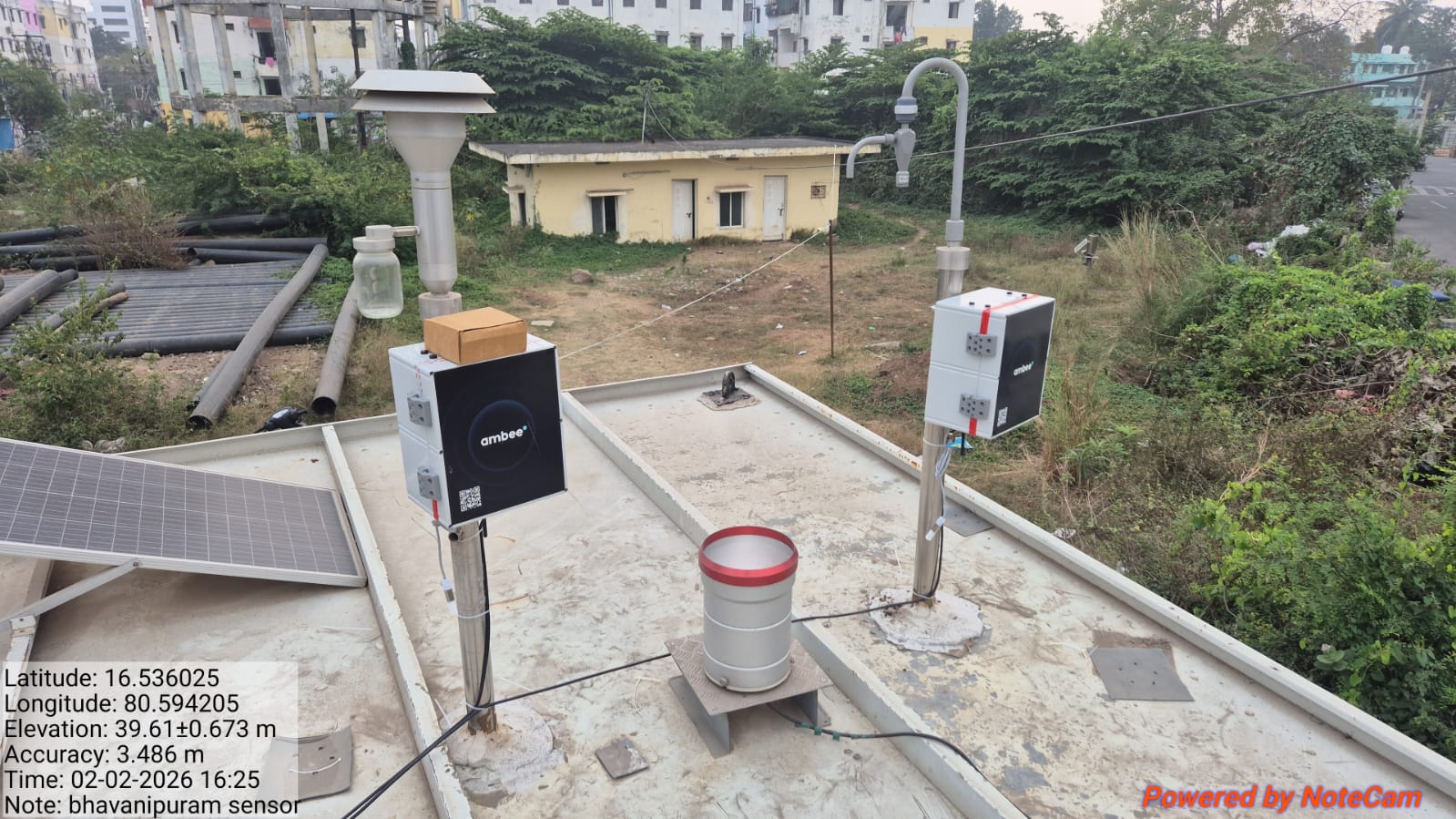
Air pollution remains one of the most pressing environmental challenges affecting urban health, economic productivity, and overall quality of life in Indian cities. Visakhapatnam, a prominent industrial and coastal hub in Andhra Pradesh, is no exception. As the city continues to expand, it faces persistent air quality issues driven primarily by emissions from industrial activities, including heavy manufacturing, port operations, and thermal power generation. Similarly, Vijayawada, a fast-growing commercial and administrative center, faces increasing air quality concerns due to rapid urbanization, high vehicular density, and mixed land-use congestion. While the transport sector is not the dominant primary source, it remains a significant contributor to localized air pollution—particularly in densely populated zones such as hospital corridors, markets, and congested junctions. These localized transport emissions exacerbate exposure risks for vulnerable groups and contribute to elevated levels of particulate matter PM 2.5 and PM 10 and nitrogen oxides NO2 in specific micro-environments.
To address these challenges, the concept of Clean Air Zones (CAZs) has emerged as a targeted and evidence-based intervention. A Clean Air Zone is defined as a geographically demarcated area where focused measures are implemented to reduce pollutant exposure, especially from transport-related sources. CAZs function as demonstration models for integrated air quality management, enabling cities to test and scale context-appropriate interventions that align environmental goals with urban development priorities.
This project, implemented jointly by The Energy and Resources Institute (TERI) and Artha Global, in close collaboration with the Vijayawada Municipal Corporation (VMC), Greater Visakhapatnam Municipal Corporation (GVMC), Andhra Pradesh Pollution Control Board (APPCB), and other local authorities, aims to demonstrate the effectiveness of CAZs in reducing urban air pollution.
The key hotspots identified in Visakhapatnam include King George Hospital Junction, MVP Double Road Junction, Convent Junction, and Jug/Sri Nagar Junction. In Vijayawada, identified hotspots include Ramesh Hospital Junction, Siddhartha College Junction, Polyclinic Road Junction, and the Kaleshwara Rao Market area.