Headquarters
The Energy and Resources Institute (TERI)
Darbari Seth Block, Core 6C,
India Habitat Centre, Lodhi Road,
New Delhi - 110 003, India
TERI-supported initiative under SIDBI’s Decarbonization Challenge Fund helps Naroda Industries Association introduce electric vehicles for waste management and maintenance.
Ahmedabad, 11 March 2026: The Energy and Resources Institute (TERI), as part of the Decarbonization Challenge Fund of the Small Industries Development Bank of India (SIDBI), undertook a detailed study to explore pathways for sustainable and efficient transport in Naroda GIDC, Ahmedabad. The project examined existing transport patterns and challenges within the industrial estate and proposed practical solutions for industries, government departments, and the industrial association. These included electrification of vehicles, improved traffic management, strengthening public transport connectivity, and the development of dedicated parking and EV charging infrastructure.
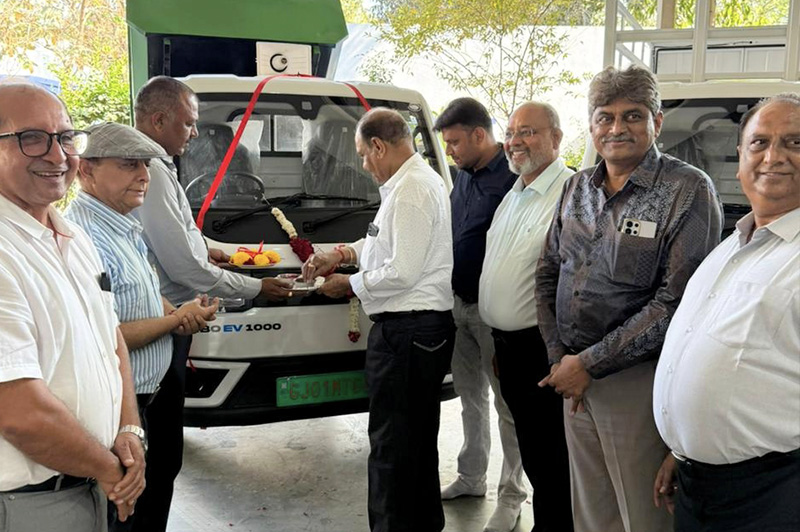
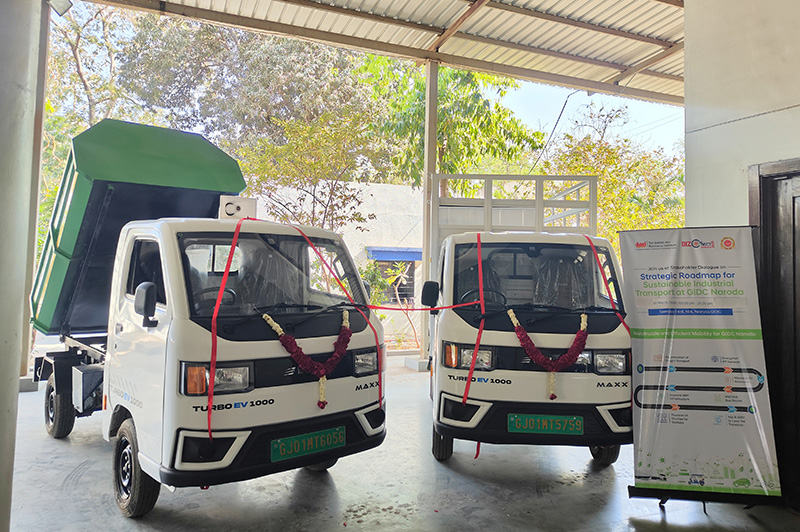
As part of the preliminary outcomes of this effort, the Naroda Industries Association (NIA), with active support from TERI, unveiled two new electric vehicles at Naroda Industrial Estate, GIDC Naroda, Ahmedabad, on 11 March 2026. The vehicles will support daily solid waste management operations within the industrial estate.
The fleet now includes two electric dumpers for door-to-door waste collection and one small electric commercial vehicle for maintenance activities across the estate. The deployment of these vehicles will help improve operational efficiency while transitioning essential estate services toward cleaner mobility.
The initiative is expected to avoid approximately 5 tonnes of CO₂ equivalent tailpipe emissions annually. As the electricity used to charge the vehicles is sourced from solar energy, the total emissions reduction is estimated at around 6.5 tonnes per year.
In addition to these vehicles procured by the Naroda Industries Association, the initiative has also contributed to growing EV adoption within the estate, with around 130 electric vehicles for passenger and commercial use adopted by industries over the past year.
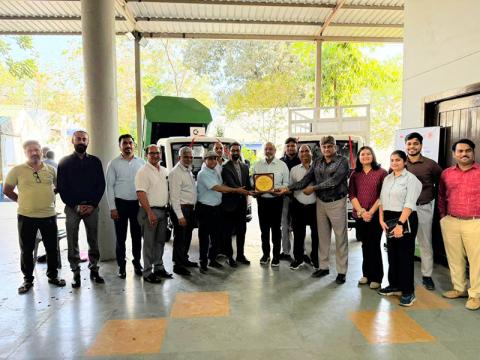
During the launch event, officials from Naroda Industries Association, Gujarat Cleaner Production Center, and TERI jointly flagged off the vehicles, highlighting the importance of collaboration between industry associations and research institutions in advancing clean mobility solutions.
Shri Bharat Patel, President, Naroda Industries Association, noted: “Since TERI initiated the project and conducted several stakeholder engagements and the EV Mela, we have seen a visible increase in green number plates within the industrial estate. These efforts have helped sensitize industries and build momentum for EV adoption. Introducing electric vehicles for our routine estate services has helped us reduce emissions while also bringing savings in fuel and maintenance costs. Encouraged by these results, we are exploring additional initiatives such as setting up EV charging infrastructure and introducing an EV-based shuttle service within the industrial estate. Naroda GIDC, one of the oldest and greenest industrial estates, has always been at the forefront of progressive change, and we hope to continue leading this transition towards cleaner mobility.”
Dr Bharat Jain, Member Secretary, Gujarat Cleaner Production Center, remarked: “Challenges often present opportunities for meaningful action. With air pollution emerging as a growing concern in urban and industrial areas, the Naroda Industries Association has taken a timely and proactive step by introducing electric vehicles for its estate operations. Such initiatives demonstrate how industrial associations can play an important role in addressing environmental challenges while moving towards cleaner and more sustainable practices.”
Mr Sharif Qamar, Fellow and Associate Director, TERI, said: “Industrial estates experience high levels of passenger and freight movement, which significantly contributes to transport emissions and air pollution. At the same time, these concentrated mobility demands and longer travel distances make industrial areas ideal for rapid adoption of electric vehicles. Naroda Industries Association has taken a commendable step by adopting EVs for its own operations and encouraging industries within the estate to transition towards cleaner mobility. Such initiatives can also bring substantial operational savings, particularly for commercial vehicles that operate intensively.”
While the emissions reduction from a small number of vehicles may appear modest in the broader urban context, such practical and localized initiatives are important steps toward improving air quality and reducing carbon emissions. Wider adoption of similar measures by industrial, institutional, and residential associations can collectively contribute to Ahmedabad’s transition toward cleaner and renewable-powered transport systems.