Headquarters
The Energy and Resources Institute (TERI)
Darbari Seth Block, Core 6C,
India Habitat Centre, Lodhi Road,
New Delhi - 110 003, India
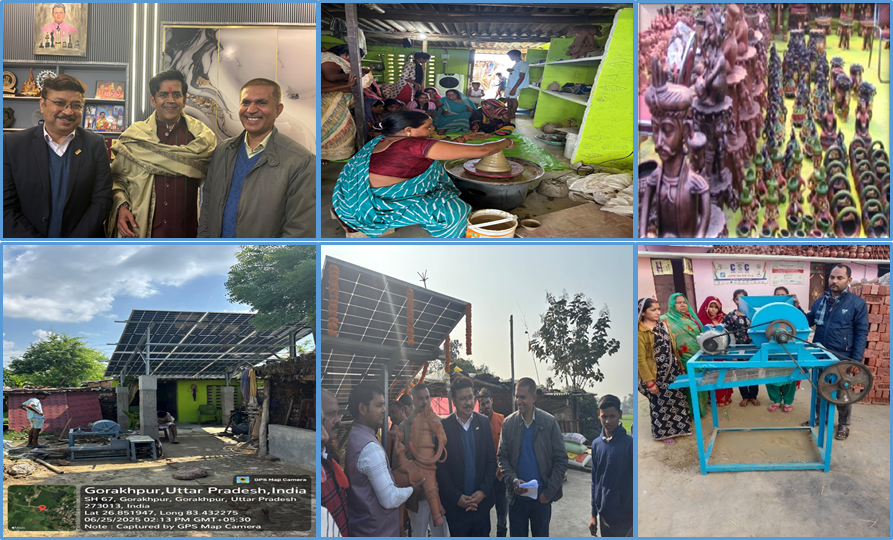
In Gorakhpur, many rural and semi-urban communities face significant challenges when it comes to accessing reliable, affordable, and clean energy. This energy scarcity often forces local businesses and enterprises to rely on costly and environmentally harmful alternatives, which further exacerbate the difficulties faced by these communities. The lack of sustainable energy solutions can severely hinder economic growth and productivity, especially in sectors that depend on consistent and reliable power sources. One such group particularly affected by these energy challenges are the terracotta artisans, who have been using traditional methods to create decorative and functional items from local clay. These artisans rely on natural dyes and time-honoured techniques, but their productivity is often constrained by the lack of access to modern machinery and clean energy sources.
Terracotta craft is an important part of the cultural identity and rural economy of Gorakhpur district, supporting approximately 1000 traditional artisans involved in clay processing, shaping, firing, and finishing activities. These artisans face energy-related constraints that directly impact their productivity and income. Terracotta products are made using ‘Kabis’ clay sourced from ponds across nearly 40 villages in the district, including Aurangabad, Bharwalia, Budhadih, and Belwa Raipur. The availability of suitable clay is seasonal and limited to the dry months of May and June. Artisans largely depend on manual, labour-intensive processes and use natural dyes and indigenous techniques for ornamentation. However, the lack of reliable energy access and modern processing equipment limits production efficiency and income potential.
Recognizing these issues, TERI initiated an intervention aimed at integrating solar energy solutions with the machinery required for terracotta production. By incorporating solar-powered machinery, the initiative helped reduce the dependency on conventional power sources. The introduction of solar energy to power terracotta production offered multiple benefits: it enhanced the efficiency of the manufacturing process, reduced operational costs, and minimized the environmental impact associated with traditional energy sources like diesel or wood.
TERI, with support from ONGC TERI Biotech Limited (OTBL) implemented two solar-enabled terracotta energy centres in Gorakhpur district, at Bharwalia (Bhathat Block) and Belwa Raipur (Chargawan Block). These centres were equipped with Hybrid Solar Charging Units (HSCU) integrated with essential terracotta machinery such as Ball Mills, Pug Mills, and Pottery Wheels. The intervention enabled reliable and clean energy access, reduced manual drudgery, improved product quality, and strengthened collective livelihood models through Self-Help Groups (SHGs).