
Headquarters
The Energy and Resources Institute (TERI)
Darbari Seth Block, Core 6C,
India Habitat Centre, Lodhi Road,
New Delhi - 110 003, India
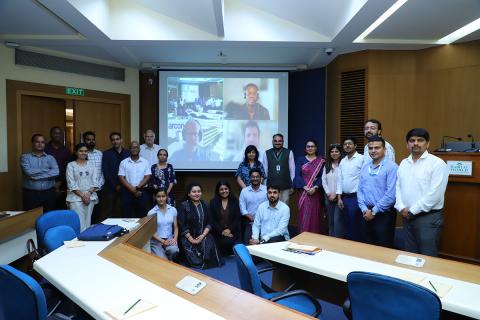
Capacity-building workshop on BIPV Guidebook brings together policymakers, industry, researchers, and practitioners to accelerate clean energy integration in buildings across the Global South
New Delhi, July 22, 2026: The Energy and Resources Institute (TERI), in collaboration with the International Solar Alliance (ISA), hosted a capacity-building workshop on Building-Integrated Photovoltaics (BIPV) on July 21, 2026, at the India Habitat Centre, New Delhi. The workshop focused on the newly developed BIPV Guidebook, aimed at supporting policymakers, urban planners, architects, developers, industry stakeholders, and researchers in accelerating the adoption of BIPV technologies across the Global South.
BIPV offer a transformative solution by incorporating solar photovoltaic technologies directly into building envelopes such as façades, roofs etc., allowing structures to generate clean electricity while serving conventional architectural functions. Despite its significant potential, widespread adoption of BIPV has remained limited due to higher upfront costs, fragmented supply chains, inadequate standards, financing constraints, and limited technical capacity.
To address these challenges, the ISA, with support from TERI (India), Sun Appeal (Switzerland), Arconsol (Austria), and the University of Applied Sciences and Arts of Southern Switzerland (SUPSI), has developed a comprehensive BIPV Guidebook that bridges research, policy, technology, and implementation for stakeholders across ISA Member Countries.
The workshop aimed to familiarize participants with the Guidebook while facilitating discussions on BIPV technologies, climate-responsive design, financing models, business opportunities, policy frameworks, regulatory standards, and skill requirements. The programme also showcased case studies and practical implementation pathways to support large-scale deployment.
In his opening remarks, Mr Ashish Khanna, Director General, International Solar Alliance, highlighted that as countries across the Global South continue to urbanize and expand their infrastructure, buildings will play a defining role in shaping future energy demand. He noted that BIPV offer a unique opportunity to transform buildings from passive energy consumers into active producers of clean electricity. Emphasizing the importance of international collaboration, he stated that the “BIPV Guidebook has been developed through extensive consultations with global partners, incorporating diverse experiences and best practices.” He also talked about importance of developing BIPV ecosystem for its wider adoption in the Global South countries. He further informed participants that the Guidebook is scheduled for an official launch at the ISA Assembly in November 2026, supporting wider BIPV adoption across Member Countries.
Delivering the special address, Dr Jiwesh Nandan, Distinguished fellow, TERI, said, “As energy demand continues to rise with rapid urbanization, economic growth, and increasing cooling needs, it is imperative to explore innovative pathways for integrating renewable energy within our cities. Building-Integrated Photovoltaics offer a promising solution by utilizing existing building surfaces to generate clean energy, thereby reducing dependence on additional land resources. In a country like India, where land availability is often a challenge, BIPV can help offset growing electricity demand while contributing to sustainable urban development, energy resilience, and long-term decarbonization efforts.”
Providing an overview of the Guidebook, Dr Gurleen Kaur, Co-Lead, Technology Roadmap and Policy Unit, International Solar Alliance, shared that the “BIPV Guidebook has been developed as a comprehensive resource to help stakeholders. Developed through extensive stakeholder consultations and expert discussions across the Global South, the Guidebook draws on insights from 110 stakeholders across 17 countries and incorporates findings from surveys, consultations, and climate-specific analyses. Covering six climate zones: tropical, arid, coastal, temperate, Mediterranean, and snow-prone climates and designed to support 118 ISA Member Countries, the Guidebook adopts a climate-responsive and context-specific approach.”
The workshop featured expert-led technical sessions covering the fundamentals of BIPV technologies, climate-specific deployment strategies, financing and business models, policy instruments, regulatory pathways, standards and certifications, as well as real-world case studies and workforce skill requirements. A concluding forum discussion provided participants with an opportunity to exchange experiences and identify collaborative pathways for scaling BIPV adoption.