Headquarters
The Energy and Resources Institute (TERI)
Darbari Seth Block, Core 6C,
India Habitat Centre, Lodhi Road,
New Delhi - 110 003, India
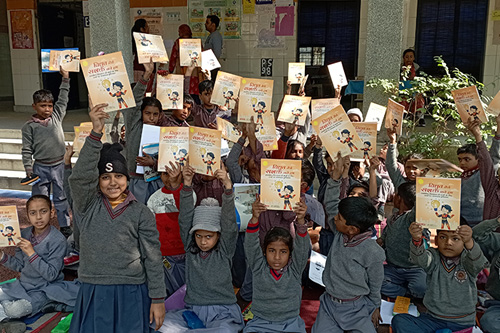
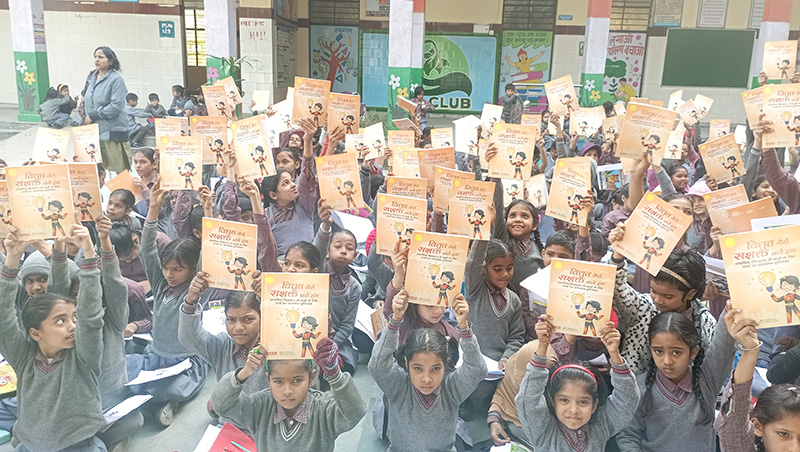
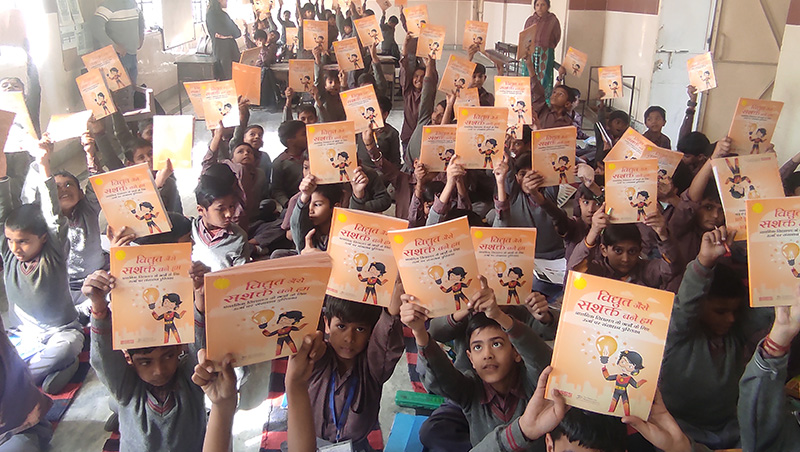
A School Education and Engagement Initiative on Energy Issues
The scale of development in India has become fast paced in the past two decades. India’s urban centres are increasing in size and modernization involving vast construction, factories and transportation networks are taking place, including new electricity connections. As a result, India has become the world’s third-largest energy-consuming nation. A significant part of India’s energy requirement is met through fossil fuels, which are meagre and may last only for a few years. In addition conventional source of energy leads to higher carbon emissions and associated risks of climate change. [1]
India as a signatory to Paris Agreement and is committed to addressing the aforementioned challenge based on equity and the principle of common but differentiated responsibilities and respective capabilities (CBDR-RC).[2] Application of renewable sources has though started but enough has to be done in terms of making renewables available door to door with widespread implementation and achieving economies of scale. This scenario warrants a firm thrust on energy conservation and enhancing energy efficiency to judiciously utilize the scarce resources of the country and help achieve universal access of energy to all.
TERI aims to implement a programme titled, ‘EN-powered Schools’ to make students and teachers understand the grim situation and establish coexistence between demand and supply curve of energy sector, through combination of conservation, efficiency measures while also introducing renewable energy and other developments in the energy sector. Through the programme, safety issues in electricity sector will also be discussed. The programme directly targets the most influential members of the family, ‘our young students’.
In 2024 – 25, students in the age bracket of 8 – 10 years from MCD schools will be targeted to educate on relevant topics, as this age group is at their reception best and is able to influence parents psyche too in the learning process. The programme will adopt a curriculum based approach, through age appropriate content. A children’s resource book and other resource material, will be developed and disseminated such that it paves the path for energy efficient and sustainable school campuses. In addition, students will be nurtured through capacity building initiatives such as storytelling sessions and film screening, contests and games, which will transcend sustainable lifestyle both at schools and at homes.
The goal of this project is to create a cadre of informed citizenry to conserve energy and enhance energy efficiency at school campuses and at homes.
[1] https://www.iea.org/commentaries/india-s-clean-energy-transition-is-rapidly-underway-benefiting-the-entire-world accessed on 15 September 2023
[2] India’s Long-Term Low-Carbon Development Strategy, Ministry of Environment, Forest and Climate Change Government of India