Headquarters
The Energy and Resources Institute (TERI)
Darbari Seth Block, Core 6C,
India Habitat Centre, Lodhi Road,
New Delhi - 110 003, India
Air pollution continues to be one of the most significant environmental health risks in India, with growing evidence linking exposure not only to respiratory and cardiovascular conditions, but also to adverse maternal and newborn health outcomes. While policy and programmatic responses have largely focused on general population health, the specific vulnerabilities of pregnant women, newborns, and infants, particularly during the first 1,000 days of life, remain insufficiently addressed within existing air quality and health frameworks.
Emerging research indicates that exposure to ambient and household air pollution during pregnancy is associated with increased risks of preterm birth, low birth weight, hypertensive disorders, and impaired early childhood development. These risks are further amplified in rapidly urbanizing and industrializing regions, where women and infants are exposed to multiple, overlapping pollution sources, including vehicular emissions, construction dust, industrial activity, and biomass-based household fuels. Despite these risks, air pollution mitigation is rarely integrated into routine maternal and newborn health service delivery, risk communication, or surveillance systems.
In this context, TERI, in collaboration with PATH, is developing and operationalizing an Air Quality and Health Adaptation Plan (AQHAP) for Maternal and Newborn Health across the states of Maharashtra and Madhya Pradesh. The initiative aims to establish a resilient and responsive health system that proactively safeguards maternal and newborn health from the adverse impacts of air pollution through integrated preparedness, informed service delivery, community awareness, and multisectoral governance.
The AQHAP adopts a life-course approach centered on the critical first 1,000 days, integrating exposure assessment, risk communication, and preventive actions across the preconception, pregnancy, childbirth, and early childhood stages. To ensure sustainability, it is designed to work through existing national and state health platforms, including the RMNCH+A (Reproductive, Maternal, Newborn, Child, and Adolescent Health) strategy and the National Health Mission (NHM) programs, thereby strengthening system preparedness without creating parallel structures.
A key component of the initiative involves developing a model implementation framework at the district level, informed by data-driven prioritization and extensive stakeholder consultations. Two distinct demonstration sites have been selected to reflect the intersection of rapid urbanization, diverse pollution sources, and existing health system capacity:
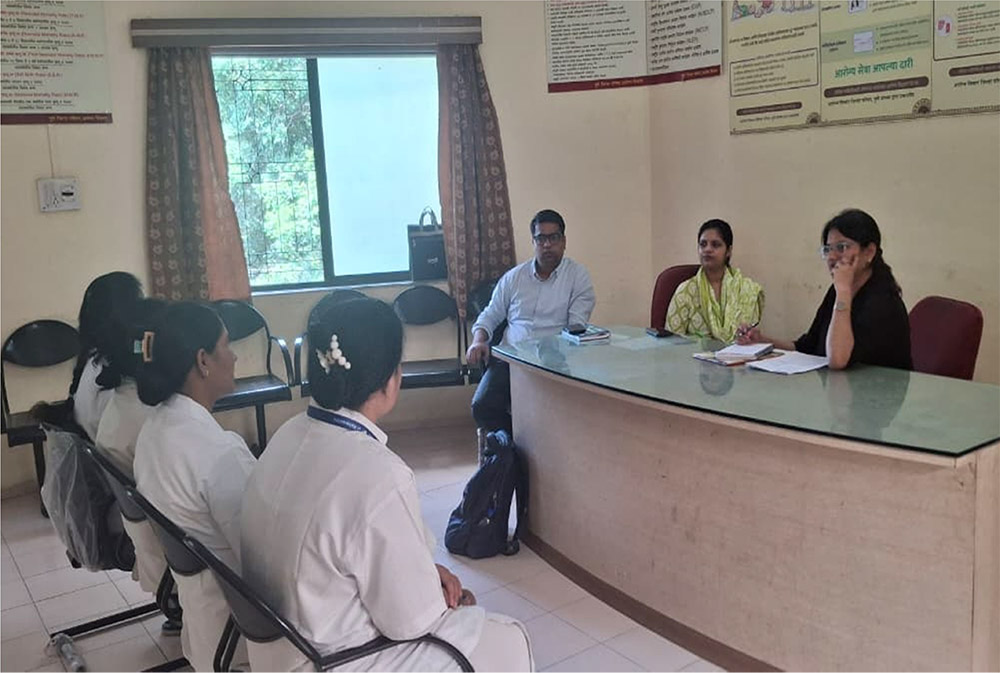
Field engagements across these districts have highlighted critical gaps in awareness, training, disease surveillance, and institutional coordination regarding air pollution and maternal health. Concurrently, these assessments have identified strong opportunities to integrate air quality risk mitigation within existing service delivery platforms, such as antenatal care (ANC), postnatal care (PNC), community outreach sessions, and frontline health worker engagement.
By linking air pollution exposure data directly with health system processes, the AQHAP seeks to enable more responsive and preventive public health action. The initiative ultimately contributes to building climate-resilient health systems by positioning air pollution as a key determinant of maternal and newborn health, while advancing practical, scalable strategies for risk reduction at both the community and institutional levels.