
Headquarters
The Energy and Resources Institute (TERI)
Darbari Seth Block, Core 6C,
India Habitat Centre, Lodhi Road,
New Delhi - 110 003, India
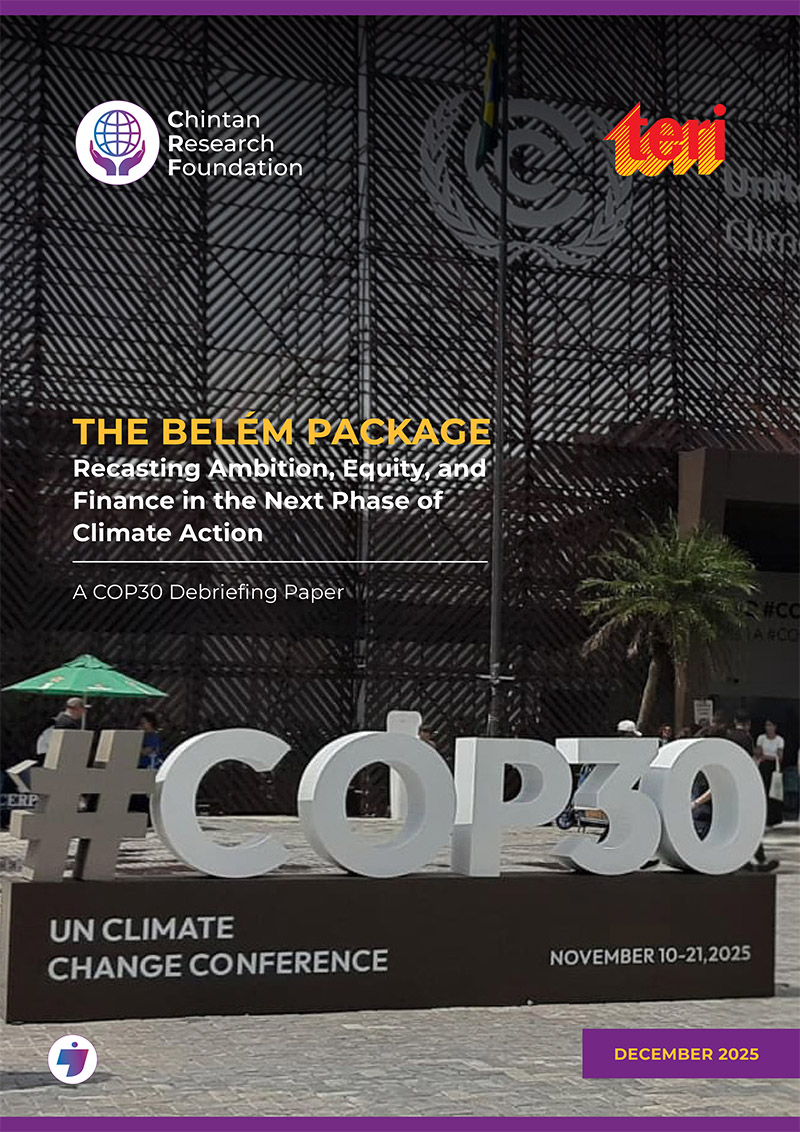
For the first time since the landmark adoption of the United Nations Framework Convention on Climate Change (UNFCCC), the Conference of the Parties (COP) returned to Brazilian soil, lending COP 30 significant political weight. Setting the context for the negotiations, the Brazilian Presidency facilitated two major announcements in the week preceding the conference. The joint Presidencies of the Baku and Belém COPs released the Baku to Belém Roadmap, outlining the mobilisation of USD 1.3 trillion annually for developing countries from all sources—including USD 300 billion in public finance from developed countries. From a developing-country perspective, this was potentially one of the most consequential pre-COP decisions, setting the tone right before Belém raised the curtain on further negotiations.
The second important announcement concerned the Tropical Forests Forever Facility (TFFF). It is a Brazil-led investment fund established to provide a permanent financial incentive for developing countries to conserve their tropical forests, aiming to reward more than 70 nations. The fund was officially endorsed by 53 countries at its launch, with Brazil and Indonesia making initial financial commitments to operationalise it.
The key agenda items of COP 30 included the adoption of indicators to track progress on the Global Goal on Adaptation, the finalization of the Just Transition Work Programme (outlining a global understanding of just transition and cooperation to achieve it), a roadmap to implement the Baku outcome on the New Collective Quantified Goal on climate finance, and the conclusion of the Mitigation Work Program.
COP 30 witnessed sharp debates on two issues. The first, carried forward from the Baku COP, was the overall ambition on finance by developed countries under Article 9.1 of the Paris Agreement. Developing countries reiterated their disappointment with the goal of USD 300 billion per year by 2035 and argued for continued negotiation on finance ambition. Developed countries, however, insisted on focusing on the implementation of decisions taken at Baku. The second issue was the demand from developed countries—supported by many LDCs—to commit to a timebound roadmap for fossil-fuel phase-out. Developing countries opposed this, particularly in the absence of commensurate commitments on additional finance. At one point, these two issues led to fears that the negotiation process might collapse; in fact, many countries threatened to reject any decision from Belém if their agenda items were not adequately included.
Parties at COP 30 entered a decisive phase: following the first-ever Global Stocktake, negotiations in Belém converged on operationalising outcomes rather than drafting new declarations. The Brazilian Presidency placed four interconnected pillars at the centre: a roadmap for decarbonisation, the New Collective Quantified Goal on climate finance, the activation of the Global Goal on Adaptation, and the establishment of a robust just-transition framework. While progress was evident, briefings revealed a widening ambition-implementation gap—particularly for developing countries facing constrained access to predictable finance and weak adaptation support. Concurrently, the draft negotiating text exposed retreating commitments from some developed parties, especially regarding fossil-fuel phase-out and trade-restrictive measures. This agenda thus became the litmus test of the multilateral regime’s ability to translate climate diplomacy into credible delivery.
The outcome of COP 30 acknowledges that the first Global Stocktake (GST-1) marks the completion of the Paris Agreement’s first implementation cycle and shows measurable progress in bending the emissions curve and advancing adaptation planning. However, the GST-1 also underscores that significant ambition and implementation gaps remain—particularly in adaptation and finance—highlighting the urgency of accelerating action, strengthening multilateralism, and mobilizing scaled-up resources to keep 1.5°C within reach.
Despite aggressive stances taken by both sides, the Brazilian Presidency was able to secure agreements on a Global Mechanism on Just Transition, the adoption of 60 indicators on the Global Goal on Adaptation (with flexibility for national application), the tripling of adaptation finance, and a two-year programme on implementing the Baku to Belém Roadmap on climate finance. Additionally, a negotiation track was opened on Article 9.1 of the Paris Agreement regarding developed countries’ climate finance obligations, along with a promise from the Presidency to prepare a roadmap on fossil-fuel phase-out for consideration by the next COP.
Arguably, the Belém outcome has commenced a new chapter of negotiations and diplomacy, seeking synchronization across policy processes and actors—both within and outside the UNFCCC process—deemed necessary for the full and effective implementation of the Paris Agreement. Platforms outside the UNFCCC, such as the International Solar Alliance and the Tropical Forests Forever Facility, have moved to the centre stage of implementation, providing the model of support that developing countries expect. Yet, negotiations on overall finance ambition and credible decarbonization pathways remain core issues within the UNFCCC, requiring significant coordination with external actors such as multilateral development banks. Similarly, the agreement on Global Goal on Adaptation indicators reflects a two-tier mechanism, acting as a harmonizing factor among diverse national circumstances.
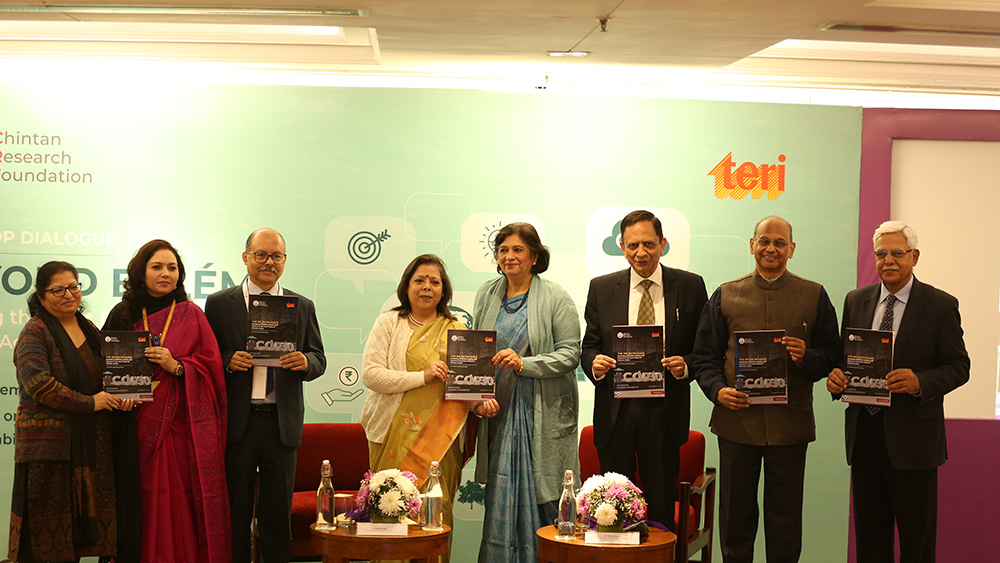
It is within this context—navigating coordination challenges between rule-based agreements within the UNFCCC and autonomous actors outside it—that TERI and CRF are convening a Post-COP Dialogue on “Beyond Belém: Charting the Next Phase of Global Climate Action.” This event is designed to foster focused deliberation on COP 30’s decisions and their implications for on-ground climate action. Bringing together policymakers, practitioners, and experts, the dialogue will unpack outcomes on mitigation, adaptation, and finance, and explore how India and other developing countries can navigate the evolving global landscape to strengthen domestic implementation pathways and safeguard equity within the climate regime.
The Dialogue will aim to go beyond immediate reactions to the COP 30 outcome and deliberate on the following questions: