
India’s clean energy transition depends not only on renewable expansion but also on securing critical minerals like lithium, cobalt, and nickel. Recycling these materials from e-waste and batteries can reduce import dependence and build a resilient, self-reliant supply chain for the future.
Growing Importance of Critical Minerals
A critical enabler for India to achieve its net-zero goal by 2070 lies in advancing renewable energy, promoting electric mobility, and investing in green infrastructure and technology. As these subjects take the center stage in shaping India’s strategic priorities, there is an urgent need to secure the complex supply chains that support them. A key component of these supply chains is Critical Raw Minerals (CRM) such as lithium, cobalt, and nickel, to name a few, essential for economic development and national security. Their availability directly influences India’s economic competitiveness, industrial growth, and national security. As India positions itself as a global clean energy leader, securing these mineral supply chain has become a strategic necessity.
The Global Race to Secure Critical Mineral Supply Chains
Minerals designated as critical by the government vary based on various factors such as supply risk, strategic priorities, and economic importance. However, in the recent years, countries across the world have been racing to secure their CRM supply chains. Once a niche concern arising from isolated incidents of supply chain disruptions due to geopolitical tensions or natural calamities has now become a global priority.
Countries around the world are actively strengthening their critical mineral supply chains. In 2023, the Ministry of Mines, Government of India, released a list of 30 critical minerals, with the intention of enhancing their supply chains to achieve self-sufficiency. According to the report, India is 100% reliant on imports for 10 of these 30 critical minerals, including lithium, cobalt, and nickel.[1][2] This underscored the need for a range of measures to secure critical mineral supply chains, encompassing both primary and secondary sources, to support India’s long-term ambitions.
Circular Economy as a Strategic Pathway to Reduce Import Dependence
An emerging solution to reducing import dependence and risk exposure is the adoption of circular economy principles, including reducing the use of Critical Raw Minerals (CRMs), substituting them with more abundantly available materials where feasible, and most importantly, recovering CRMs from mineral-rich waste streams such as electronic waste, battery waste, and mining tailings. Recognizing this, the Union Cabinet approved the National Critical Minerals Mission (NCMM) in January 2025, with a government outlay of Rs.16,300 crore and an expected investment of Rs.18,000 crore by PSUs, etc.[3] The NCMM outlines clear objectives encompassing all stages of the value chain, including mineral exploration, off-shore mineral assets acquisition, mining, refining and recovery from end-of-life products (Figure 1).
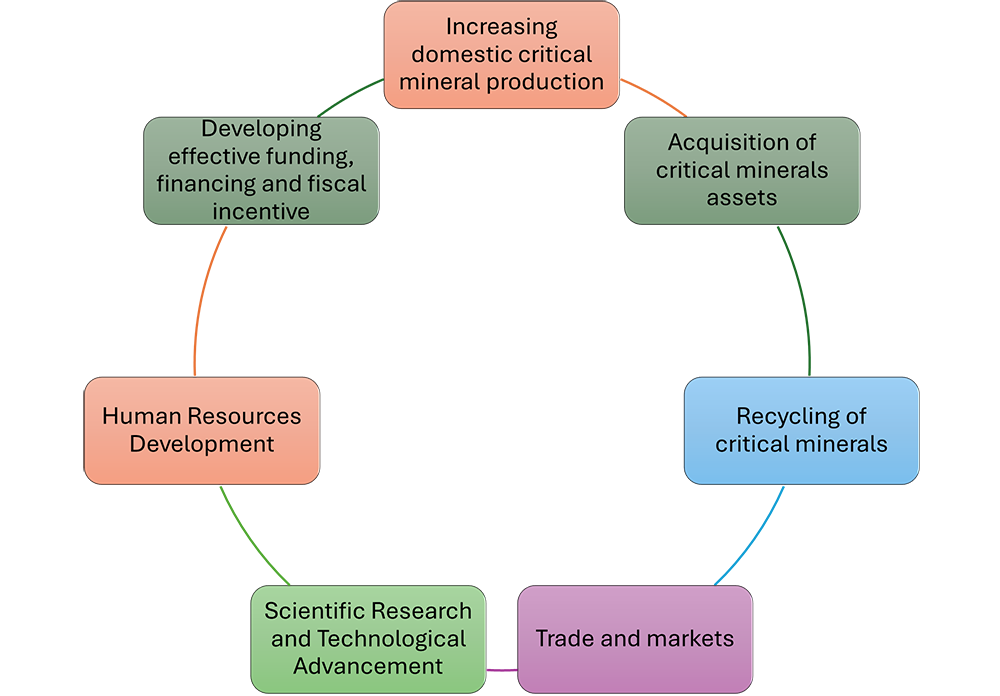
Figure 1: Components of NCMM; Source: https://www.pib.gov.in/PressReleaseIframePage.aspx?PRID=2120525®=3&lang=2
Urban Mining: The Untapped Potential in Waste Streams
As we witness a technological revolution driven by rapid innovation, the share of CRM-rich waste streams such as e-waste, battery waste, and solar panels has also increased. Printed Circuit Boards (PCBs), which are foundational for nearly all electronic devices, contain 18-25% copper, Lithium-ion batteries employed in electric vehicles contain 5-20% cobalt and 5-7% lithium, NdFeB (Neodymium Iron Boron) magnets contain between 25-30% Neodymium, catalytic convertors are a rich secondary source for Platinum Group of Elements (PGE), solar PV panels contain significant amounts of silicon and copper along with other minerals in varying amounts.[4] The presence of these minerals in post-consumer and industrial waste streams presents a significant economic opportunity.
However, the value chain associated with reintegration of minerals into manufacturing faces several challenges such as low collection rates (~10% for e-waste, <5% for batteries) due to inadequate infrastructure and consumer awareness. The existing recycling sector is dominated by informal players using primitive dismantling and processing methods that are inefficient and pose significant health hazards to the workers. Meanwhile, existing formal facilities struggle with high initial costs, lack of skilled labour, and underutilization of capacity due to unreliable feedstock availability.[5]
There is a huge scalable opportunity for India to secure its domestic CRM supply chain through EoL (end of life) recovery. Seizing this opportunity will require coordinated policy support, investments and technological interventions to increase uptake of secondary minerals and build a reliable market.
Global Lessons and India’s Policy Landscape
Countries have adopted different strategies based on their resource availability and industrial priorities. The United States places emphasis on internalizing its critical minerals supply chain to build resilience. South Korea prioritizes supply chain diversification and stockpiling. Meanwhile, the European Union, given their limited mineral resources, couples supply chain diversification with a major policy push to build a sustainable supply chain through EoL product recycling. India has adopted a range of similar policy measures, including the Extended Producer Responsibility (EPR) under the E-waste Management Rules, 2022 and Battery Waste Management Rules, 2022, which promote and incentivize responsible management of e-waste and EoL batteries. Mines and Minerals (Development and Regulation) Amendment Act, 2023 (MMRDA Act) aims to strengthen mineral exploration and extraction, with a particular focus on encouraging private sector participation, and the NCMM, which is an all-encompassing strategic initiative.
While India’s existing policy ecosystem is forward-looking, there remains a scope for better alignment to reduce CRM supply chain vulnerabilities and address key enforcement gaps. This needs to include product mapping to identify best feedstocks for recovery considering the existing recovery technologies and infrastructure; streamlining regulatory mechanisms for establishing new recycling facilities; enforcing traceability mechanisms to ensure validity of recovery claims by recyclers; and providing government support to private sector entrants to offset the high initial costs.[6] Critical mineral recovery requires a coordinated systemic approach that spans feedstock mobilization, pre-processing, refining, and reintegration into manufacturing. Well-designed policy incentives streamlined regulatory process, and strong enforcement mechanisms can catalyze private sector investments in advanced recycling infrastructure, which is crucial for developing a high quality and globally competitive market for secondary CRMs.
Recycling for Clean Energy Future
India’s clean energy transition cannot succeed without material security. Recycling critical minerals at scale can reduce import dependence, support domestic manufacturing, create jobs, and improve environmental outcomes. For India to fully harness this potential, there is a need to strengthen the entire value chain for critical mineral recovery. Strengthening traceability systems, improving enforcement of existing Extended Producer Responsibility (EPR) frameworks, and supporting research and innovation in recycling technologies will be essential for creating a reliable supply of secondary critical minerals. Recycling must therefore move beyond the ambit of environmental policy and become a pillar of India’s industrial and clean energy strategy. Building a strong market for critical minerals is not just environmentally important but also economically and strategically essential.
References
[1] https://mines.gov.in/admin/download/649d4212cceb01688027666.pdf
[2] https://www.ibef.org/research/case-study/critical-mineral-imports-and-india-s-green-energy-transition
[3] https://www.pib.gov.in/PressReleaseIframePage.aspx?PRID=2097309®=3&lang=2
[4] https://www.pib.gov.in/PressReleaseIframePage.aspx?PRID=2097309®=3&lang=2
[5] https://pmc.ncbi.nlm.nih.gov/articles/PMC4446940/#:~:text=Any%20recycling%20process%20involves%20dismantling,dangerous%20and%20slow%20poisoning%20chemicals.
[6] https://niti.gov.in/sites/default/files/2026-02/Scenarios-Towards-Viksit-Bharat-and-Net-Zero-Critical-Mineral-Assessment-Demand-and-Supply.pdf