Headquarters
The Energy and Resources Institute (TERI)
Darbari Seth Block, Core 6C,
India Habitat Centre, Lodhi Road,
New Delhi - 110 003, India
Refex Green Power Limited engaged TERI to conduct a comprehensive waste characterization study, including physical and chemical analysis and BMP assessment of municipal solid waste (MSW) across three major cities in Tamil Nadu- Salem, Coimbatore, and Madurai. The study was undertaken to evaluate the suitability of MSW as feedstock for compressed biogas (CBG) plant installation and to support the development of sustainable waste-to-energy solutions.
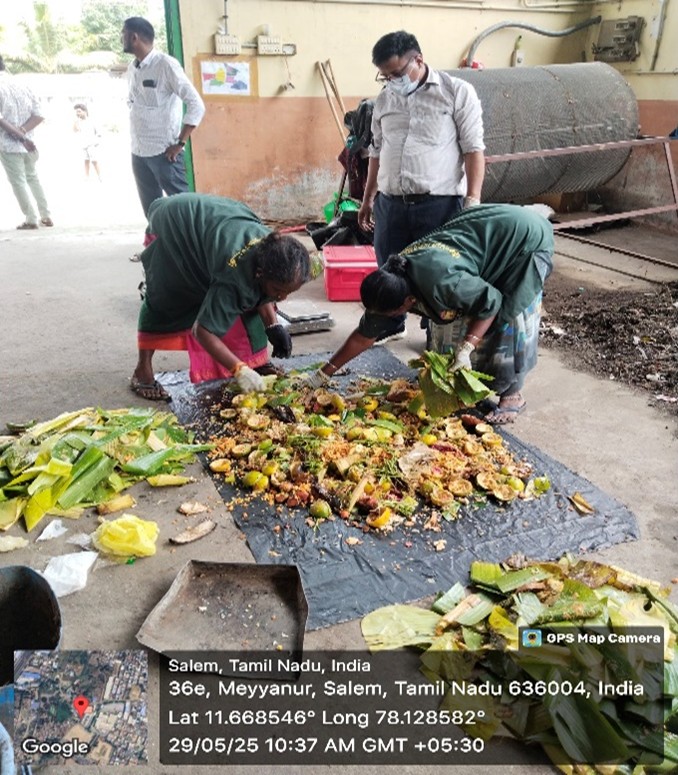
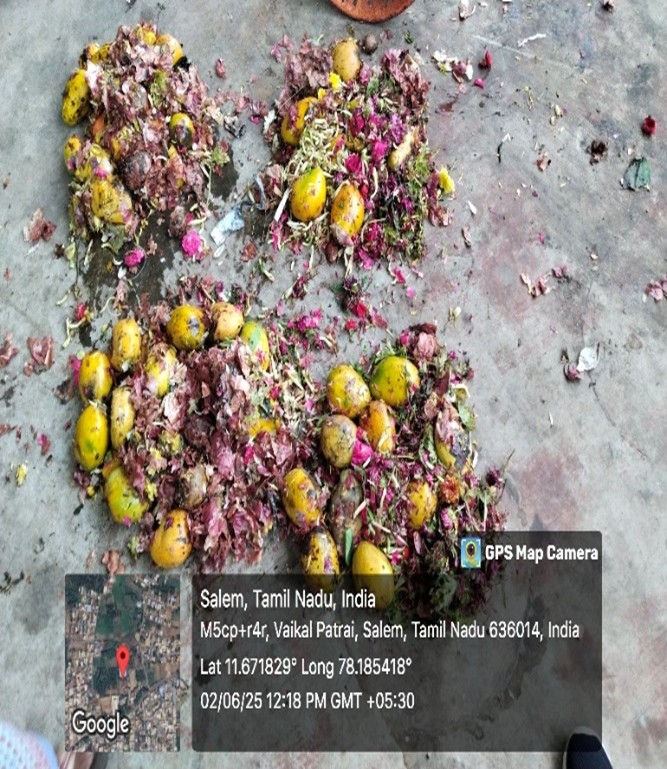
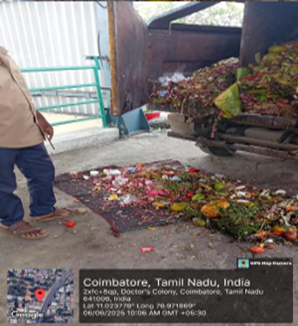
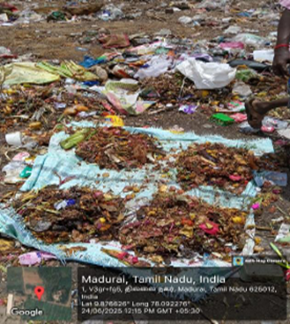
The sampling and characterization activities were carried out across multiple zones and Refuse Transfer Stations (RTS) under the respective municipal corporations. In Salem City Municipal Corporation (SCMC), sampling was conducted across four zones- Suramangalam, Hasthampatty, Ammapet, and Kondalampatty, over four days from May 29 to June 2, 2025, resulting in the collection of 52 samples. In Coimbatore City Municipal Corporation (CCMC), sampling was conducted across three RTS locations- Peelamedu, Ukkadam, and Omani Bus Stand, over three days from June 4 to June 6, 2025, with a total of 45 samples collected. In Madurai City Municipal Corporation (MCMC), sampling was conducted across four locations- Anaiyur, Madurai, Pechikulam, and KK Nagar,over five days from June 24 to June 28, 2025, resulting in 55 samples.
The sampling process was carried out systematically following TERI’s standardized methodology to ensure consistency, representativeness, and accuracy in waste characterization. Samples were collected from different sections of the waste stream and homogenized to capture variability in composition.
The physical characterization results across all cities indicated a predominance of organic waste, particularly kitchen and green waste fractions. In Salem, organic waste constituted a significant portion, with kitchen waste alone contributing approximately 65–66 per cent and green waste around 10–11 per cent. Similarly, Coimbatore exhibited a high organic fraction, with kitchen waste contributing approximately 79 per cent and green waste around 12 per cent, indicating strong potential for biological treatment processes. In Madurai, organic waste composition was also dominant, with kitchen waste contributing approximately 69.5 per cent and green waste around 5.5 per cent. Other waste fractions observed across the cities included paper, plastics (particularly polythene), cloth, and field waste, along with minor quantities of inert materials and sanitary waste.
Following physical characterization, samples were transported to the TERI laboratory for chemical characterization and BMP analysis. The chemical characterization included determination of key parameters such as Total Solids (TS), Volatile Solids (VS), moisture content, pH, ash content, carbon-to-nitrogen (C:N) ratio, and calorific value. These parameters are critical in assessing the biodegradability and energy recovery potential of MSW.
The BMP assessment was conducted using controlled anaerobic digestion experiments. For Coimbatore and Madurai, the BMP tests were performed to evaluate biogas generation efficiency. The reactors were monitored over a period of 50 days, and daily as well as cumulative biogas generation was recorded using standard measurement techniques.
The results demonstrated consistent biogas generation trends across all cities, confirming the suitability of MSW as a viable feedstock for biomethanation. The high organic fraction, coupled with favorable chemical characteristics, supports the feasibility of establishing CBG plants in Salem, Coimbatore, and Madurai. The study provides critical insights into waste composition, processing potential, and operational considerations for waste-to-energy projects.