
Headquarters
The Energy and Resources Institute (TERI)
Darbari Seth Block, Core 6C,
India Habitat Centre, Lodhi Road,
New Delhi - 110 003, India
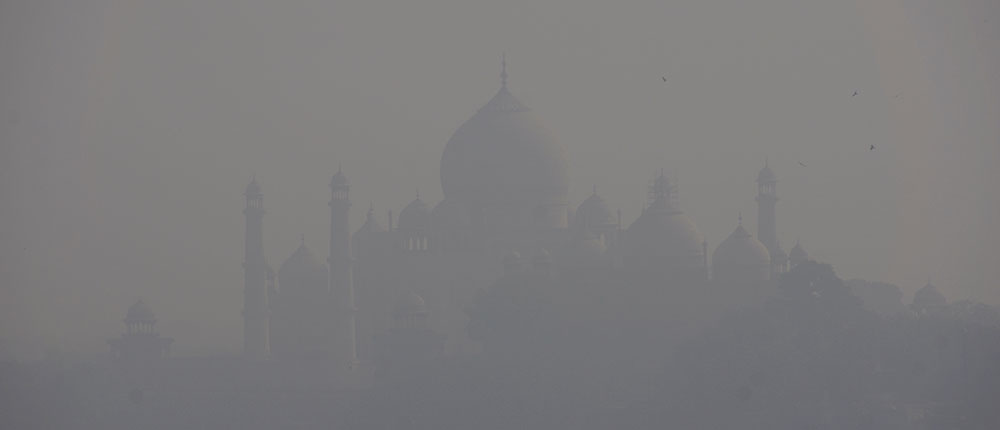
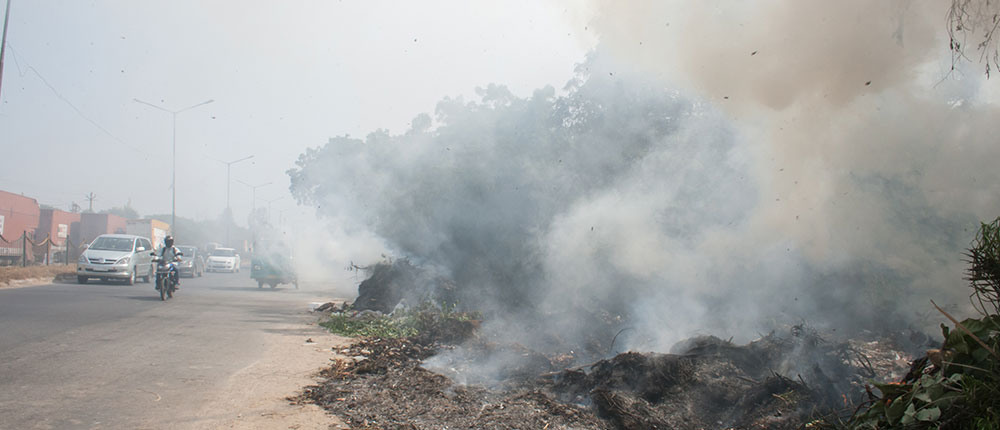
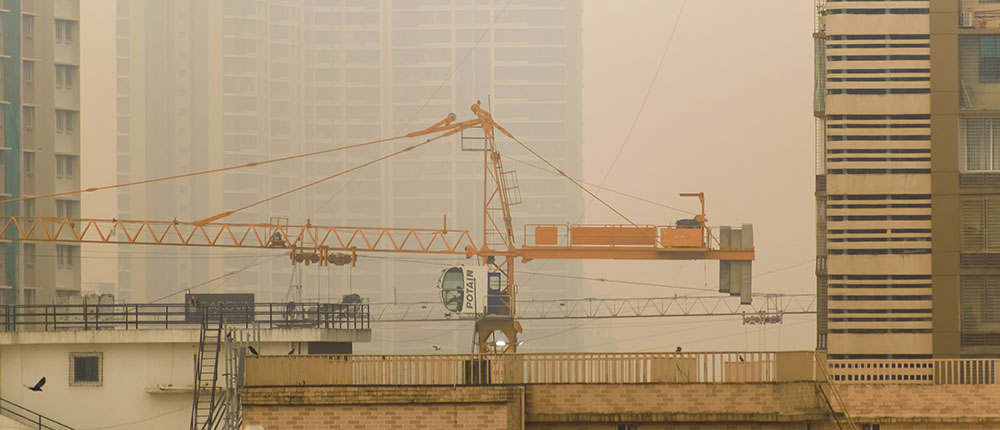
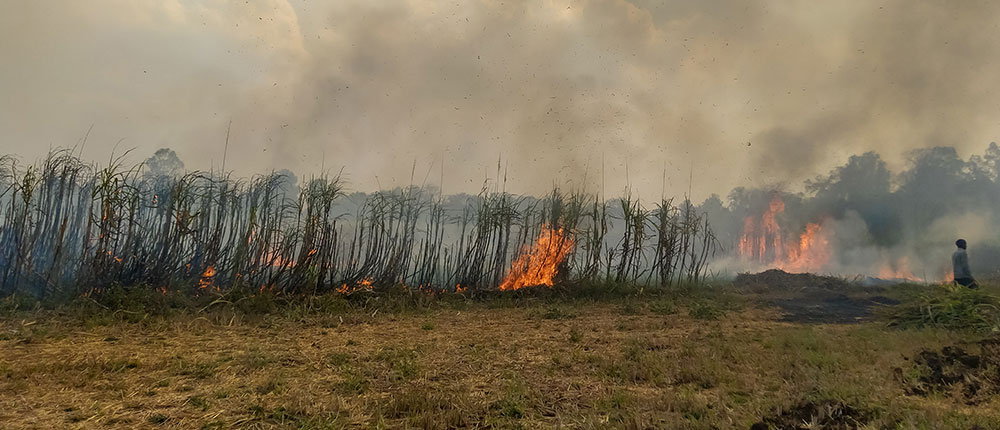
Air pollution is a global concern contributing to a wide range of health risks. According to the World Health Organisation data, around 7 million people die worldwide every year from exposure to the polluted air. More than 80% of people living in urban areas are exposed to concentrations higher than the level recommended by the WHO. India is one of the countries that are severely affected by air pollution. More than half of the world's twenty most polluted cities are located in India. Sensing the urgency, the Government of India launched the National Clean Air Programme (NCAP) with the aim to reduce pollution levels in 122 non-attainment cities by 20-30% by 2024.
In view of this, the Global Programme Climate Change and Environment of the Swiss Agency for Development and Cooperation (SDC) has initiated a project 'Clean Air Project in India (CAP India) to support India's efforts for improving air quality.
CAP India was launched in four cities — Lucknow and Kanpur in Uttar Pradesh, Nashik and Pune in Maharashtra — by SDC, and The Energy and Resources Institute (TERI) at the World Sustainable Development Summit 2020.
The CAP India programme will focus on improving data measurement, enhancing capacities of city and state authorities to implement clean air policies and action plans, and raising public awareness for clean air action.
These four cities were selected after conducting a scoping study, which considered several factors such as severity and sources of air pollution, population density and associated health impacts, economic standing of the state, readiness or preparedness of state in terms of policies/regulation etc.
The CAP India project aims to support NCAP by demonstrating viable approaches for cities to address air pollution. NCAP was launched in January 2019 with a goal to meet the prescribed annual average ambient air quality standards across the country.
The CAP India project is planned to be carried out by a consortia of national and international organisations including TERI, Automotive Research Association of India, International Institute for Applied Systems Analysis, IIT-Kanpur, National Environmental Engineering Research Institute, Paul Scherrer Institute, EPFL Switzerland, Indian Institute of Tropical Meteorology, and University of Bern.
The goal of this project is to support India's efforts to improve people's health and well-being through better air quality, while contributing to environment and climate change mitigation.
To support India's efforts to improve air quality, while contributing to public health, environment and climate change mitigation. CAP India is assisting four partner cities — Lucknow, Kanpur, Pune and Nashik — in strengthening their existing clean air action plans based on the state of art source apportionment studies.
The overall goal of the project is to support India's efforts to improve air quality, while contributing to public health, environment and climate change mitigation.
Improved data measurement and analysis on clean air
Enhanced capacities of city and state authorities to implement clean air policies and action plan
Awareness for clean air action

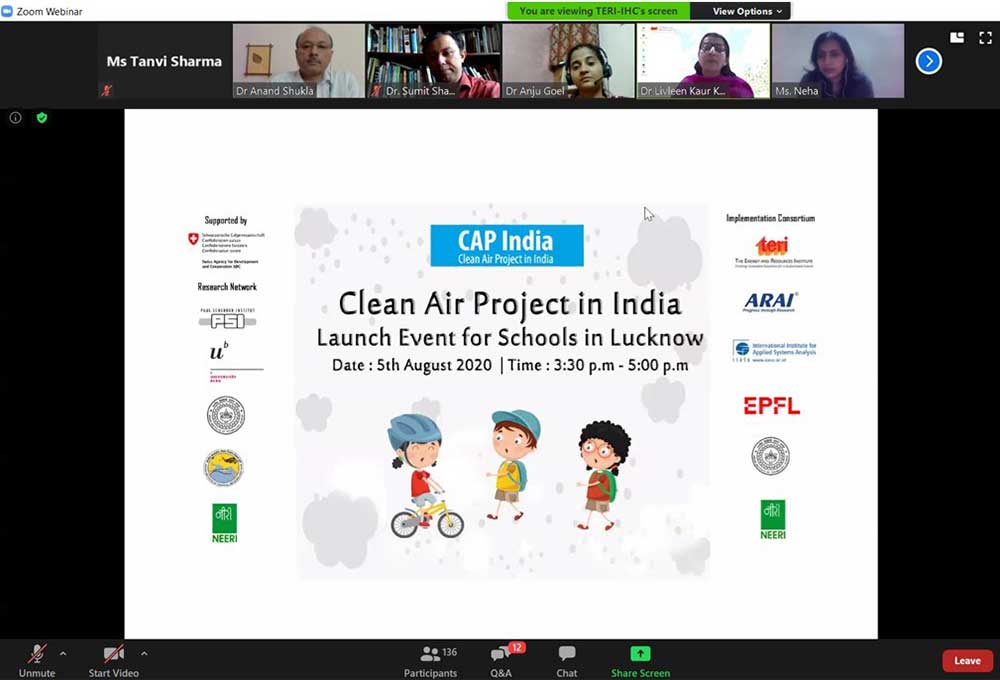
TERI and Swiss Agency for Development & Cooperation (SDC) conducted a launch event for the schools in Lucknow, Uttar Pradesh. The event on 5th August saw participation from at least 430 students & teachers from 30 schools. Dr Anand Shukla, Sr Thematic Advisor, SDC highlighted the need to be vocal about local environmental challenges such as air pollution. An interactive session 'Let's learn together' was also conducted by our fellows Ms Neha & Dr Anju Goel to discuss the impacts of air pollution.
Prof. Mukesh Sharma, Department of Civil Engineering, IITKanpur discussed the importance of clean air and how students can play an important role by raising awareness to reduce air pollution. Dr Livleen K Kahlon, Associate Director, Environmental Education and Awareness, TERI said that air pollution from vehicles and power plants has been inhibiting the flying ability of pollinators to find flowers providing them nectar. Air Pollution harms all different lifeforms.
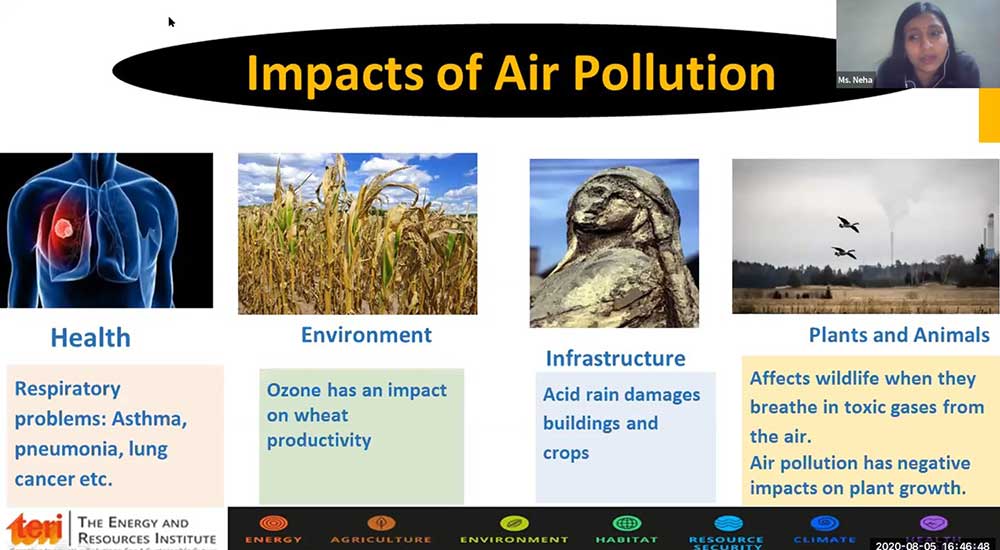
The launch of CAP- India in Kanpur was organised on 28 August 2020 through a webinar. The launch event received registration from 227 students and teachers from 9 schools in Kanpur, Uttar Pradesh. An interactive session with students was held to apprise them about air pollution, highlighting facts about Kanpur. This session was an infusion of quiz session, visuals on air pollution, and information dissemination on air pollution and its impacts and solutions.
Supported by: Swiss Agency for Development and Cooperation (SDC)