Headquarters
The Energy and Resources Institute (TERI)
Darbari Seth Block, Core 6C,
India Habitat Centre, Lodhi Road,
New Delhi - 110 003, India
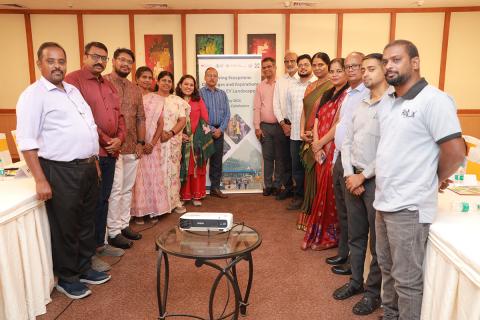
The deliberation focused on equitable EV adoption, inclusive skilling, accessible infrastructure, and livelihood opportunities for women and persons with disabilities
Coimbatore, 15 May 2026: The Energy and Resources Institute (TERI) convened a roundtable discussion on “EVolving Ecosystem: Challenges and Aspirations in India’s EV Landscape” at Vivanta, Coimbatore, bringing together representatives from government, academia, skill development institutions, civil society organizations, and the mobility sector to deliberate on pathways for an inclusive electric mobility transition in India.
The roundtable was organized against the backdrop of India’s accelerating shift toward electric mobility and the growing need to ensure that the benefits of this transition are equitable and accessible to all sections of society, particularly women and persons with disabilities.
The discussion revolved around critical themes including infrastructure readiness, accessible mobility systems, inclusive EV design, financing mechanisms, skill development, workforce participation, and policy interventions required to strengthen India’s evolving EV ecosystem. The event also explored emerging livelihood opportunities across the EV value chain and strategies for ensuring equitable participation in the sector.
Delivering the keynote address, Mr I V Rao, Distinguished Fellow, TERI underlined the importance of inclusive skilling ecosystems and collaborative action in supporting India’s clean mobility ambitions. He said, “Stringent EV norms may push automobile manufacturers from vehicle manufacturing towards battery ecosystems, a transition the world has already begun to witness.”
The event featured special addresses by Mr Kasi Viswanathan, Managing Director, Tamil Nadu Apex Skill Development Centre for Automobile, Ms Kalaivani Neelakandan, Managing Director, Women In EV, Energik Pvt. Ltd, and Dr P B Harathi, Principal, PSGR Krishnammal College for Women.
Welcoming the participants, Dr Jayanta Mitra, Senior Fellow, TERI, emphasized the importance of placing inclusion and accessibility at the centre of India’s EV transition. On the need for an inclusive and resilient EV ecosystem, stakeholder collaboration, and equitable mobility transition, Dr Mitra remarked, “Inclusive mobility systems create access not only to transport, but also to dignity, livelihoods, and participation.” Addressing the gathering, Mr Kasi Viswanathan highlighted the importance of industry-aligned skilling and capacity-building initiatives for the future EV workforce. On workforce preparedness, industry partnerships, and emerging opportunities in the EV sector, he mentioned, “The strength of Coimbatore lies in its industrial base, technical talent, and entrepreneurial culture all the ingredients needed for an EV revolution. And therefore, the city holds immense potential to emerge as a leading hub for EV infrastructure and sustainable mobility.”
Speaking at the roundtable, Ms Kalaivani Neelakandan emphasized the need to build a gender-responsive and accessible mobility ecosystem that expands participation and opportunities for women. She stressed that large-scale awareness and sensitization initiatives are essential to build trust, understanding, and readiness for EV adoption among communities and workers alike. She highlighted, “With the right training ecosystem, women can become a driving force in India’s electric mobility revolution. Our vision is clear by 2027; we must build a skilled resource pool of 5,000 EV technicians to cater to the rising demand for EV service centres.”
Dr P B Harathi underlined the role of academic institutions in fostering inclusive innovation, awareness, and future-ready talent. Dr Harathi averred, “In emerging sectors like electric mobility, hands-on training is far more valuable than mere bookish knowledge. Education must move beyond classrooms and connect directly with livelihoods and real-world industry needs.”
The programme included two focused technical sessions. The first session, “Enabling Inclusive EV Adoption: Addressing Access Barriers and Unlocking Livelihood Opportunities,” examined challenges related to accessibility, affordability, shared mobility models, financing, and employment pathways. The second session, “Building an Inclusive EV Ecosystem: Skills, Infrastructure, and Policy Readiness,” deliberated on skill gaps, infrastructure accessibility, training systems, institutional partnerships, and policy frameworks needed to support equitable EV adoption.
The discussions and recommendations emerging from the roundtable are expected to contribute toward evidence-based policy inputs and actionable pathways for strengthening India’s inclusive and sustainable EV ecosystem. The event concluded with a synthesis of key takeaways, action points, and stakeholder recommendations, followed by networking interactions among participants.