Headquarters
The Energy and Resources Institute (TERI)
Darbari Seth Block, Core 6C,
India Habitat Centre, Lodhi Road,
New Delhi - 110 003, India
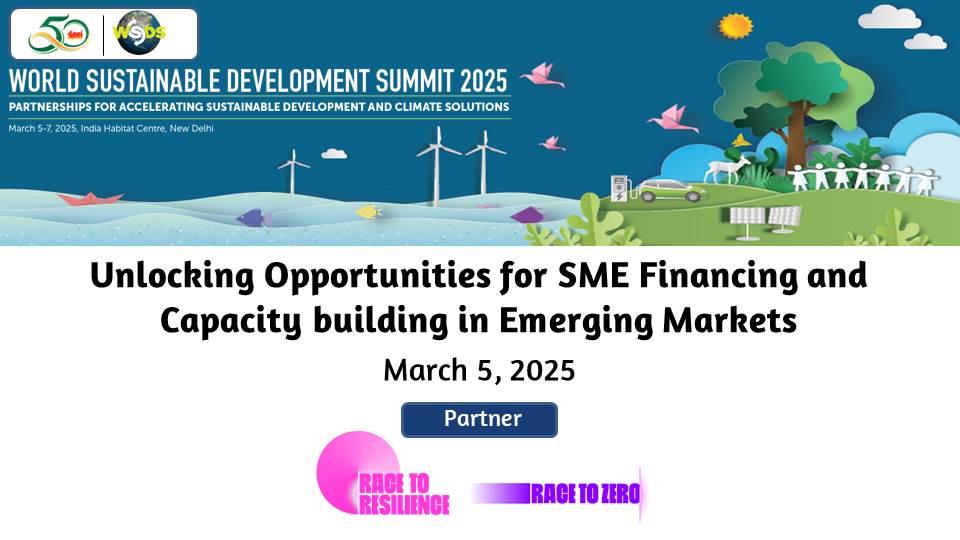
Small and Medium Enterprises (SMEs) play a major role in Emerging Markets and Developing Economies (EMDEs) - driving economic growth, creating employment opportunities, and supporting the creation of a vibrant local economy.
At the same time, SMEs are disproportionately vulnerable to climate-related risks and shocks. SMEs play a vital role in a just transition that delivers equitable human and economic development. Recognizing these challenges and opportunities, particularly across emerging markets and developing economies (EMDEs), the COP29 High-Level Champion (HLC), Nigar Arparadai, launched the “Climate Proofing SMEs” campaign to improve SMEs’ awareness of and access to relevant capacity building measures and opportunities to access finance - so they too can thrive in the green transition.
In India and EMDEs in the region, partnership-based models for supporting access to finance and capacity building for formalized SMEs are helping SMEs overcome the multi-fold challenges they continue to face.
This roundtable will bring together organizations providing support to SMEs in the region through the Climate-Proofing SMEs campaign, alongside SMEs and leading organizations in the region - to share experience-based insights on opportunities and a way forward to empower SMEs in the context of the evolving impacts of climate change.
The objectives of this session/track are to create a platform for:
Strengthen Collaborative and Innovative Financing Models: The event emphasised the importance of partnership-led approaches and catalytic finance to improve SME access to formal financial systems. Case studies from institutions such as SIDBI, ADB, and KfW highlighted successful regional models, while participants advocated for scalable pilot projects, philanthropic capital, and public sector interventions to crowd in additional finance.
Promote Inclusive Design and Gender-Lens Investing: A strong policy recommendation was to integrate gender-responsive strategies into SME financing. Organisations such as Women’s World Banking and Nikore Associates stressed the critical role of empowering women-led SMEs within broader financial inclusion and resilience agendas.
Leverage Digital Platforms and Climate Finance Innovations: The success of platforms like the National Single Window System and the Bhutan Climate Fund underscored the role of technology, data, and carbon markets in connecting SMEs with finance. Stakeholders advocated for the use of climate finance research, sustainability tools, and digital innovation to improve SME resilience and climate readiness.