Headquarters
The Energy and Resources Institute (TERI)
Darbari Seth Block, Core 6C,
India Habitat Centre, Lodhi Road,
New Delhi - 110 003, India
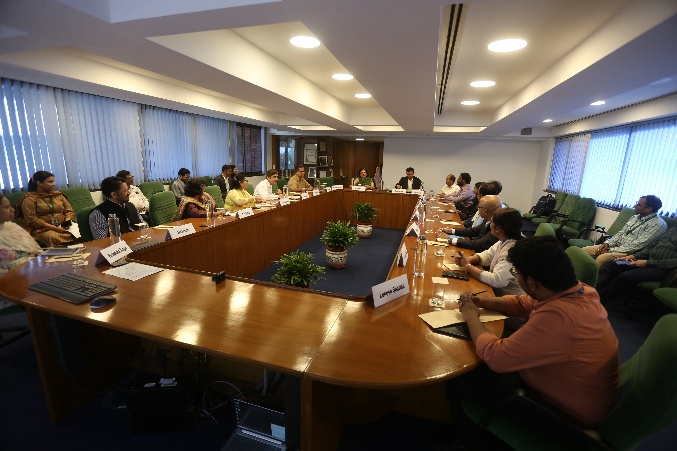
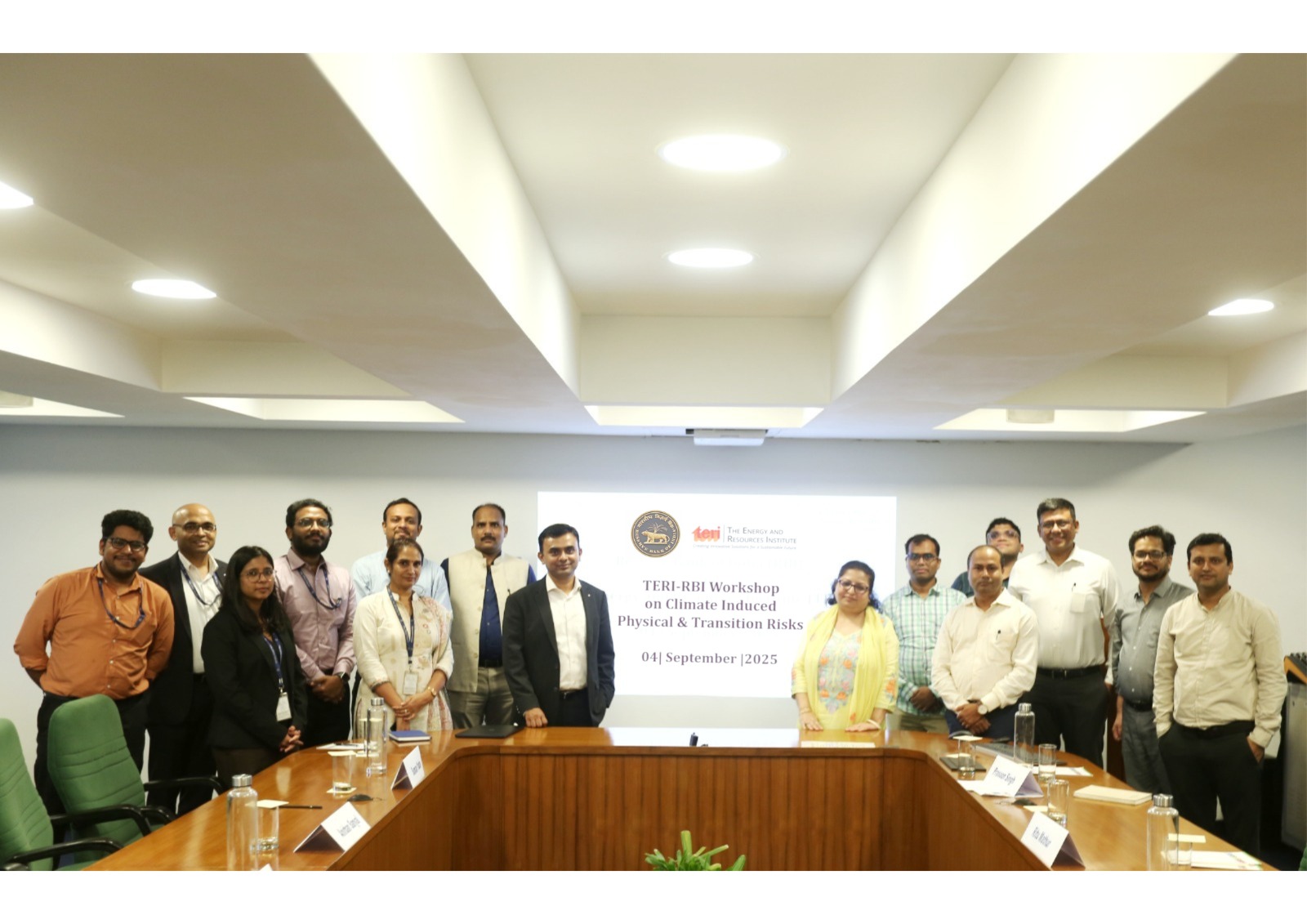
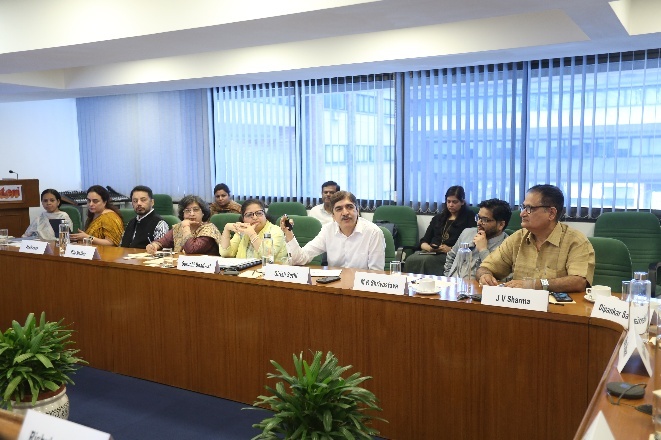
The workshop titled ‘TERI-RBI Workshop on Climate-Induced Physical and Transition Risks’ was held at the R.K. Pachauri Hall, 4th Floor, The Energy and Resources Institute (TERI), Core 6C, India Habitat Centre, Lodhi Road, New Delhi – 110003, on Thursday, 4th September 2025.
TERI hosted a full-day capacity-building workshop for officials of the Reserve Bank of India (RBI) on Climate-Induced Physical and Transition Risks. The delegation from the RBI included representatives from the Sustainable Finance Group – Department of Regulation (DoR), the Department of Statistics and Information Management (DSIM), and the Department of Economic and Policy Research (DEPR).
The RBI, established in 1935 under the RBI Act, serves as India’s central bank and monetary authority. It is mandated to regulate currency issuance, manage monetary policy, and oversee the financial system to maintain stability. The RBI plays a critical role in risk management by monitoring and mitigating systemic risks, ensuring the resilience of banks, and safeguarding the broader economy against financial shocks. Its policies influence credit flow, inflation control, and financial inclusion, making it central to India’s economic stability.
This was a closed-door capacity-building workshop specifically curated for RBI officials involved in the development of the Reserve Bank – Climate Risk Information System (RB-CRIS), an initiative to create a centralized climate risk data repository. Within the larger framework of risk management and resilience planning against climate-related financial risks, RB-CRIS aims to: (i) bridge the gaps in high-quality climate-related data for financial institutions; (ii) support robust climate risk assessment and compliance with RBI’s climate-related financial risk disclosure framework; and (iii) provide standardized data on local climate scenarios, forecasts, and emissions to help banks and NBFCs manage systemic risks from climate change.
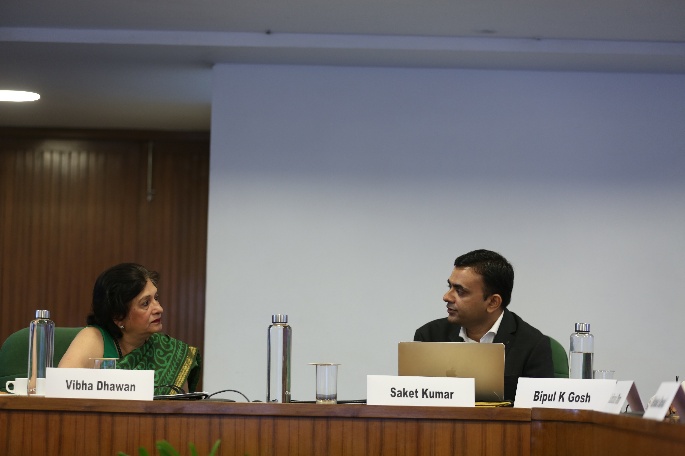
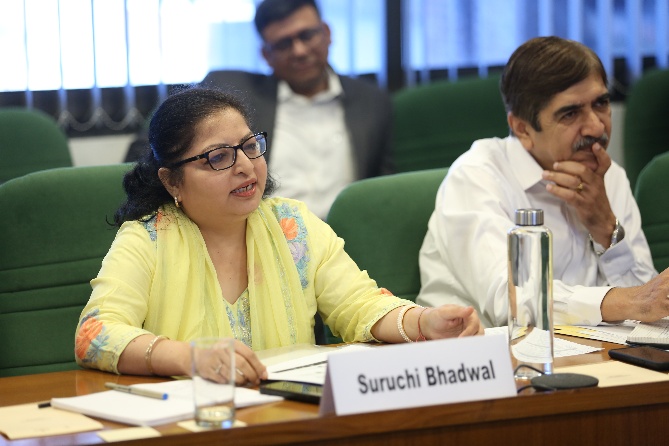
The workshop was conducted by officials from TERI’s Earth Sciences & Climate Change Division and the Industrial Energy Efficiency Division.