This article explores the landscape of clean air finance in India, highlighting key national and international funding sources, funding gaps, challenges, and potential pathways forward.
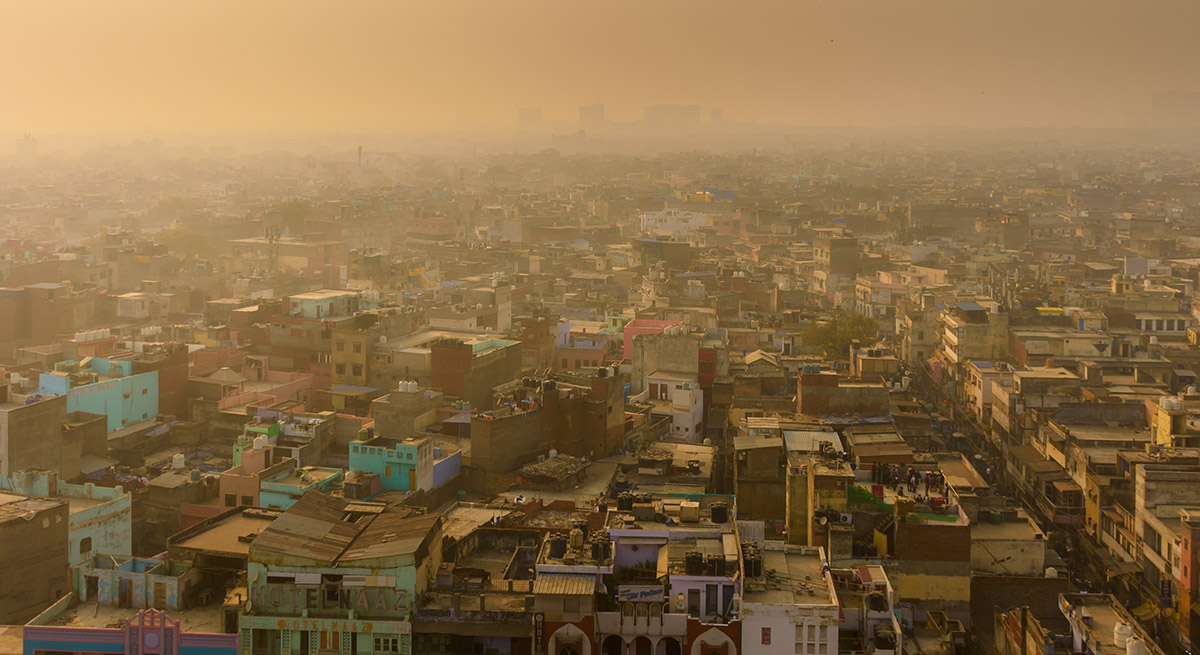
Air pollution in Indian cities is a perpetual environmental and public health issue, leading to serious economic repercussions. Over the last 10 years, the majority of the world's cities with the most polluted air were located in India. Addressing this crisis requires substantial financial investment, innovative funding mechanisms, and coordinated efforts across the government, the private sector, and international stakeholders. This article explores the landscape of clean air finance in India, highlighting key national and international funding sources, funding gaps, challenges, and potential pathways forward.
Sources of Clean Air Finance in India
National Funding Sources
The National Clean Air Programme (NCAP), the flagship initiative of the Government of India (via the Ministry of Environment, Forest and Climate Change), was launched in 2019. It targeted a reduction of PM10 concentrations by 20–30% by 2024 (revised to 40% by 2026) compared to 2017 levels in 131 non-attainment cities that failed to meet National Ambient Air Quality Standards (NAAQS) for five consecutive years.
Between FY2019-20 and FY2025-26, ₹3,072 crore was allocated under the NCAP. Additionally, the Government of India allocated ₹16,539 crore for 48 million-plus cities under the Million Plus City Challenge Fund (MPCCF) of the 15th Finance Commission for the period FY2020-21 to FY2025-26. The Government has released ₹11,541.88 crore under the MPCCF and NCAP so far, of which ₹8,714.55 crore has been utilized.
Furthermore, the Ministry of Agriculture released an additional ₹3,623.45 crore between FY2018–19 and FY2024–25 to Punjab, Haryana, Uttar Pradesh, and Delhi to effectively manage post-harvest crop residues (Rajya Sabha Question No. 187, dated 12/12/2024). The burning of crop residues in these states has been identified as a primary source of air pollution in Delhi and the National Capital Region (NCR).
International Funding Sources
Through its Country Partnership Framework, the World Bank assists India with air quality control, emphasizing capacity building, knowledge transfer, and airshed management in areas such as the Indo-Gangetic Plain. The funding is a combination of loans and grants and currently represents a major source of international funding for clean air initiatives in India.
- Uttar Pradesh: The World Bank is providing approximately ₹2,741 crore for the Clean Air Management Project (UP-CAMP), approved by the Ministry of Finance in September 2022.
- Haryana: A loan of approximately ₹2,498 crore was approved in January 2025 for the Haryana Clean Air Project.
to improve air quality across the Indo-Gangetic Plain (World Bank documents P502491, 2024; P508222, 2025). Additionally, the Energy Sector Management Assistance Program (ESMAP) of the Bank approved a US$1.5 billion financing package (Grant and Loan) in June 2024 to support India's low-carbon transition, including electric mobility, which offers co-benefits by reducing transport sector emissions.
Other Key International Agencies:
- UNDP: The United Nations Development Programme supports NCAP via integrated climate-resilient development, focusing on urban air quality monitoring (enhancing measurement in 20+ cities) and policy capacity. UNDP funded projects worth approximately ₹90 crore to manage air quality in Indian cities between 2023 and 2025 (UNDP India Annual Report, 2024).
- UNEP: Approximately ₹53 crore in projects were funded by the United Nations Environment Programme under the Global Air Quality Program between 2023 and 2025. Emphasizing research and enforcement, this grant provides technical assistance for air quality standards, source apportionment, and regional plans.
- SDC: The Swiss Agency for Development and Cooperation provided bilateral aid of approx. ₹72 crore between 2019 and 2023, focused on sustainable urban development and transboundary pollution. In the second phase, SDC sanctioned about ₹90 crore to address transboundary air pollution in the Indo-Gangetic Plain, contributing to the World Bank’s regional Air Quality Management program.
- GIZ: The German Agency for International Cooperation leads technical cooperation for NCAP implementation, focusing on airshed management, industrial emission controls, and urban mobility. About ₹220 crore was provided for clean air initiatives between 2021 and 2025 (GIZ India Portfolio, 2025).
Philanthropic Funding Sources
Philanthropies emphasize co-benefits like health equity, climate mitigation, and economic growth. These funds primarily focus on technical assistance for NCAP (e.g., emission inventories), low-cost sensors, corporate engagement (e.g., Alliance for Clean Air), and community awareness. Initiatives like Breathe Cities (launched in 2023) now cover 14 Indian cities.
- Clean Air Fund (CAF): CAF oversees the implementation of NCAP through community campaigns (Lung Care Foundation), funding low-cost sensors (e.g., ATMAN Center at IIT-Kanpur), and the TRUE Initiative for vehicle emissions testing. It co-leads the Alliance for Clean Air and Breathe Cities. While there is no India-specific fund, their initiatives in India share a significant portion of a global target estimated at ₹180–270 crore between 2023 and 2025.
- Bloomberg Philanthropies: Working with the MoEF&CC since the launch of NCAP, Bloomberg has supported strategies for cities like Surat and Patna (with TERI) and EV roadmaps for West Bengal. In 2023, Bloomberg announced potential climate finance solutions exceeding ₹5,700 crore to support India’s low-carbon development.
- IKEA Foundation: Funds the Clean Air Fund for India programs, particularly crop residue management via the "Better Air Now" initiative. It announced an annual fund of ₹4–8 crore for the India air program during 2023–2026.
- Children's Investment Fund Foundation (CIFF): CIFF supports awareness campaigns regarding pollution's impact on children. It provided approximately ₹106 crore for "India Clean Air Phase 2" to assist state pollution control boards and funded an estimated ₹8–16 crore for other initiatives between 2019 and 2025.
- Shakti Sustainable Energy Foundation: Funded ₹4–10 crore annually between 2020 and 2025 towards clean air programs, including emission studies in Surat and Bengaluru.
Note: Philanthropic funding rose post-COP28 but faces headwinds from global aid reductions, including cuts from USAID, the UK, France, and Germany.
How "Clean" is India's Clean Air Finance?
Determining whether finance for air quality initiatives comes from environmentally clean sources is complex. "Clean funding" ideally excludes money derived from high-emission industries like fossil fuels.
- Government Funds (NCAP/MPCCF): These are financed by general tax revenue, which includes contributions from polluting sectors like industry and fossil fuels. While the 15th Finance Commission incentivizes forest cover, the funds are tied to the broader, carbon-intensive economy. Therefore, the largest funding block for clean air is not strictly classified as "clean."
- Philanthropy:
- Bloomberg: Derived from Bloomberg L.P. (financial services/media). While operationally low-carbon, the company serves sectors including fossil fuels. The funding is largely clean with minor indirect exposure.
- CAF: Supported by multiple donors (Bloomberg, IKEA, CIFF). While generally clean, tracing endowment origins often reveals indirect links to unsustainable sectors.
- Multilateral & Bilateral:
- World Bank: Funds come from member contributions and bond markets. Despite a 2017 commitment to phase out upstream oil and gas financing, historical ties remain. This funding is considered partially clean.
- GIZ & SDC: These are government-funded. While Germany and Switzerland have green mechanisms (carbon levies, climate funds), their national budgets still contain minor revenues from fossil fuel usage. However, these are considered mostly environmentally clean.
Ultimately, India continues to expand coal capacity while using coal cess money to fight air pollution. Since >75% of the budget comes from NCAP and MPCCF, the aggregate funding for India's clean air program cannot be considered environmentally clean.
The Funding Gap
India launched its "war" against poor air quality with the NCAP in 2019. Six years later, the effort is crippled by financial barricades:
- Red Tape & Capacity Crunch: Municipal bodies, already cash-strapped and understaffed, struggle to prepare bankable proposals or meet complex compliance requirements.
- Loan-Heavy International Funds: Over 90% of multilateral air quality funding comes as loans. While partners like the World Bank offer expertise, they saddle states with debt. Grant-based philanthropic money is flexible but limited to a few hundred crores annually.
- Bias in Allocation: Most funding targets million-plus cities, while rural India—where crop burning and household biomass cookstoves contribute up to 40% of PM2.5 in the Indo-Gangetic Plain—remains underfunded. Furthermore, urban funds prioritize suppressing pollution (e.g., sprinklers) rather than preventing emissions.
- Political Economy: India has added 30 GW of coal power since 2019. Diesel vehicles and gensets dominate. There is almost no focus on public transportation or non-motorized transport corridors, barring resource-heavy metro networks.
- Data Gaps: As of June 2025, only about 50% of non-attainment cities have completed source apportionment studies. Most are implementing action plans "blindly." Additionally, there is no legally binding regional airshed management plan outside the NCR.
- Budget Diversion: Floods, elections, and welfare schemes repeatedly consume environmental budgets. Air quality is still treated as a seasonal "winter problem" rather than a year-round public health emergency.
A Glimmer of Hope
Philanthropies like Bloomberg and the Clean Air Fund have punched above their weight. However, India urgently needs to focus on execution rather than allocation.
Unless India implements war-footing reforms—such as single-window approvals, shifting to grant-heavy models, integrating rural solutions, and ring-fencing air quality budgets—the clean air program will remain more aspirational than achievable. It risks becoming another well-meaning policy that died of financial starvation. Clean air shouldn’t be a luxury good. Until the money matches the magnitude of the crisis, millions will continue to pay with their health, and the bureaucracy will simply shift the goalposts whenever targets are missed.