Headquarters
The Energy and Resources Institute (TERI)
Darbari Seth Block, Core 6C,
India Habitat Centre, Lodhi Road,
New Delhi - 110 003, India
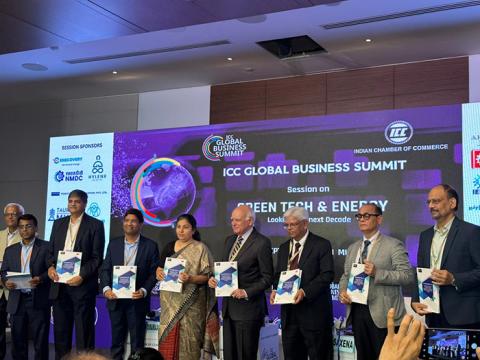
TERI releases a knowledge paper "Emerging Energy Technologies and Workforce Transformation in India"
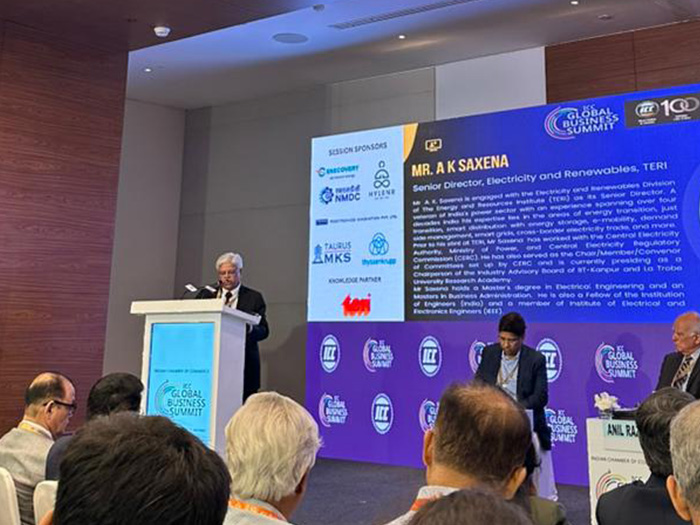
As the knowledge partner for the ICC Global Business Summit 2025, The Energy and Resources Institute (TERI) contributed to the Green Tech & Energy Forum, emphasizing the critical link between India's clean energy goals and its workforce.
The forum's opening address by Mr Anil Razdan, former Secretary at the Ministry of Power, underscored the urgent need to mitigate global warming. He highlighted that this is the era of chemical engineers and innovators who must solve complex challenges and stressed the need for global collaboration to train both current and future generations in emerging technologies.
Mr AK Saxena, Senior Director at TERI, reinforced this message by pointing to the "twin drivers" of demand-pull and knowledge-push in technology development. He stressed the importance of aligning India's human capital with its clean energy ambitions.
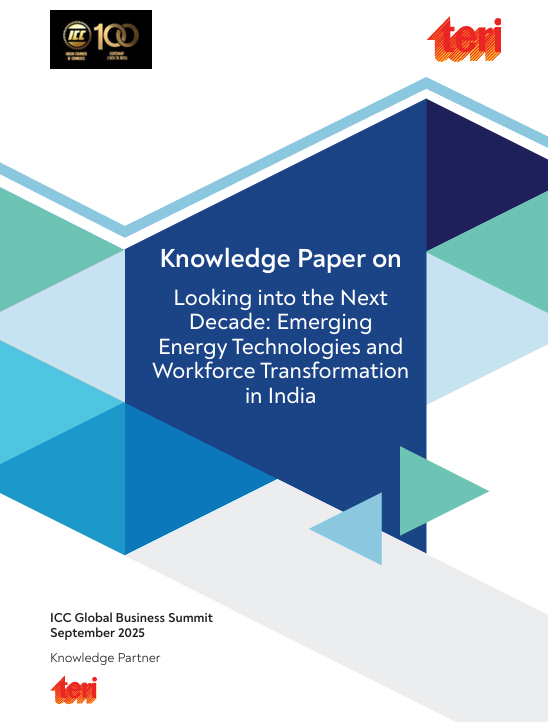
In this context, TERI has released a knowledge paper, "Emerging Energy Technologies and Workforce Transformation in India." The paper outlines key technology trends, market trajectories, and skill gaps, proposing a strategic roadmap to align the nation's workforce with its clean energy future.
India’s transition to a clean, resilient economy by 2047 depends not just on technology but on a skilled workforce. Rapid advancements in sectors like green hydrogen, semiconductors, and AI are facing a significant constraint: a talent shortage that could slow down progress.
Current workforce readiness is inadequate: over 65 % of new clean-energy roles require re-skilling, yet formal vocational training reaches only 4 % of India’s labour force. Semiconductor fabs, hydrogen hubs, and AI-driven grid projects face project delays if talent gaps persist. Key roles identified include electrolyser stack engineers, CBG process operators, cleanroom technicians, and grid-AI engineers. Demand for many of these roles is projected to more than double by 2030, underscoring the need for immediate action on curricula, apprenticeships, and certification pathways.
The report recommends integrating human capital development into every mission and incentive programme. The roadmap proposes:
Four system-level enablers are critical:
If implemented, this strategy could deliver higher placement rates, higher productivity across assets, and an exportable pool of skilled professionals, turning India’s demographic dividend into a competitive advantage in the global clean energy economy.