
Follow the first principles of reducing transport emissions in enhancing fuel efficiency and promoting zero emission vehicles.
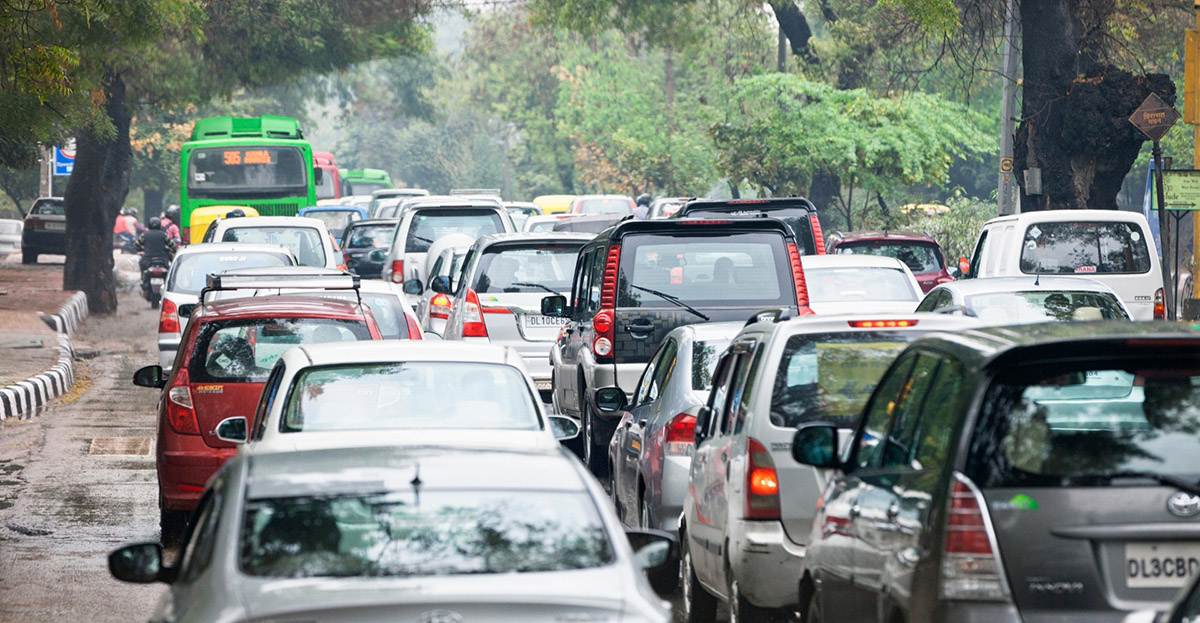
Efficiency improvement is one of the key levers of achieving transport decarbonizing. By keep on improving efficiency, it essentially means that a motor vehicle could cover more distance per unit of fuel. With India’s Net Zero Target of 2070 – our tasks are cut off – start making changes today and not tomorrow.
The transport sector accounts for about 12% of India’s energy-related CO2 emissions, which is expected to rise unless decarbonization efforts are scaled up rapidly. Recognizing this, India introduced Corporate Average Fuel Economy (CAFE) standards in 2017, designed to regulate vehicle manufacturers or original equipment manufacturers (OEMs) towards producing cleaner, more fuel-efficient passenger vehicles. This standard, which are currently only for four-wheeler passenger cars of the M1 segment, are meant to curb CO2 emissions, reduce oil imports, and accelerate the shift to zero emission vehicles.
The Bureau of Energy Efficiency (BEE), the nodal agency for efficiency improvement efforts in India, first released the draft CAFE-III and IV for comments in June 2024, and over a year later, a revised CAFE-III proposal was issued in September 2025. Surprisingly, the discussion on Phase IV has disappeared in thin air, which could have given a window of opportunity for a long-term perspective planning, something OEMs have been demanding from the government. Today, with the Indian automobile market evolving rapidly and as per TERI analysis, the population of cars and taxis is projected to reach about 25 crores by the year 2046-47, from the current level of 5.5 crore, tightening CAFE norm is essential. However, the recently released draft for CAFE-III has triggered a massive debate among the OEMs and bureaucratic circles, largely due to two provisions: continuation of super-credits for hybrid vehicles, and relaxations for small cars, which would largely benefit only one OEM.
No super-credits for ICE and hybrids
The concept of super-credits was introduced to reward OEMs for introducing new technologies and manufacturing cleaner efficient vehicles. But globally, such incentives are temporary, which is that these are phased out as the market matures. However, revised CAFE proposal continues to provide super-credits even to hybrid vehicles and range extended electric vehicles (REEVs) – which involves use of generators combustion engine to charge batteries, despite mounting evidence, including a new study in Europe that hybrids perform worse than EVs in real-world emissions. Interestingly, in Europe, carmakers are pressuring EU lawmakers to treat hybrids as clean vehicles under a ‘technology neutral’ approach to decarbonising cars.[1]
Since hybrids do not offer zero tailpipe emissions, extending super credits to them undermines the environmental objective of the CAFE framework. While super credits are helpful in calculating compliance with the regulations, they have no role in boosting actual sales of an OEM. Super-credits for hybrid vehicles disproportionately favour a small subset of OEMs, making the regulation appear less ‘technology-neutral’ than intended.
Small-car relaxations or a step backwards
The revised draft proposes relaxation for small cars based on an unladen weight cut-off of 909 kg. However, the rationale behind this threshold and its alignment with India’s long-term clean mobility goal remains unclear. As per the Society for Indian Automobile Manufacturers (SIAM) data on four-wheeler fuel efficiency, a total of 30 models or variants were offered under the portfolios of five OEMs during the year 2017-18, all falling within the unladen weight category of less than 909 kg and engine capacity of less than 1200 cc. Over time, by 2020-21, both the number of models and the participating OEMs in this segment had declined, reflecting a consolidation trend within this market segment. In the year 2024-25, 43.2 lakh passenger vehicles were sold in India, and nearly 20% fell within the small-car category. Such relaxations weaken the regulatory intent, giving OEMs – in this case only two OEMs who voted ‘yes’ for CAFE relief out of the total of 19 OEMs selling cars in India – which would lead to an easier compliance pathway without necessarily investing in cleaner or zero-emission technologies.
On another note, global and domestic experience shows that fuel efficiency regulations do not dictate consumer preference now, however market choices do. Japan Kei car, or small car, incentives could not prevent consumers from shifting towards non-Kei cars. India is experiencing a similar trend, with industry average unladen mass increasing over time with ever increasing demand for bigger bulkier cars. Another example is that when India introduced excise duty relaxations for vehicles under 4-metre length with small engines (<1.2L for Petrol, and <1.5L for Diesel), OEMs engineered their product portfolio to maximise benefits. Similar strategy may be played with weight-based relaxations.
With 43.2 lakh cars sold in 2024-25, even a modest shift toward relaxation criteria through portfolio adjustments could erase years of emission-reduction gains. Affordable mobility remains important, but not at the cost of public health, energy security, or climate objectives.
Future-focused framework
Indian regulators stand at a crucial crossroads and should follow the First Principle-approach to reduce emissions from the transport sector. It needs to focus on deployment of cleaner zero emission vehicles and stringent in nature to keep the country on track to meet the Net Zero target of 2070. This will not only help achieve the ambition of Make in India but also Made in India for the World – local to global.
The passenger vehicle market is undergoing technological change, and policy certainty is required to guide this transition. Therefore, policy signals must be aligned with our long-term national interests and climate commitments. Strengthening CAFE-III requires removing weight-based relaxations to preserve technology neutrality and phasing out super-credits for technologies that do not offer zero tailpipe emissions, including hybrids and other internal combustion engine technologies.
CAFE norm must serve as a forward-looking instrument that nudges the industry toward innovation rather than offering reasons to slow down.